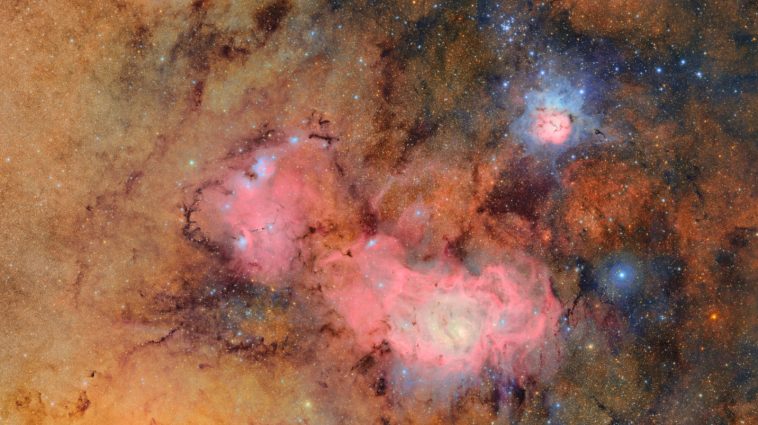
The Dawn of a New Cosmic Era: Rubin Observatory Kicks Off Universe-Defining Survey
This week marks a monumental achievement in astrophysics with the official commencement of the Vera C. Rubin Observatory’s Legacy Survey of Space and Time (LSST). Over two decades in the making, this ambitious endeavor promises to revolutionize our understanding of the cosmos, from unraveling the mysteries of dark energy and dark matter to charting the universe’s expansion and cataloging celestial objects within our own solar system. This comprehensive survey, set to generate an unprecedented “cosmic movie,” stands as a testament to human ingenuity and our relentless pursuit of knowledge.
The Vera C. Rubin Observatory’s Cosmic Unveiling
Perched high in the Chilean Andes, the Vera C. Rubin Observatory, home to the world’s largest digital camera with an astounding 3,200 megapixels, has officially embarked on its decadal mission. Beginning June 30, the observatory will capture a new image approximately every 40 seconds, systematically surveying the entire southern sky every few nights. This relentless observation schedule is designed to create an ultrawide, ultrahigh-definition time-lapse record of the universe, offering an unparalleled dynamic view of cosmic phenomena.
Brian Stone of the National Science Foundation aptly described the undertaking: “Today, we begin filming the greatest cosmic movie ever made.” The observatory’s capabilities were brilliantly showcased last summer during test runs, yielding breathtaking images of millions of galaxies and stars, alongside thousands of previously uncataloged asteroids. The LSST will revisit each point in the sky roughly 800 times over its ten-year span, enabling it to meticulously record subtle changes and transient cosmic events. This astronomical data deluge will amount to approximately a thousand images per night, generating an staggering ten terabytes of raw data daily.
This immense data stream will be a boon for modern cosmology and astrophysics. Darío Gil, Under Secretary for Science at the US Department of Energy, emphasized its profound impact, stating, “By seeking to understand the enigmatic phenomena of dark energy and dark matter, we are not just observing the stars; we are striving to grasp the fundamental laws that govern our existence.” The observatory’s meticulous observations are expected to provide crucial insights into these elusive components of the universe, potentially validating or challenging existing cosmological models and illuminating the true nature of cosmic acceleration. Beyond these grand cosmological questions, the LSST is also poised to discover countless near-Earth objects, transient stellar events like supernovae, and even previously unknown objects lurking in the far reaches of our solar system, fundamentally altering our understanding of celestial dynamics.
Advancements in Bio-Robotics: Submersible Cyborg Cockroaches
In a fascinating convergence of biology and robotics, scientists from Nanyang Technological University Singapore and Waseda University have developed a miniature diving suit that allows cyborg cockroaches to operate underwater for extended periods. While initially sounding like science fiction, this innovation holds significant implications for hazardous environment exploration and critical search and rescue operations, particularly in scenarios where human access is impossible.
The core motivation behind this research lies in the unparalleled ability of small, agile biological robots to navigate confined and unstable environments, such as collapsed buildings or flooded areas, that are inaccessible to human rescuers or larger robotic platforms. Demonstrating their practical utility, cyborg roaches were recently deployed in the field to assist with search and rescue efforts following a devastating earthquake in Myanmar earlier this spring. This successful deployment underscores the urgent need for tools that can extend their operational capabilities.
The primary hurdle for these electronic-controlled Madagascar hissing cockroaches in flooded environments was their inability to breathe underwater. The ingenious solution developed by the research team comprises a flexible diving suit integrated with an oxygen-generation tank and four silicone supply tubes. These tubes are painlessly attached to the roaches’ spiracles, their natural breathing apertures, ensuring a continuous oxygen supply. The researchers, whose findings were published in Nature Communications, reported that with this innovative setup, the cyborg insects could actively swim underwater for up to three hours in controlled tests. This breakthrough significantly expands the operational envelope for bio-inspired robots, paving the way for more effective disaster response and exploration in challenging, waterlogged terrains.
Paving the Way to a Permanent Lunar Outpost
NASA’s ambitious lunar exploration strategy continues to evolve, with a decisive shift earlier this year from a solely orbiting Lunar Gateway to the establishment of a robust $20 billion Moon Base. This strategic pivot underscores a renewed commitment to sustained human presence on the lunar surface, laying the groundwork for long-term scientific research, resource utilization, and ultimately, future deep-space missions. To facilitate this monumental undertaking, NASA has significantly ramped up its commercial partnerships.
Following an initial tranche of three missions slated for late 2026, NASA recently announced four additional missions scheduled for late 2028. These contracts, totaling nearly $600 million, have been awarded to Astrobotic, Firefly Aerospace, and Intuitive Machines. These commercial partners will play a critical role in delivering essential science payloads to the lunar surface for the burgeoning Moon Base. Astrobotic has been awarded two missions, while Firefly Aerospace and Intuitive Machines will each undertake one.
Each of these deliveries will leverage updated versions of the companies’ lander designs, incorporating valuable insights gained from previous missions under NASA’s Commercial Lunar Payload Services (CLPS) program. Crucially, each delivery will carry an identical set of payloads: the Stereo Camera for Lunar Plume Surface Studies (SCALPSS) to gather vital landing data, a Laser Retroreflector Array (LRA) for precision spacecraft localization, and a Linear Energy Transfer Spectrometer (LETS) to measure incoming space radiation. This redundancy is not a mere duplication but a deliberate and strategic choice.
Joel Kearns, deputy associate administrator for exploration, Science Mission Directorate, at NASA Headquarters, articulated the rationale: “By flying the same science instruments on multiple landers, we will better understand potential hazards during landing and build out a global network of environmental data and location markers on the Moon.” This approach is akin to establishing a network of weather stations across Earth, providing comprehensive and distributed data critical for ensuring the safety of future human exploration and for establishing a resilient, long-term operational base on the lunar surface. These flight-proven payloads will contribute immensely to mitigating risks and solidifying our presence on Earth’s closest celestial neighbor.
The Horizon of Innovation
From charting the farthest reaches of the universe to deploying submersible cyborgs and laying the groundwork for a permanent lunar outpost, this week’s scientific and technological advancements underscore a period of profound innovation. These endeavors not only push the boundaries of human knowledge and capability but also lay the foundation for a future where humanity’s reach extends further into the cosmos and its ingenuity tackles the most pressing challenges on Earth. The collaborative spirit driving these projects, whether through international observatories or commercial space partnerships, signals a vibrant era of discovery and transformation.
#trending #viral #explore #reels #fyp #foryou #challenge #love #instagood #instagram #photooftheday #fashion
Artificial Intelligence, Cloud, Software Engineering