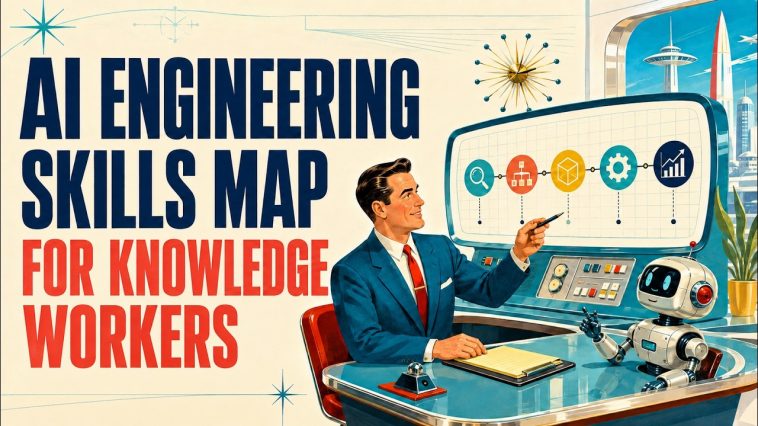
The AI-Driven Metamorphosis of Knowledge Work: Navigating a New Skill Frontier
The landscape of knowledge work is undergoing a profound and irreversible transformation, driven by the rapid evolution of artificial intelligence. We are witnessing a fundamental shift from directly executing tasks to a more strategic role of managing and orchestrating autonomous AI agents. This paradigm shift demands a new, specialized set of skills, moving beyond traditional proficiencies to embrace AI engineering principles.
The Evolving Landscape of Professional Roles
The rise of sophisticated AI agents, capable of autonomously performing complex knowledge work tasks, signals a pivotal moment for businesses and professionals alike. This isn’t merely about automation; it’s about re-architecting workflows where human expertise is amplified by AI’s speed and analytical power. Organizations are already reporting significant productivity gains, ranging from 25% to 40%, by deploying AI agents for appropriate tasks. Furthermore, AI agents can reduce cognitive burden, allowing human workers to focus on higher-value, creative contributions.
This evolution necessitates that knowledge workers, irrespective of their specific domain, cultivate a deep understanding of AI’s capabilities and limitations. The future workforce will thrive not just by possessing knowledge, but by intelligently leveraging AI as a powerful extension of their own cognitive abilities.
Mastering Essential AI Engineering Skills
To navigate this new era, NLW (likely a reference to a thought leader or framework in AI) has identified five critical AI engineering skills that knowledge workers must acquire. These skills empower individuals to effectively collaborate with and guide AI systems, transforming them from mere tools into indispensable partners.
- Capability Mapping: This involves a precise understanding of what AI agents can and cannot achieve. It requires the ability to assess AI tools, evaluate their strengths in specific contexts, and recognize their boundaries. This foresight prevents misapplication and maximizes efficiency.
- Context and Harness Management: Providing clear, unambiguous instructions and establishing operational boundaries for AI is paramount. Knowledge workers must master the art of prompt engineering, setting parameters, and managing the iterative feedback loop with AI agents to ensure desired outcomes.
- Problem and Product Prototyping: The agility to rapidly prototype solutions and products using AI tools is becoming a core competency. This involves iterating quickly, experimenting with different AI approaches, and swiftly bringing concepts to fruition, significantly accelerating innovation cycles.
- Opportunity Identification: Beyond executing tasks, professionals must develop the acumen to identify novel opportunities where AI can create unprecedented value. This requires strategic thinking, foresight, and a keen eye for leveraging AI to solve problems or unlock new markets that were previously unattainable.
- Rapid Skill Acquisition: The AI landscape is perpetually in flux, with new models, tools, and methodologies emerging at an astonishing pace. Continuous learning and the ability to quickly assimilate new AI-related skills are no longer optional but a fundamental requirement for sustained relevance.
Recent Developments Shaping the AI Frontier
The accelerated pace of AI innovation is evident in recent industry headlines, underscoring the massive investment and strategic maneuvering underway.
Cursor, an AI coding provider, has launched Origin, a new code hosting platform positioning itself as a rival to GitHub. Origin integrates source code and AI coding agents directly within the development environment, allowing developers to assign coding and review tasks within the same ecosystem. This move, coincidentally timed with a significant GitHub outage, highlights the growing demand for more robust and AI-native developer tooling, where AI agents can work directly with code in a seamless, integrated fashion.
Meanwhile, the financial performance of leading AI model developers continues to impress. Anthropic’s annual revenue run rate has reportedly surpassed an astounding $65 billion by the end of July, outpacing even OpenAI’s reported figures. This sevenfold year-over-year increase, driven by strong enterprise demand for its Claude AI models, signals the immense commercial traction of advanced AI and sets the stage for anticipated IPOs and further industry consolidation.
Further demonstrating the strategic importance of AI infrastructure, Stripe has agreed to acquire OpenRouter for over $7 billion. OpenRouter is an AI model gateway and routing platform that helps businesses optimize token usage across various models and providers. This acquisition positions Stripe at the nexus of AI token payments and highlights a broader industry recognition of the need for sophisticated tools to manage AI computing capacity, costs, and strategic security in a multi-model intelligence future.
The Path Forward: Strategic Implications and Future Outlook
The confluence of these technological advancements and market shifts paints a clear picture: AI agents are not just augmenting human capabilities; they are redefining the very structure of knowledge work. Organizations that embrace this shift by investing in AI literacy and upskilling their workforce will gain a significant competitive advantage. This involves fostering a culture of continuous learning and equipping professionals with the tools and mindsets to thrive in an agent-managed world.
The future of work will be characterized by symbiotic human-AI collaboration, where human creativity, critical thinking, and strategic judgment are complemented by AI’s analytical power and efficiency. Organizations must prioritize building flexible systems, ensuring robust data platforms, clear governance, and preparing employees to work alongside these powerful new tools. The integration of AI into every facet of enterprise operations is no longer a futuristic concept but an immediate strategic imperative.
#TechTrends #AIInnovation #FutureIsNow #DigitalLife #GadgetGeek #SmartLiving #ExploreTech #GameOn #ScienceFacts #FutureTech #AIRevolution #InnovationNation
The most relevant keywords from the list, reflecting current technological impact and trends, are Artificial Intelligence, Cloud, and Cybersecurity.
Artificial Intelligence (AI) is consistently cited as a fundamental enabler of technological advancement and a key area shaping the future, encompassing subfields like Machine Learning and Natural Language Processing. Generative AI, a subset of AI, is also highlighted as a top strategic technology trend for 2024.
Cloud computing provides the foundational infrastructure for much of modern technology, including the extensive demands of AI training and inference.
Cybersecurity, particularly in the form of AI Trust, Risk and Security Management (AI TRiSM) and Continuous Threat Exposure Management, is deemed critical for mitigating risks and ensuring the secure and ethical implementation of AI and other digital initiatives.
Artificial Intelligence, Cloud, Cybersecurity