Unveiling the Milky Way’s Violent Past: A New Era of Galactic Archaeology
Professor Vasily Belokurov stands at the forefront of a profound shift in our understanding of galactic evolution, recognized as one of three esteemed winners of the 2026 Kavli Prize in Astrophysics. This prestigious award celebrates his groundbreaking work in unearthing the fossilized evidence of ancient galactic mergers, definitively proving the tumultuous processes that sculpted our home galaxy, the Milky Way. His research redefines our perception of cosmic stability, revealing a dynamic history far more chaotic than previously imagined.
The Deceptive Calm of the Cosmos
For millennia, humanity has gazed upon the night sky, finding solace and a symbol of permanence in the predictable patterns of stars. From ancient observatories to modern urban skylines, this celestial tableau has appeared immutable. Yet, this apparent calm is a grand cosmic illusion.
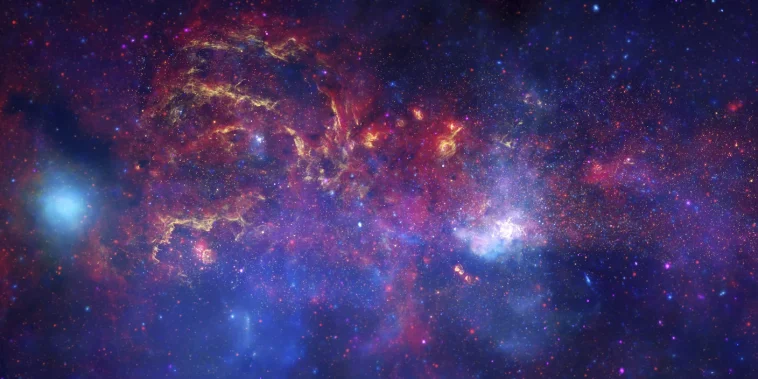
Our galaxy, the Milky Way, is not a static entity but a product of immense gravitational forces, violent collisions, and continuous transformation. Its stellar populations are a testament to this turbulent past, comprising “migrants,” “exiles,” and “survivors” from other cosmic systems. Indeed, even now, our galaxy is subtly stretching and distorting, inexorably drawn towards another massive companion in an ongoing, slow-motion ballet of cosmic destiny.
Galactic Archaeology: Reading the Universe’s History
As a pioneering “galactic archaeologist,” Professor Belokurov’s mission is to meticulously reconstruct the Milky Way’s tumultuous history and decipher the clues to its future. His methodology transcends traditional excavation; instead, it involves sifting through astronomical data—hundreds of millions of stars—using the fundamental laws of dynamics and stellar evolution.
The goal is to identify the most ancient and chemically distinct stars, interpreting their intricate orbits to piece together the cataclysmic events that forged our galaxy. These celestial fossils bear the deep, indelible scars of ancient encounters, scars that continue to define the Milky Way’s structure and dynamics billions of years later. Understanding these past interactions is crucial for distinguishing between internal evolutionary changes and externally imposed transformations from cosmic collisions.
The Enigma of Dark Matter: Mapping the Invisible Scaffold
Underpinning this entire endeavor is the persistent mystery of dark matter. This invisible substance, whose pervasive gravitational influence binds galaxies together, remains one of astrophysics’ most profound unsolved puzzles. Its true identity continues to elude scientists, representing a significant frontier in our quest to comprehend the universe.
The Milky Way offers an unparalleled laboratory for dark matter research. Its relative proximity allows for the extraordinary measurement of stellar motions with exquisite detail, enabling cosmologists to construct the most precise maps of dark matter to date. By charting its reach, density around our solar system, overall shape, and the distribution of its clumps, we aim to transcend mere localization and begin to understand the very nature of dark matter itself.
A New Dawn in Observational Astrophysics
The field of galactic archaeology has been fundamentally transformed by a revolution in open sky surveys. The Sloan Digital Sky Survey (SDSS), initiated in 2000, pioneered the concept of vast public astronomical datasets, leading to discoveries far beyond its initial scope. This accessibility democratized research, accelerating our understanding of cosmic structures.
Since 2014, the European Space Agency’s Gaia mission has elevated this transformation to an unprecedented level. By mapping the precise positions and motions of nearly two billion stars, Gaia has converted our galaxy into an expansive, living archaeological record. Here, the “clues” are not ruins or artifacts, but the stars themselves, each carrying a unique signature of its journey through cosmic time.
Echoes of a Cataclysmic Past: The Gaia-Sausage-Enceladus Merger
The most compelling evidence of a bygone galactic cataclysm lies in the “migrant” stars observed within our galaxy—stars not born in the Milky Way itself. While indigenous stars generally follow the ordered, rotating flow of the galactic disk, these migrants exhibit highly unusual, elongated orbits, plunging into the inner galaxy before soaring back out to its distant outskirts repeatedly.
These peculiar trajectories are often coupled with distinct chemical compositions. Migrant stars typically show lower enrichment in heavier elements compared to local populations, a hallmark of slower evolutionary rates characteristic of smaller dwarf galaxies. This makes them doubly invaluable: not only are they direct fossils of the Milky Way’s violent history, but they also serve as vital probes of its outer, less understood regions.
Rewiring the Milky Way: Disk, Halo, and Dynamics
A cornerstone of cosmic structure formation theory posits that galaxies grow hierarchically. Smaller galaxies are gravitationally drawn into larger ones, torn apart, and their stars dispersed, becoming migrants within their new host. In the Milky Way, the most significant ancient example of this process is the “Gaia-Sausage-Enceladus” structure, the remnants of a vanished galaxy that merged with our own approximately 8 to 11 billion years ago.
This colossal collision did not leave the Milky Way unscathed; it fundamentally rewired and reshaped it. Obvious changes are visible in the data, such as stars from the original disk being “splashed” into the galaxy’s halo, becoming exiles in their own birthplace. New star clusters were also assimilated. More profoundly, this encounter is believed to have altered the orientation of the Milky Way’s disk and its intricate alignment with its vast, invisible dark matter halo.
While dark matter is too diffuse to significantly influence our immediate solar system, it constitutes the primary gravitating mass in the outer galaxy. This dark halo, often imagined as a simple, spherical cloud, is now revealed by Gaia data to be far more complex and asymmetric. Major galactic encounters, like the Sausage merger, can significantly stretch and distort this dark halo. Consequently, the Milky Way, akin to a ship listing at sea, began to subtly “lean” – a gradual, imperceptible shift unfolding over billions of years, fundamentally altering its long-term dynamics.
A New Cosmic Dance: The Large Magellanic Cloud’s Influence
Remarkably, compared to many galaxies of similar mass, the Milky Way enjoyed a prolonged period of relative tranquility after the Sausage merger, allowing it ample time to recover. No other cosmic cataclysm of similar magnitude appears to have shaken our galaxy since, granting it a quiet, uneventful stretch of cosmic history—until now.
The Large Magellanic Cloud (LMC), presently the Milky Way’s most massive companion, is already exerting a powerful gravitational pull, disturbing our galaxy’s halo once more. In a striking echo of events billions of years ago, the Milky Way is now being drawn into an accelerating gravitational dance with this neighboring dwarf galaxy. It recoils in response to the LMC’s close approach, initiating a fresh chapter of migration, stellar survival, and galactic adaptation. This is a cosmic ballet from which only one galaxy is likely to emerge structurally intact.
A Deeper Appreciation for Cosmic Permanence
Far from diminishing the beauty of the night sky, these profound insights deepen it immeasurably. The serene band of light above us is no longer merely a symbol of static permanence; it stands as a visible, resplendent reminder of extraordinary cosmic survival. The Milky Way has been broken, meticulously rebuilt, and is now being profoundly disturbed once more. Its stars, each a tiny beacon, remember the past through their chemistry and motions, and collectively, they foretell the future. What appears eternal to our transient gaze is, in truth, merely a fleeting moment within an infinitely longer, more captivating cosmic narrative.
#TechTrends #InnovationNation #FutureIsNow #AIRevolution #DigitalTransformation #GadgetLife #Web3World #MetaverseMagic #StartupLife #DeepLearning #CodingCommunity #NextGenTech
Artificial Intelligence, Cloud, Cybersecurity