AI’s Eye on the Storm: DeepMind’s WeatherNext Rewrites Disaster Preparedness
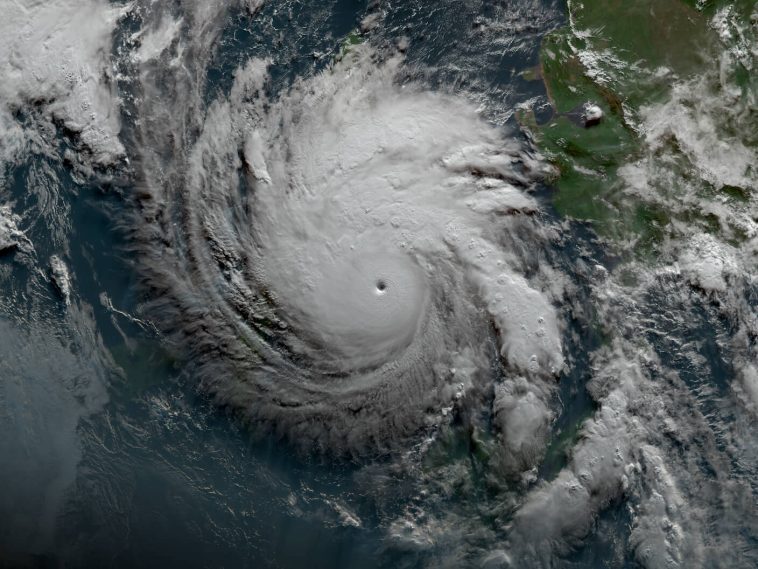
The year 2025 etched itself into Caribbean history with the ferocious arrival of Hurricane Melissa in Jamaica. This wasn’t merely a powerful storm; it was the strongest ever to strike the island, stunning forecasters with its unprecedented rapid intensification. Yet, amidst the chaos, a new era in disaster preparedness was quietly being inaugurated, thanks to an innovative AI model from Google DeepMind named WeatherNext.
Working in close collaboration with the National Hurricane Center, WeatherNext achieved a monumental feat: it predicted Melissa’s sudden escalation to a Category 5 hurricane with nearly 100 percent confidence, a full three days before landfall. This groundbreaking accuracy provided critical extra time, enabling experts to orchestrate comprehensive preparations and initiate timely evacuations across the island. It marked the first instance where a storm, initially exhibiting relatively low wind speeds, was successfully forecasted to reach such extreme intensity so far in advance.
The Imperative of Advanced Cyclone Prediction
Cyclones, encompassing hurricanes and typhoons, stand as some of nature’s most formidable and destructive forces. Their inherent unpredictability – rapid shifts in path, sudden intensification, or unexpected deviations towards populated areas – makes them notoriously difficult to anticipate. In the face of such destructive power, every additional hour of warning becomes an invaluable lifeline, allowing communities to mobilize resources, fortify infrastructure, and move residents out of harm’s way, directly translating into saved lives and mitigated economic devastation.
Historically, predicting these chaotic systems has been a monumental challenge. Traditional physics-based models, while sophisticated, struggle with the inherent sensitivity of atmospheric conditions, where even minuscule initial differences can dramatically alter long-term outcomes. These models typically provide reliable forecasts up to two days out. DeepMind’s WeatherNext, however, extends this crucial warning period to three days without compromising on accuracy—an improvement the team equates to a decade’s worth of conventional meteorological progress. This technological leap underscores a fundamental shift in our ability to contend with the escalating threats posed by extreme weather events in a changing climate.
A Collaborative Future for Global Weather Intelligence
Beyond its immediate impact on cyclone prediction, WeatherNext offers a broader vision for global weather forecasting. The model can generate comprehensive 15-day weather forecasts with remarkable speed and energy efficiency, significantly outperforming conventional models in computational cost. It’s crucial to understand that AI systems like WeatherNext are not designed to supersede established physics-based models but rather to augment and enrich them.
This synergistic approach fosters a “collaborative weather forecasting ecosystem.” By integrating advanced machine learning capabilities with the indispensable, nuanced expertise of human meteorologists, we empower forecasters with richer, more diverse data streams. This enhanced information facilitates more robust decision-making, ultimately bolstering societal resilience against an increasingly volatile climate. The interplay between AI’s processing power and human interpretative skills represents the optimal pathway forward for meteorology.
The Evolution of AI-Powered Forecasts
The pursuit of accurate weather prediction has always pushed the boundaries of scientific inquiry. Standard forecasting software relies on complex physical models of Earth’s atmosphere, meticulously calculating the evolution of variables like temperature, pressure, wind, and humidity. These calculations, performed by supercomputers, are computationally intensive, time-consuming, and inherently rigid, often taking hours to process, and remain susceptible to the smallest deviations in initial conditions.
DeepMind’s journey into AI-driven weather forecasting began five years prior, with an AI model that surpassed physics-based methods for 90-minute predictions. This trajectory continued with the 2023 introduction of GraphCast, an algorithm that mastered 10-day predictions from historical data, outperforming leading systems in approximately 90 percent of thousands of scenarios. GenCast further refined this, drastically reducing the time and energy required for generating predictions. These systems operate by segmenting the globe into “pixels,” learning intricate patterns of how weather conditions in one area influence its neighbors.
However, extreme weather events like cyclones present a unique challenge. While vast datasets exist for training AI on common weather patterns, cyclones are relatively rare and highly chaotic. To overcome this, DeepMind ingeniously built uncertainty directly into WeatherNext. Instead of merely adding random noise to generate “what-if” scenarios, which can disrupt inter-pixel relationships and produce unrealistic patterns, WeatherNext inherently accounts for the probabilistic nature of extreme events. This allows the model to explore a multitude of potential outcomes with a greater degree of fidelity.
Bridging the Scale-Accuracy Divide
Traditionally, a significant trade-off has existed in cyclone prediction between accuracy and scale. Coarse global models excel at tracking a cyclone’s overall trajectory, as storms are steered by immense atmospheric currents. Yet, they lack the granularity to zoom in on the localized turbulence that dictates rapid intensification. Conversely, high-resolution local models precisely predict a storm’s strength but often miss the broader atmospheric context essential for accurate path forecasting.
WeatherNext effectively bridges this divide. DeepMind trained the AI on decades of global weather patterns, critically augmenting this with an expertly curated dataset of nearly 5,000 extreme cyclones. This dual approach allows the model to grasp both the “forest” (global atmospheric steering) and the “trees” (local intensification dynamics). Rather than providing a single best guess, WeatherNext runs thousands of probabilistic “what-if” scenarios, assigning confidence levels to each. This capability allows forecasters to consider a thousand potential trajectories and intensity profiles for a single cyclone, offering a far more nuanced understanding of risk.
The model’s efficiency is equally impressive, capable of generating a full 15-day forecast in under a minute on a single AI chip. For cyclones, it extends the warning window significantly. Benchmarking against leading physics-based models like GenCast and the National Oceanic and Atmospheric Administration’s Hurricane Analysis and Forecast System (HAFS), WeatherNext demonstrated comparable accuracy in predicting maximum wind speed and trajectory, crucially extending the warning period from two to three days. While WeatherNext’s live predictions are available on Google Weather Lab, the team rightly emphasizes that official forecasts and warnings should always be sourced from local and national weather agencies.
The Future Horizon: Integrated Hazard Prediction
The field of AI weather prediction is evolving at an unprecedented pace, with major players like Huawei and Nvidia also actively developing advanced forecasting systems. There is a growing scientific consensus that AI will significantly enhance the speed and cost-effectiveness of weather predictions. Yet, this progress does not signal the obsolescence of physics-based models. These traditional models offer crucial interpretability, allowing meteorologists to understand the underlying physical processes. Moreover, they can uncover previously unknown weather patterns, an increasingly vital capability as Earth’s climate continues to change in ways that may not be fully represented in historical training data.
This reciprocal relationship—physics models informing AI, and AI enhancing the efficiency of physics-based research—is a powerful feedback loop. Human expertise, particularly in discerning the physical plausibility of AI-generated forecasts, remains an indispensable component of this evolving system. Looking ahead, scientists envision connecting weather models with other critical systems, such as storm-surge modeling, seismic activity, and tsunami prediction. This convergence of tools could enable comprehensive, multi-hazard risk assessments, providing emergency services with a holistic and realistic picture of combined threats. Imagine predicting not just a hurricane’s landfall, but also its interaction with high sea levels or an earthquake-generated tsunami, allowing for truly integrated disaster response.
Evan Thompson, from the Meteorological Service Jamaica, has already witnessed the tangible benefits of WeatherNext. As Hurricane Melissa bore down on the island, the extended lead time provided by the AI model proved invaluable. “With early evacuation and better preparation, that reduction in harm really does make a difference to our people,” Thompson stated. “It does actually save their lives, and it saves the livelihoods that they want to secure.” This powerful testimonial underscores the transformative potential of AI in safeguarding communities against the escalating fury of a changing climate.
#TrendingNow #Innovation #FutureIsNow #TechSavvy #DigitalLife #AIRevolution #GlobalImpact #CreativeMinds #StayCurious #DailyInspiration #BreakingNews #LifeHacks
Artificial Intelligence, Cloud, Cybersecurity