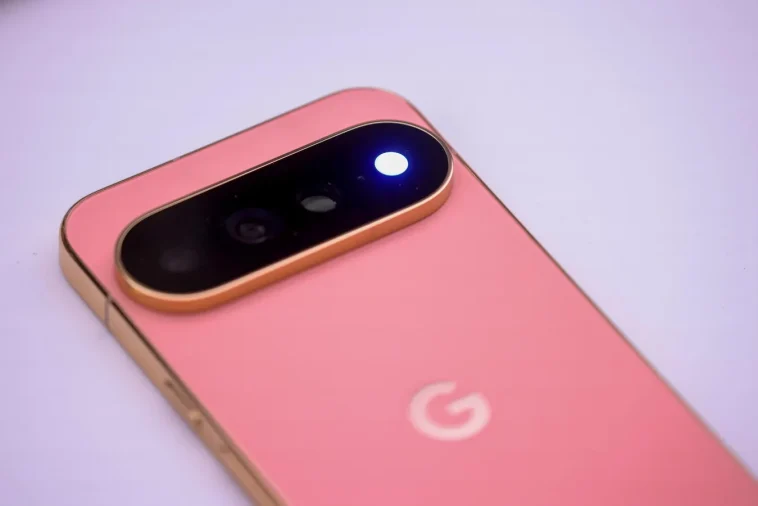
Google’s Pixel 11: A Masterclass in Market Share Acquisition Through Aggressive Promotion
Google’s latest flagship, the Pixel 11, initially launched to a somewhat muted reception. Early assessments highlighted higher price points, a perceived reduction in RAM, a less generous Google AI Pro bundled offering, and a design that largely echoed its predecessor, the Pixel 10. This incremental evolution stood in stark contrast to the bold, experimental designs emerging from competitors like Samsung with its new foldable devices. Such factors might lead many to prematurely dismiss the Pixel 11’s market potential.
However, writing off Google’s hardware ambitions would be a significant oversight. The tech giant has consistently demonstrated a shrewd understanding of the market, particularly when it comes to leveraging aggressive promotional strategies. This approach effectively mitigates initial concerns and has become a cornerstone of their hardware sales model, allowing them to carve out a growing presence in a highly competitive landscape.
Aggressive Promotions Offset Initial Pixel 11 Hesitations
Google’s strategic use of discounts and trade-in incentives is a clear demonstration of its commitment to pushing Pixel sales. The introduction of new trade-in guarantees and stacked discount codes, while varying by region, underscores a deliberate effort to make the Pixel 11 an undeniably attractive proposition, even in the face of its perceived drawbacks. This isn’t merely discounting; it’s a carefully orchestrated maneuver to stimulate demand and drive adoption.
The guaranteed trade-in program in the U.K. serves as a prime example of this aggressive strategy. Google is offering a minimum of £400 (approximately $545 USD) for any eligible phone, regardless of its age. This means an older device like a Pixel 6 Pro, which might only fetch around £130 ($177) on secondary markets like eBay, can command £480 ($654) when traded directly to the Google Store. This substantial uplift significantly reduces the barrier to entry for the Pixel 11.
Such a generous scheme even creates unique market arbitrage opportunities. Consumers could strategically acquire an inexpensive, working older Android phone, such as an original Pixel or Pixel 2, which Google values at £430 ($586) for trade-in. This dramatically lowers the effective purchase price of the Pixel 11, making the upgrade almost irresistible for savvy buyers. Furthermore, the enduring benefit of unlimited free Google Photos uploads associated with the original Pixel adds an extra layer of value for those considering such a trade.
Google’s willingness to accept a broad spectrum of brands for trade-ins, including devices from defunct manufacturers like LG, Huawei, Sony, and HTC, alongside major players like Samsung, Apple, and Motorola, further amplifies the program’s reach. This inclusive policy essentially translates into a significant, upfront discount of £400 or more on the Pixel 11, requiring only the presence of an eligible device to unlock the substantial savings. This tactic not only boosts sales but also reinforces Google’s image as an accessible platform for all Android users.
In contrast, the U.S. market has seen a slightly more tempered approach. While Google offers up to $500 for eligible trade-ins, this represents a maximum value rather than a guaranteed minimum. Consequently, older or lower-value phones will yield lesser returns. For instance, a Pixel 6 Pro is valued at $350 in the U.S., a figure significantly lower than the U.K.’s guaranteed £400 (roughly $456 USD). Similarly, the original Pixel commands only $100 in the U.S., a stark difference from the U.K. store’s £430 ($553 USD).
The geographical disparity extends to accepted brands as well, with the U.S. store excluding devices from Alcatel, Huawei, Oppo, Sony, HTC, and LG. Furthermore, the U.S. promotion concluded earlier, on August 27th, while the U.K. offer continued until September 1st. These regional differences highlight Google’s adaptive strategy, tailoring promotions to specific market conditions and competitive landscapes, though it may leave some international customers feeling less prioritized.
Beyond Trade-Ins: Google’s Multi-Pronged Discount Approach
Beyond the high-profile trade-in offers, Google has quietly deployed a series of additional, stackable discount codes to its user base. This multi-layered approach to promotions demonstrates a sophisticated understanding of consumer psychology, leveraging both overt and covert incentives to drive conversions.
Many of these additional discounts manifest as email codes distributed to users who had previously opted into Google Store marketing. Ranging from $100 to $250, these personalized offers often appear to be somewhat random in their distribution and value, creating a sense of exclusivity and urgency. This strategy has been a long-standing practice for Google, rewarding loyal users and incentivizing purchases through unpredictable, yet attractive, discounts. It fosters a feeling of being “in the know” for recipients, further strengthening brand loyalty.
A more recent development in Google’s promotional arsenal involves the distribution of vouchers through the Play Store Points program. Accessible via the ‘Play Points > Perks’ section, these discounts, which typically range from $125 to $175, are tied to a user’s Play Points level. This innovative approach integrates hardware sales with Google’s broader ecosystem, rewarding engagement within its app store and reinforcing the value of remaining deeply embedded in the Google ecosystem. It’s a clever way to convert digital loyalty into tangible hardware savings.
Strategic Maneuvers: Google’s Long-Term Play for Pixel Market Share
Google’s consistent reliance on deep discounts and strategic promotions is not merely a short-term sales tactic; it represents a fundamental pillar of its long-term strategy to gain significant market share in the smartphone arena. The company’s predictable cadence of sales events, often occurring almost monthly, signals a sustained commitment to making Pixel devices accessible and attractive. It’s a deliberate attempt to build a robust user base and solidify its position against established giants like Apple and Samsung.
While the expectation of future sales is high – indeed, it’s almost as certain as the holiday season itself – buyers should be discerning about which specific deals to prioritize. The current guaranteed trade-in offer, particularly in regions like the U.K., stands out as an exceptional value proposition that may not resurface in the near future. Combined with the Play Points voucher, these stacked discounts make the Pixel 11 an incredibly compelling purchase right now. Google is undoubtedly preparing for competitive counter-programming, with major deals likely to emerge around key competitor launches, such as the rumored iPhone 18, as it seeks to divert attention and capture market momentum.
This aggressive pricing model is more than just selling phones; it’s about ecosystem expansion. By bringing more users into the Pixel family, Google strengthens its position in AI, cloud services, and software integration. The long-term implication is a more robust Google hardware presence that seamlessly integrates with its vast software and service offerings, driving sustained user engagement and loyalty. For consumers, staying informed about these dynamic promotional cycles is key to maximizing value in a constantly evolving smartphone market.
#Innovation #TechTrends #MotivationMonday #DigitalLife #FutureIsNow #AIRevolution #WellnessJourney #CreativeVibes #GlobalImpact #DailyInspiration #SmartLiving #ExploreMore
Artificial Intelligence, Cloud, Cybersecurity