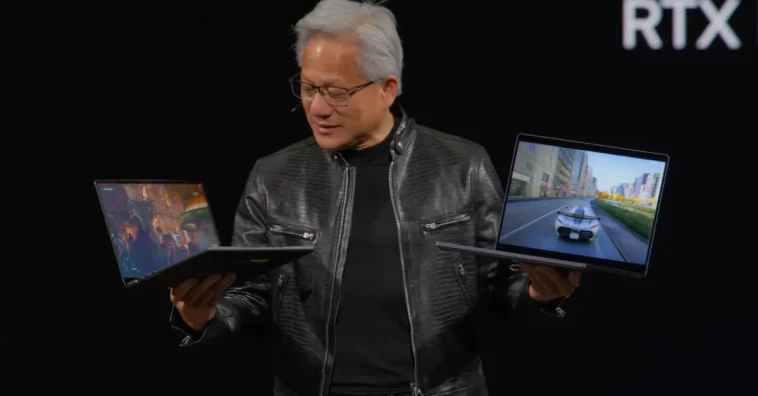
Nvidia’s RTX Spark: A Potentially Transformative, Yet Priced, Entry into Windows Laptops
Nvidia’s official foray into the consumer laptop chip market with its RTX Spark announcement represents a seismic shift for the Windows ecosystem. For years, Apple has demonstrated the remarkable efficiency and performance capabilities of ARM-based silicon in its Mac lineup, delivering exceptional power alongside stellar battery life. While Qualcomm has made commendable efforts in the Windows on ARM space, its chips have historically lagged in graphical prowess, leaving a significant void. Nvidia now steps in, promising to bridge this performance gap with its renowned GPU expertise.
This moment could herald a new dawn for Windows laptops, mirroring Apple’s groundbreaking M1 introduction in 2020. Yet, as we stand in 2026, the launch of RTX Spark elicits a complex blend of excitement for its raw potential and apprehension regarding its market strategy.
Unpacking the RTX Spark’s Powerhouse Specifications
The specifications of the Nvidia RTX Spark paint a picture of a truly formidable laptop chip. It boasts an impressive 20 CPU cores and a staggering 6,144 GPU CUDA cores, coupled with a massive 128GB of unified LPDDR5X memory. Nvidia claims its integrated graphics performance rivals that of a dedicated RTX 5070 Laptop GPU, though concrete benchmarks are still eagerly awaited. This “superchip” is essentially a miniaturized version of the GB10 chip found in Nvidia’s DGX Spark mini-PC, positioning it as a powerhouse designed for intensive workloads. Nvidia has proudly dubbed it “the most efficient PC chip ever built,” a sentiment echoed by Microsoft, which describes its Spark-equipped Surface Laptop Ultra as “the most powerful thing we’ve ever made.”
A New Horizon: AI and Creative Workflows
Unsurprisingly, Nvidia CEO Jensen Huang dedicated substantial keynote time to discussing AI and “CPUs for agents,” identifying this as a significant new growth driver for the company. The RTX Spark is poised to deliver robust local AI compute capabilities, allowing complex AI tasks to be processed directly on the device, enhancing privacy and responsiveness. This emphasis aligns perfectly with the burgeoning demand for AI-accelerated workflows in various professional sectors.
Beyond AI, the RTX Spark is squarely aimed at creative professionals. Strategic partnerships with companies like Adobe, which are already optimizing their flagship applications such as Photoshop and Premiere for the new architecture, underscore this focus. This move directly challenges Apple’s long-standing dominance in creative industries, offering Windows users a compelling alternative that promises both performance and efficiency for demanding creative tasks.
The High Stakes of Premium Pricing
The clear target in Nvidia’s crosshairs is Apple’s MacBook Pro line, specifically the high-end M5, M5 Pro, or M5 Max models. However, this ambition comes with an anticipated premium price tag. Initial RTX Spark laptops, including Microsoft’s Surface Laptop Ultra, Dell XPS 16, Asus ProArt P14 and P16, Lenovo Yoga Pro 9n, MSI Prestige N16 Flip AI Plus, and HP OmniBook Ultra and OmniBook X 14, are expected to start in the $2,000 to $2,500 range, with some more modest configurations of the OmniBook X being an exception.
Considering the 128GB of LPDDR5X memory, these high prices are not entirely unexpected. For comparison, AMD’s Strix Halo APU with similar memory configurations, like the Asus ROG Flow Z13, carries an MSRP of around $3,300, while the ProArt PX13 GoPro Edition is priced at $3,000. The Nvidia DGX Spark desktop, which houses the underlying GB10 chip, already costs approximately $4,700. Factoring in additional laptop components like a high-resolution display, keyboard, trackpad, and battery will inevitably push these consumer models even higher. While Nvidia indicates that lower RAM configurations will be available, the current “RAMageddon” trend has already driven up prices for even 16GB and 32GB memory options, further complicating affordability.
Learning from Apple’s M1 Moment: A Different Approach
Nvidia’s strategy notably diverges from Apple’s highly successful M1 launch. Apple initially introduced its M1 chip in more accessible machines like the Mac Mini, MacBook Air, and the entry-level MacBook Pro. This allowed a broader consumer base to experience the benefits of ARM-based performance and efficiency firsthand, generating significant momentum and incentivizing widespread developer adoption. Apple then scaled its offerings with the more powerful M1 Pro and M1 Max chips nearly a year later.
Nvidia, it appears, is attempting to skip directly to an “M1 Max” or even “M1 Ultra” moment, launching with top-tier, high-cost hardware. This high-end-first approach carries inherent risks, particularly in a market where consumer spending power is currently experiencing a downturn and computer component costs are on the rise. While a $599 MacBook Neo might have disrupted the industry, it remains to be seen if a $2,499 (or higher) RTX Spark laptop can achieve the same widespread impact.
A New Era of Competition for Windows Laptops
The arrival of RTX Spark ushers in an exciting era of choice for Windows laptop buyers, bringing the total number of viable chip architectures to four: Intel, AMD, Qualcomm, and now Nvidia. Each contender offers distinct advantages. AMD typically provides robust performance with acceptable battery life, while Qualcomm has prioritized exceptional battery longevity and standby times, albeit with historical limitations in graphics and gaming support. Intel has consistently offered a balanced option with full x86 compatibility.
Nvidia’s entry on the ARM front promises to deliver a compelling combination of strong battery life and significantly enhanced graphics performance. Furthermore, there’s a tangible opportunity for ARM-native gaming to close the gap with the broad compatibility enjoyed by x86 Windows gamers. The commitment from Microsoft and Nvidia to work with developers, including Riot Games for titles like Valorant and League of Legends, and broader support for anti-cheat solutions like Easy Anti-Cheat, BattlEye, and Denuvo, is a crucial step towards robust gaming on Windows on ARM.
While the prospect of increased competition and advanced features is undoubtedly positive for the industry and for consumers seeking specialized performance, the looming specter of elevated prices could prove to be a significant barrier to mainstream adoption. The RTX Spark is poised to redefine what’s possible in a Windows laptop, but its true impact will ultimately be measured not just by its raw power, but by its accessibility and the willingness of the market to embrace this new, premium frontier.
#TrendingNow #Innovation #FutureIsHere #TechTrends #DailyVlog #MotivationMonday #Inspiration #TravelGram #FitnessJourney #FoodieAdventures #LifeHacks #ViralContent
Artificial Intelligence, Generative AI, Cloud