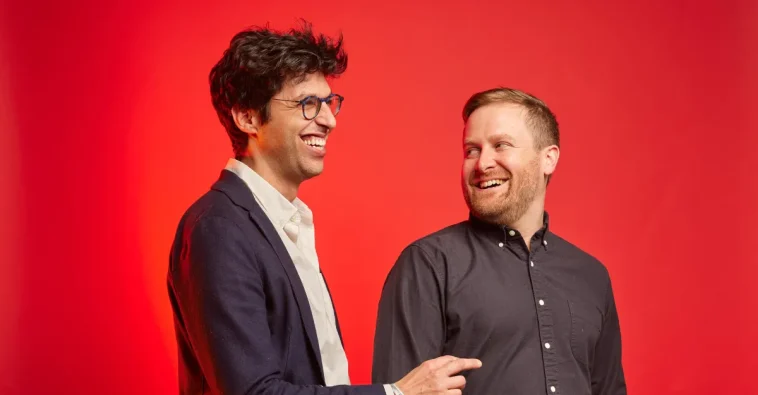
Switched on Pop Leaps to Video, Elevating Music Discourse with Unparalleled Insight
What began as a deep dive into the undeniable earworm that is Carly Rae Jepsen’s “Call Me Maybe” has blossomed into one of the most intellectually stimulating and genuinely engaging music podcasts available today. Switched on Pop, co-hosted by the brilliant minds of Nate Sloan and Charlie Harding, has spent over a decade meticulously deconstructing popular music, moving beyond casual listening to explore the intricate theoretical underpinnings and sophisticated production techniques that define modern hits. For anyone with a serious interest in the mechanics and cultural impact of pop music, this podcast has become an essential listen.
The podcast’s unique authority stems from the complementary expertise of its hosts. Nate Sloan, a distinguished composer and professor of musicology at the USC Thornton School of Music, brings a rich academic perspective, with research spanning pop, jazz, and even the historical nuances of Tin Pan Alley. Complementing this is Charlie Harding, an accomplished songwriter, music journalist, and fellow professor, who grounds the theoretical discussions in practical, industry-insider knowledge. Their combined knowledge is truly encyclopedic, allowing them to illuminate the rich tapestry of even the most deceptively simple songs—from dissecting the “text painting” in Justin Timberlake’s “Can’t Stop the Feeling!” to exploring the burgeoning realm of AI experiments in music, as exemplified by Taryn Southern. This rigorous yet accessible approach has set a new standard for music analysis in the digital age.
From Audio Waves to Visual Narratives
After an impressive 12-year run and nearly 500 episodes that have captivated a dedicated global audience, Switched on Pop has successfully made the significant leap to a video format on Netflix. This strategic expansion marks a pivotal moment, not just for the podcast, but for the evolving landscape of digital content consumption. The visual medium allows for an even deeper exploration of musical concepts, bringing theoretical discussions to life with on-screen demonstrations and guest interactions. The show’s move to Netflix speaks to the mainstream recognition of its intellectual depth and entertainment value, amplifying its reach and impact.
The video series features an impressive roster of guests, including influential figures like Aaron Dessner of The National, legendary producer Trevor Horn (The Buggles, Yes), and hip-hop icons Cypress Hill. This diverse guest list underscores the podcast’s broad appeal and its ability to bridge different musical genres and eras through a shared language of analysis. In candid discussions, Sloan and Harding have peeled back the curtain on their creative process and the tools they deem indispensable, offering insights into everything from the foundational importance of a metronome to the perhaps “problematic” allure of guitar pedals.
The Architects’ Toolkit: Analog, Digital, and Personal Tech
When discussing their most indispensable tools, the contrast between the hosts’ preferences highlights the multifaceted nature of modern music creation and analysis. Charlie Harding reveres his Martin D-28, calling it the “platonic idea” of a guitar, echoing its iconic status in hits like “Blackbird” and “Wish You Were Here.” This choice underscores the enduring power and timeless appeal of analog instruments in a rapidly digitizing world. Nate Sloan, conversely, champions Sibelius music notation software, emphasizing that true understanding of a song’s melody, harmony, and rhythm only comes through transcription. This reveals the critical role of advanced digital tools in academic and analytical dissection.
Beyond their primary instruments, the hosts shed light on their approaches to digital efficiency and inspiration. Harding points to keyboard shortcuts and the window management app Rectangle as underappreciated time-savers, transforming mundane tasks into something akin to “mission control” operations. This speaks volumes about the importance of streamlined workflows in creative professions. Sloan, ever the audio archivist, quickly installs AudioHijack on any new device, a testament to the essential need for high-quality audio capture in their analytical process.
Navigating the Digital Frontier: Productivity, Privacy, and Passion
Their interactions with personal technology also offer a fascinating glimpse into the modern creative’s struggle with digital overload. Harding expresses a “nitpicky” frustration with iOS focus modes, specifically how family group chats can override carefully constructed boundaries, humorously lamenting urgent notifications about his father’s fishing exploits. Sloan, more playfully, wishes his phone could be strummed like a guitar, blending his passion directly into the ubiquitous device. These anecdotes reflect a broader societal challenge: balancing constant connectivity with the need for focused work and personal space.
Their digital habits further diverge, with Harding maintaining 92 “nicely organized” tabs, while Sloan consciously limits himself to two to preserve his attention span. This illustrates the diverse strategies individuals employ to manage information overload. For their “happy place online,” Harding dives into Sweetwater, endlessly browsing guitar pedals — a clear indication of his passionate, if self-admittedly “problematic,” relationship with musical gear. Sloan finds solace in YouTube ukulele tutorials, demonstrating a lighter, more exploratory side to his musical curiosity. These personal digital havens underscore the importance of online spaces for both professional development and personal enjoyment.
Crafting Legacy in a Dynamic Soundscape
The hosts also voiced strong opinions on emerging tech trends, particularly AI in music. Harding emphatically wishes for the demise of “AI music slop,” highlighting a growing concern within the creative community regarding the integrity and authenticity of AI-generated content. This sentiment reflects a critical debate about the future of artistry in an era of rapidly advancing generative AI. Sloan’s pride in coining the term “pop drop”—describing the instrumental post-chorus in pop songs—showcases his impactful contribution to musicological discourse, demonstrating how their work shapes the language we use to understand music.
Their journey from a podcast examining pop perfection to a highly anticipated Netflix series exemplifies the power of dedicated, insightful analysis in an increasingly complex media landscape. Switched on Pop not only dissects the hits but also illuminates the broader cultural, technological, and artistic implications of music, solidifying its place as an authoritative voice in contemporary cultural commentary. As they continue to bridge academic rigor with engaging accessibility, Nate Sloan and Charlie Harding remain at the forefront of understanding how pop music resonates within and shapes our world.
#TrendingNow #DailyMotivation #TechInnovation #FitnessGoals #TravelAdventures #FoodieLife #FashionStyle #ArtLovers #LearnSomethingNew #Mindfulness #SustainableLiving #PositiveVibes
Artificial Intelligence, Cloud, Generative AI