InnovationWarrior.com
## Nvidia Ignites New Era for Windows PCs with RTX Spark
Nvidia, a titan increasingly synonymous with AI data center dominance, is making a formidable re-entry into the consumer PC market with its long-anticipated Arm-based chip, RTX Spark. After years of speculation and a previous foray into Windows RT that fizzled, this new “superchip” represents a significant strategic pivot, directly challenging established players and signaling a profound shift in the Windows ecosystem. The announcement, made during CEO Jensen Huang’s keynote at Computex 2026, positions RTX Spark as a cornerstone for “personal AI agents” and a reinvention of the PC itself.
## A Closer Look at RTX Spark’s Powerhouse Architecture
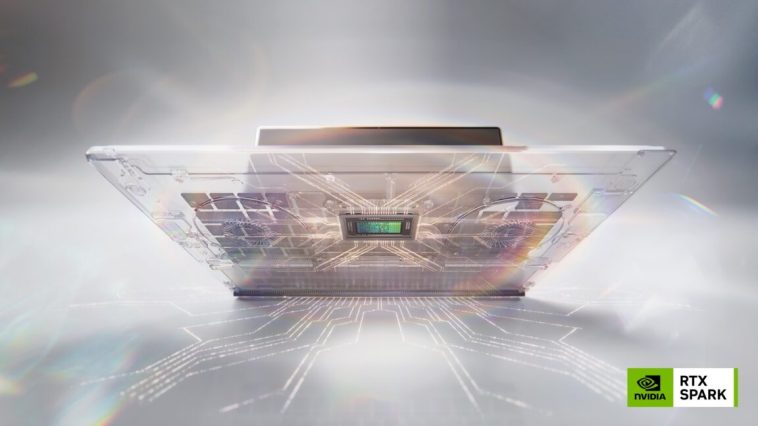
The RTX Spark is not merely a chip; it’s a comprehensive system-on-a-chip (SoC) designed for high-performance and power efficiency. It integrates a 20-core Nvidia Grace CPU, co-developed with MediaTek, alongside a robust Blackwell-based GPU featuring up to 6,144 cores. This powerful graphics engine mirrors the architecture of Nvidia’s cutting-edge RTX 50-series GPUs, promising top-tier gaming and content creation capabilities. Crucially, it boasts support for up to 128GB of unified LPDDR5x memory, allowing the CPU and GPU to share a massive, coherent pool of RAM. This unified memory architecture is a key differentiator, enabling on-device AI models with up to 120 billion parameters to run locally, a feat that would traditionally require substantial cloud resources.
The collaboration with MediaTek on the custom CPU design is particularly noteworthy, emphasizing a focus on power efficiency without compromising performance. The entire chip is fabricated on TSMC’s 3-nanometer manufacturing node, ensuring cutting-edge transistor density and efficiency. Nvidia claims this integration delivers an impressive 1 petaflop of AI compute, making it a compelling platform for the next generation of AI-accelerated applications and agentic workloads.
## Challenging the Windows on Arm Status Quo
Nvidia’s return marks a significant shake-up for the Windows on Arm landscape, which has largely been dominated by Qualcomm in recent years. While Qualcomm has made strides with its Snapdragon X series, Nvidia’s entry introduces a powerful new competitor with a deep heritage in graphics and AI acceleration. This move transforms Windows on Arm from a primarily Qualcomm-led initiative into a multi-vendor contest, creating a more robust and diverse platform.
The timing is strategic, coinciding with Microsoft’s intensified push for AI-centric “Copilot+ PCs.” The RTX Spark’s formidable AI capabilities, including dedicated Tensor Cores and FP4 precision, position it as a strong contender for meeting and exceeding the requirements for these next-generation AI experiences. Microsoft has actively collaborated with Nvidia on optimizing Windows 11 and its workload scheduling for RTX Spark, indicating a deep partnership aimed at maximizing performance and efficiency.
## Nvidia’s Broader Ecosystem Play
This isn’t just about selling chips; it’s about extending Nvidia’s formidable AI ecosystem directly to the consumer. The RTX Spark is heavily influenced by Nvidia’s enterprise-grade DGX Spark platform, adapting its supercomputing-level hardware for a mainstream audience. By bringing Blackwell architecture, CUDA, RTX, and Nvidia’s entire AI software stack to Windows PCs, the company is enabling local AI agents, advanced creative workflows, and high-fidelity gaming on a new class of device.
For developers, this offers a powerful new target. Nvidia is actively engaging with ISVs and game developers to foster native Arm versions of applications, while Microsoft’s robust Prism emulator will ensure compatibility for existing x86-64 applications. This dual approach aims to accelerate the transition to a more efficient, Arm-native software ecosystem for Windows.
## Future Outlook and Market Impact
The first RTX Spark-powered “slim Windows laptops with all-day battery life and premium displays” and “compact desktop PCs” are slated to arrive this fall. Major OEM partners including Asus, Dell, HP, Lenovo, Microsoft (Surface brand), MSI, Acer, and Gigabyte are lined up to launch devices, signaling widespread industry adoption. While specific pricing details are yet to be announced, industry insiders anticipate these will target the premium segment of the market.
Nvidia’s entry intensifies competition not just with Qualcomm, but also with Intel and AMD, whose x86 dominance in the PC market is now under renewed pressure. This move could reshape the competitive landscape, pushing all players to innovate further in power efficiency, integrated graphics, and on-device AI capabilities. The promise of “personal AI supercomputers” in every home, capable of running autonomous AI agents, paints a compelling vision for the future of personal computing, where the PC becomes more of an intelligent teammate than a mere tool.
#TrendingNow #ExplorePage #ViralContent #InstaGood #MotivationMonday #TechGadgets #FitnessGoals #TravelAdventures #FoodieLife #FashionInspo #DailyInspiration #ArtisticVibes
Artificial Intelligence, Cloud, Cybersecurity