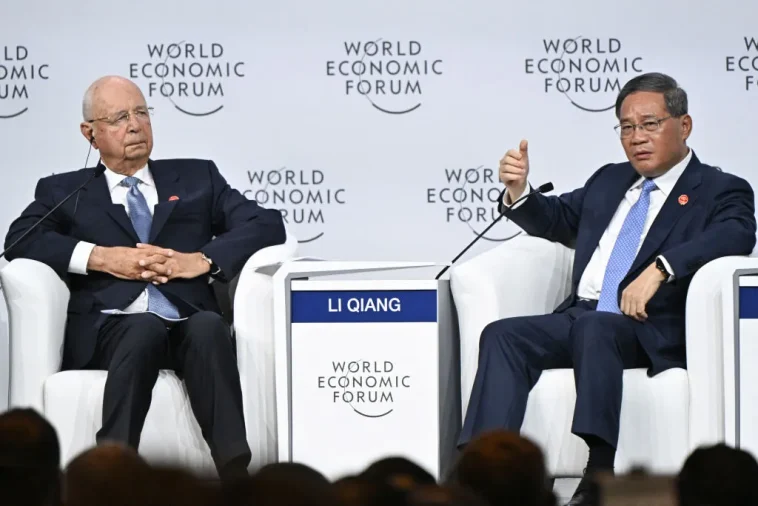
Decoding China: Beyond the Data at Summer Davos
As the global spotlight converges on Dalian for Summer Davos, with its compelling theme of “Innovating at Scale,” discussions will inevitably pivot to the transformative powers of artificial intelligence, the imperatives of energy transition, the intricacies of global supply chains, and the evolving contours of China’s economic landscape. These are indeed crucial dialogues, shaping the future of global commerce and technology. Yet, beneath these pressing agendas lies a more fundamental, often overlooked, challenge: why do Western enterprises, investors, and analysts frequently misinterpret China, even after decades of intense engagement?
The persistent misreading isn’t typically born from a scarcity of information. Western boardrooms are routinely inundated with comprehensive market reports, sophisticated risk assessments, and detailed regulatory briefings. The true chasm lies in interpretation. China is too often perceived through a dichotomous lens: either an opportunity too vast to disregard or a risk too complex to navigate. Both perspectives, while containing elements of truth, tend to oversimplify a richly textured reality. China is far more than a singular “market” awaiting a universal key; it is a context-rich business environment where nuanced factors like language, established relationships, hierarchical structures, mutual trust, precise timing, and the intricate concept of “face” profoundly dictate commercial success.
In the realm of intercultural communication, it becomes evident that engaging with China transcends mere linguistic exchange. Language itself serves as a conduit for deeply embedded cultural values, distinct thought processes, and unspoken social expectations. My research underscores politeness not as a superficial social grace but as a sophisticated mechanism for managing respect, cultivating relationships, and defining responsibilities. These might appear as ‘soft’ concepts, yet in the dynamic Chinese business sphere, they frequently serve as the decisive arbiters of a market-entry strategy’s ultimate triumph or failure. Three critical dimensions demand particular attention: branding, negotiation, and leadership.
Branding: Beyond Literal Translation, Towards Cultural Resonance
For many years, a prevailing assumption guided Western brands entering China: foreign origin inherently conferred prestige. This belief held some validity, particularly within sectors like luxury goods, education, high-end automobiles, and certain consumer products, where Western brands benefited from associations with superior quality, elevated status, and a cosmopolitan identity. However, numerous companies mistook this historical advantage for an immutable, permanent fixture in the market.
Today’s Chinese consumers are markedly more digitally astute, increasingly value-conscious, and possess a burgeoning cultural self-assurance. The ascendance of formidable local brands is frequently, and somewhat reductively, attributed to nationalism in Western analyses. While national sentiment can certainly play a role, reducing this phenomenon solely to patriotism overlooks a profound underlying shift: consumers are now rigorously evaluating whether a brand genuinely comprehends their daily lives, their preferred digital platforms, their unique sense of humor, cultural rituals, and core aspirations. This discerning approach demands an authentic cultural immersion, moving beyond superficial adaptations.
Starbucks provides an illuminating case study. The coffee giant was instrumental in cultivating a nascent coffee culture in China, yet the competitive landscape surrounding it transformed dramatically. Local rivals, such as Luckin Coffee and Cotti Coffee, innovated by building consumption habits around unparalleled convenience, efficient delivery, compelling digital coupons, and a focus on everyday affordability. Starbucks, once an unequivocal symbol of aspirational international lifestyle, has been compelled to fundamentally reimagine its brand proposition, particularly in smaller cities and within an increasingly price-sensitive market. Its strategic partnership in China with Boyu Capital, framed by the company as a catalyst for “hyper-localization,” should not be misconstrued as a retreat. Instead, it represents a crucial acknowledgment that brand equity in China is not static; it must be perpetually renegotiated and re-earned through deep, authentic engagement with local culture.
The enduring misunderstanding stems from the erroneous belief that a brand’s globally established meaning can simply be translated into Chinese. This is a fallacy. Meaning must be painstakingly earned within its specific cultural context. In China, that context is a rich tapestry woven with family expectations, intense social comparison, pervasive platform-driven behaviors, intricate gifting norms, significant regional variations, and, crucially, mianzi – often superficially translated as “face.” Western managers frequently misconstrue mianzi as mere vanity or public image. In the intricate world of Chinese business, however, it is far closer to social credibility, respect, and dignity. A brand that successfully grants consumers face today may no longer be the most overtly foreign or luxurious; it is increasingly the one that empowers them to appear discerning, pragmatic, culturally fluent, and socially aware.
Negotiation: The Deal as a Milestone, Not the Destination of Relationship
The second pervasive misunderstanding pertains to the art of negotiation. Western business culture often conceives of negotiation as a largely linear process: meticulous preparation, formal meetings, direct bargaining, precise documentation, and swift execution. In China, while a signed agreement holds undeniable importance, its social and relational meaning often differs significantly. The relationship, crucially, does not conclude when the contract is inked; rather, the contract frequently serves to formalize an ongoing relationship that demands continuous cultivation and maintenance.
This fundamental divergence can be a significant source of frustration for both parties. Western negotiators might interpret indirect communication as evasiveness, silence as a sign of weakness, or requests for additional meetings as deliberate delays. Conversely, Chinese counterparts may perceive Western directness as impatience, a lack of appropriate respect, or a dearth of genuine commitment. Both sides, operating under disparate expectations regarding how trust is genuinely forged and sustained, might erroneously conclude that the other is behaving unreasonably. The reality is often a clash of deeply ingrained cultural norms.
Tesla’s protracted journey to deploy its more advanced driver-assistance features in China vividly illustrates this point. From a distance, Western commentary frequently simplifies such scenarios to market-access politics: China is either perceived as deliberately obstructing a foreign competitor or overtly favoring domestic champions. While geopolitical dynamics certainly form part of the broader environment, such explanations are inherently incomplete. In Tesla’s specific context, factors such as stringent data localization requirements, complex regulatory approvals, intricate mapping regulations, evolving over-the-air software update protocols, and the necessity of deep cooperation with local technology partners have all played pivotal roles. The negotiation, in such an environment, extends far beyond mere customer engagement or even direct dialogue with a single government ministry; it encompasses an entire ecosystem predicated on trust, national data sovereignty, and profound public responsibility.
Here, the strategic application of politeness becomes paramount. Politeness within the Chinese context is not merely about uttering agreeable statements or avoiding offense. It is a sophisticated undertaking focused on preserving dignity, providing ample space for contemplation, adeptly interpreting implicit meanings, and meticulously avoiding unnecessary public confrontation. A Western executive who adamantly demands a swift, unequivocal “yes” or “no” answer may believe they are fostering clarity, but they might inadvertently be instigating deep embarrassment or discomfort. The more insightful question to pose is not, “Why won’t they be direct?” but rather, “What crucial information has not yet been rendered sufficiently safe or comfortable to be communicated directly?” This shift in perspective is key to unlocking deeper understanding and facilitating more productive outcomes.
Leadership: China as an Innovation Hub, Not Merely an Execution Arm
The third widespread misunderstanding concerns the very nature of leadership in a globalized context. For many decades, numerous Western multinational corporations viewed China primarily as an efficient manufacturing base, a burgeoning growth market, or a challenging arena for local adaptation. Strategic directives were typically formulated at headquarters, with China’s role largely confined to rapid and efficient execution. This operational model has, increasingly, become obsolete and inadequate for the current landscape.
Summer Davos serves as a potent reminder that China is not solely a market, but a vibrant and increasingly dominant source of innovation at unprecedented scale. In critical sectors such as electric vehicles, advanced battery technology, ubiquitous mobile payments, dynamic social commerce, sophisticated logistics, and cutting-edge digital services, Chinese companies are not merely adapting global models; they are actively pioneering and shaping new business paradigms that are now being meticulously studied and emulated worldwide. This paradigm shift demands a re-evaluation of where genuine leadership and strategic insight reside.
Volkswagen’s landmark partnership with XPeng is a powerful illustration of this evolving dynamic. The German automotive giant’s articulated “In China, for China” strategy transcends mere localized marketing efforts. It represents a profound acknowledgment that product development, intricate software architecture, and rapidly evolving consumer expectations within China necessitate embedding deep local knowledge at the absolute core of decision-making processes. When a globally recognized automotive group collaborates with a leading Chinese EV company to co-develop vehicles and electronic architectures specifically for the Chinese market, it is an unequivocal admission that global leadership can no longer be predicated on exporting assumptions and strategies conceived solely in Wolfsburg, Detroit, or London. Instead, it signifies a pivot towards collaborative innovation, where local expertise informs and drives global strategy.
This new reality mandates a distinctly different leadership posture: one characterized by humility without succumbing to naivety. Cultural intelligence is not synonymous with simply acquiescing to every demand emanating from a specific market. Rather, it signifies possessing a sufficiently profound understanding of the prevailing system to enable the making of truly informed and wise strategic choices. The most effective leaders in this complex environment do not romanticize China, nor do they resort to simplistic caricatures. They possess the nuanced capacity to simultaneously embrace and navigate contradictions: recognizing China as both an extraordinary ecosystem for innovation and a challenging regulatory environment; a colossal consumer opportunity alongside a significant geopolitical risk; and a market that is both familiar in its commercial ambition and profoundly unfamiliar in its communicative norms.
I often reflect on the traditional Chinese character 聽 (tīng), meaning “to listen.” This character serves as a powerful reminder that true listening transcends the auditory. It inherently demands comprehensive attention, an open mind, and genuine empathy from the heart. This holistic discipline is an invaluable asset for Western companies operating in China. Far too many listen primarily for confirmations of their pre-existing beliefs: that China is becoming insular, that consumers are increasingly nationalistic, that local partners are inherently difficult, or that regulation is inherently arbitrary. While these concerns occasionally contain elements of truth, they rarely, if ever, represent the complete picture.
As global leaders gather at Summer Davos to deliberate on innovation, economic growth, and China’s forthcoming trajectory, it is imperative to remember that “scale” is not solely a technological or economic metric. Understanding itself must also scale exponentially. Cultural intelligence should never be relegated to the China country office as a mere tactical execution after global strategy has been finalized. Instead, it must be intrinsically woven into the fabric of brand strategy formulation, the meticulous design of negotiation frameworks, and the comprehensive development of leadership capabilities from the very outset.
The West does not need to diminish its critical scrutiny of China. Instead, it desperately needs to move beyond simplistic narratives and embrace a far more sophisticated, nuanced understanding. The enterprises poised for enduring success are not those that perceive cultural difference as an obstacle to be overcome, but rather as invaluable information to be deeply understood and strategically leveraged. In the intricate tapestry of China’s business landscape, misunderstanding exacts a prohibitive cost. Therefore, profound and empathetic listening emerges as a powerful, undeniable competitive advantage.
#TrendingNow #ViralContent #ExplorePage #ForYou #InstaDaily #Motivation #Inspiration #SuccessMindset #DigitalMarketing #SocialMediaTips #LifeHacks #Creativity
Artificial Intelligence, Generative AI, Cybersecurity