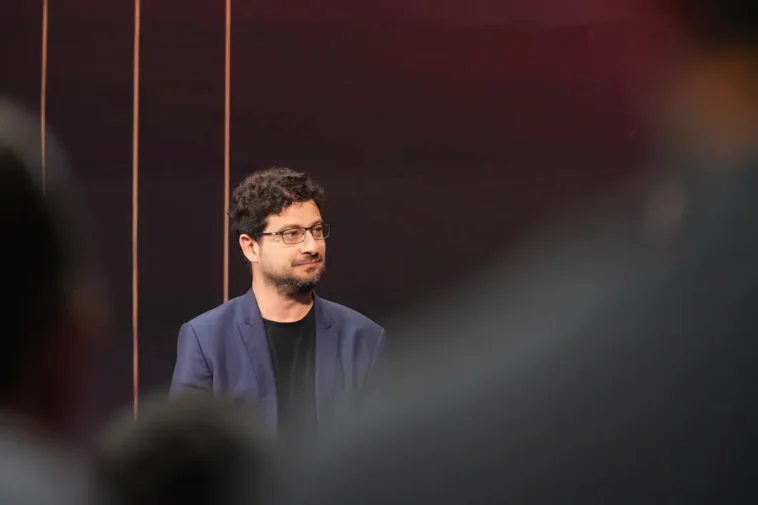
Kyber’s Real-Time Infrastructure Set to Revolutionize the Age of Physical AI
For decades, VLC Media Player, with its iconic orange traffic cone, has been a ubiquitous fixture on our digital desktops, downloaded over 6 billion times. Now, its lead developer, Jean-Baptiste Kempf, is channeling his open-source genius into a far more ambitious vision: an infrastructure layer designed to underpin the coming explosion of physical AI and remote robotics. Kempf posits that “hundreds of millions of robots and drones” will soon populate our streets, and his latest venture, Kyber, aims to be the essential nervous system enabling their widespread operation.
Powering the Next Generation of Autonomous Systems
Kyber, a Paris-based startup, is building a critical infrastructure layer for controlling remote devices in real time. At its heart is an advanced Software Development Kit (SDK) meticulously crafted to synchronize video, audio, sensor data, and control inputs with unparalleled, minimal latency. This technological foundation addresses a core challenge: bringing the operator, the computational power, and the physical action into seamless alignment, regardless of their geographical separation.
The timing of Kyber’s emergence aligns perfectly with the accelerating rise of physical AI. This synergy wasn’t lost on investors, as evidenced by Kyber’s successful $5 million funding round led by Lightspeed Venture Partners, a firm with a notable track record in AI, having also backed industry leaders like Anthropic and Mistral AI. As Lightspeed articulated in their investment announcement, “Physical AI is only as good as the underlying systems running it,” underscoring the strategic importance of robust, low-latency infrastructure for real-world AI deployment.
Bridging the Distance: Latency as a Critical Factor
While deeply integrated with the future of AI, Kyber’s potential applications extend far beyond. Kempf emphasizes that the platform is engineered for “all the use cases where the person who’s operating is not in the same place as the compute, which is not in the same place as the action.” This encompasses a vast array of scenarios, from controlling industrial robots in hazardous environments to managing complex drone fleets for logistics and surveillance.
The foundational principle driving Kyber is speed, a concept so central it inspired the company’s name, a nod to the energy-rich Kyber crystals that power lightsabers in Star Wars. Kempf articulates this philosophy succinctly: “If you control things in the real world, every millisecond matters.” This focus on eliminating lag is not merely about convenience; it’s about ensuring safety, precision, and efficiency in environments where even tiny delays can have significant consequences. The pursuit of ultra-low latency is paramount for true real-time interaction and autonomous operation.
From Streaming to Scalable IoT: Kyber’s Technical Edge
Kyber’s technical prowess in minimizing latency is deeply rooted in video-streaming technology, a natural progression given Kempf’s prior role as CTO at cloud gaming startup Shadow and his extensive work on VLC. This heritage provides a distinct advantage in handling high-bandwidth visual data streams. However, equally vital is the company’s profound expertise in IoT optimization, ensuring performance is finely tuned to each device’s available compute resources and scaled efficiently across vast networks. This dual focus on streaming and IoT is the cornerstone of Kyber’s ability to deliver robust, scalable remote control.
The challenge of managing large-scale autonomous fleets is immense. Kempf notes that even the largest existing remote-driving operations typically manage only a few thousand vehicles. Kyber is designed to handle a monumental leap to millions of devices, a scale that introduces entirely new complexities in network architecture, data processing, and command execution. This exponential increase also dramatically elevates the stakes for observability—the ability to monitor, understand, and ensure systems are functioning correctly, especially as AI agents increasingly take over fleet management. Beyond complex autonomous systems, the platform also offers immediate benefits, such as facilitating seamless over-the-air software updates for distributed devices, eliminating the need for costly and time-consuming physical interventions.
An Open-Source Philosophy Meets Enterprise Demands
True to Kempf’s open-source ethos, the core Kyber project remains open source, fostering community adoption and innovation. Concurrently, the company offers a robust, productized version tailored for enterprise customers, balancing accessibility with commercial viability. Beyond software, Kyber adopts a strategy similar to firms like Palantir, providing hands-on, custom deployments through its forward-deployed engineers (FDEs). These specialized engineers are integral to tailoring Kyber’s powerful platform to the unique operational requirements of diverse clients.
Kyber’s global ambitions are reflected in its team of 25 full-time staffers, headquartered in Paris with additional offices in San Francisco and Singapore. This strategic global presence is designed to support a diverse international client base across critical sectors. The company is already engaging in commercial deployments with customers spanning defense, telecommunications, robotics, and advanced AI development, demonstrating its versatile applicability across high-stakes industries.
Targeted Impact: Robotics, Drones, and Next-Gen Remote IT
To maximize its impact, Kyber is initially prioritizing three key segments: robotics, drones of all types, and remote IT access. In the rapidly expanding fields of robotics and drones, Kyber’s low-latency infrastructure is a game-changer for applications ranging from industrial automation and logistics to advanced surveillance and infrastructure inspection. These sectors are poised for explosive growth, and Kyber aims to be the foundational technology enabling their widespread deployment and efficient operation.
The remote IT access segment, while perhaps less glamorous, presents a particularly strong demand for Kyber’s capabilities. Kempf envisions Kyber as far more than just a challenger to established remote desktop solutions like Citrix, aiming to unlock a far larger total addressable market. The company’s career page highlights a core motivation: “The companies that tried to solve it spent years and tens of millions building custom solutions they’ll never share. We’re building the version everyone else can use.” This mission underscores Kyber’s commitment to democratizing advanced remote control, providing a universally accessible and powerful solution that can accelerate innovation and efficiency across countless industries previously constrained by proprietary, costly, or inadequate systems.
#TrendingNow #ExplorePage #ViralContent #InstaGood #LoveIt #DailyVibes #MustSee #FashionForward #TechLife #FoodieAdventures #TravelGram #FitFam
Artificial Intelligence, Cloud, Cybersecurity