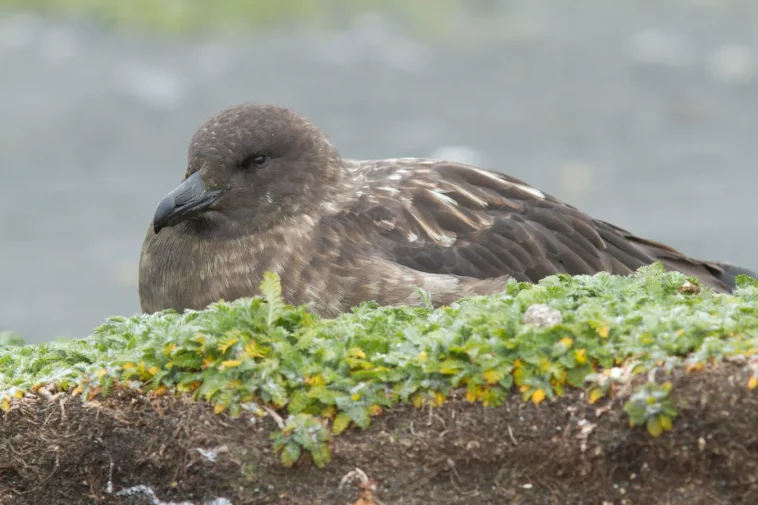
Australia’s Biosecurity Breached: H5N1 Arrives from the South
Perth, Western Australia – A grim milestone has been reached on Australia’s pristine shores, as a dying brown skua discovered in a remote stretch of the Western Australian coastline has confirmed the arrival of the highly pathogenic H5N1 avian influenza, specifically the devastating clade 2.3.4.4b. This marks the first confirmed detection of this global animal pathogen on the Australian continent, a moment years of stringent biosecurity measures had sought to avert. The confirmation on June 20 signals the end of Australia’s status as the last major landmass free from this most destructive lineage of bird flu.
This particular strain of H5N1 has wreaked havoc across avian and mammalian populations on every other continent, causing unprecedented mortality events. Unlike previous concerns that focused on migratory bird flyways from Asia, this viral incursion came from an unexpected vector: the subantarctic, carried by seabirds traveling north from Antarctica. These birds had tragically contracted the virus on southern islands, where it has already decimated thousands of seals.
The infected skua was found at Cape Le Grand National Park near Esperance, approximately 700 kilometers southeast of Perth. Confirmation was provided by CSIRO’s Australian Centre for Disease Preparedness. Preliminary results also suggest a southern giant petrel found in the same region is positive, pending confirmatory testing. While authorities report no current detections in poultry or other species, and Australia retains its international poultry disease-free status for now, the implications for the nation’s unique wildlife and agricultural industries are profound.
Australia is no stranger to avian influenza, having battled other strains in the past. The country spent much of 2024 combating bird flu, primarily the H7 subtype, within its poultry sector, experiencing 16 highly pathogenic outbreaks—a significant increase compared to just seven in the preceding four decades. These efforts resulted in the culling of approximately 1.8 million birds. Additionally, 2024 saw Australia’s first human H5N1 case, though it was linked to an infection acquired in India, not the 2.3.4.4b clade now present. This latest development, however, marks the panzootic 2.3.4.4b’s undeniable arrival on Australian soil.
The Unforeseen Southern Invasion
For years, Australia’s biosecurity strategists meticulously monitored northern migratory flyways, anticipating H5N1’s entry via ducks and waterfowl from Asia—the primary natural reservoirs for avian influenza. However, Australia’s unique ecological separation, where its reservoir hosts do not typically intermingle with those of Asia or Antarctica, offered a fragile shield.
The virus circumvented these long-held assumptions, taking a circuitous southern route that began to be documented in October 2023. It reached the Antarctic region via a brown skua at South Georgia, carried down from the tip of South America. From there, it leapfrogged thousands of kilometers across the Southern Ocean, spreading from island to island. This eastward progression saw seabirds like skuas, gulls, and giant petrels, known for their vast oceanic movements, acting as the primary carriers.
By late 2025, the virus had reached Australia’s subantarctic Heard Island, an Australian territory roughly 4,000 km southwest of Perth, where it tragically claimed an estimated 13,000 elephant seal pups, representing a staggering 77% mortality rate among counted pups. The subsequent crossing to the mainland underscores the relentless and adaptable nature of this pathogen. The persistence of the virus in cold, aquatic environments characteristic of sub-Antarctic regions likely facilitates its transmission, making these remote areas potential long-term environmental reservoirs.
The Critical Threat: From Seabirds to Waterfowl
While the dead skua confirms the virus’s presence, the real concern lies in its potential establishment within Australia’s freshwater duck populations. Skuas and petrels, as scavengers, are effective sentinels for detecting the virus, but their role in seeding widespread outbreaks across a continent is limited. The true “game-changer,” as experts warn, would be the virus becoming endemic in ducks. “Once in ducks, the likely spread of the virus increases dramatically, and the outlook would be grim,” stated researchers Marcel Klaassen, Meagan Dewar, and Michelle Wille.
The grim prognosis stems from the immunological naivety of Australian wildlife and farmed flocks. The H5N1 2.3.4.4b clade is notoriously virulent in populations with no prior exposure. Overseas, it has annihilated up to 47% of some northern gannet colonies, decimated South American sea lions and elephant seals, and ravaged seabird cliffs across the North Atlantic. Australia’s unique and often range-restricted endemic fauna faces an existential threat, with species having nowhere else to retreat. Conservationists warn of potentially catastrophic declines and even extinctions for vulnerable species.
The economic ramifications for Australia’s poultry industry are equally severe. This same H5N1 strain has triggered record culls and driven up egg prices dramatically across North America and Europe, costing American consumers billions of dollars and resulting in the loss of millions of farm birds. Australia’s flocks, currently without immunity, face a similar prospect of widespread infection and mandatory depopulation measures, threatening livelihoods and national food security. Robust biosecurity protocols and rapid response capabilities will be crucial to mitigate these impacts.
Interconnected Risks: Wildlife, Livestock, and Human Health
The arrival of the H5N1 clade 2.3.4.4b in Australia starkly highlights the “One Health” paradigm, where the health of wildlife, livestock, and humans are inextricably linked. This virus transcends traditional boundaries, posing a multi-faceted threat that demands an integrated approach.
The wild bird reservoir represents an uncontrollable variable. While poultry barns can be depopulated and disinfected, migratory flyways cannot be managed in the same way. Australia’s poultry industry must now contend with an enduring risk of incursions from wild birds, while conservation managers face the daunting task of tracking and responding to inevitable die-offs in native species, with limited preventative options.
The direct human risk remains low for now, with no evidence of sustained human-to-human transmission globally. However, the ongoing concern stems from the virus’s ability to adapt to mammalian hosts. Each infection and subsequent death in mammals, such as seals and sea lions, presents another opportunity for the virus to mutate and potentially acquire adaptations that could facilitate human-to-human spread. Monitoring these mammalian spillover events is critical, as they represent the pathway by which an animal disease could evolve into a human pandemic.
Australia held out longer than any other continent against a virus that has spent half a decade proving its ability to infect a vast range of species across diverse environments. The critical question now is no longer if it is present, but how effectively Australia can protect its irreplaceable wildlife and robust agricultural sector from its devastating reach, and how quickly it can adapt its biosecurity and public health strategies to this persistent new threat. The long-term ecological and economic consequences of this viral breach will unfold in the years to come.
#TrendingNow #ExplorePage #ViralContent #InstaDaily #Motivation #GoodVibes #Inspiration #TravelGram #FitnessJourney #FoodieAdventures #TechTrends #LifeHacks
Artificial Intelligence, Generative AI, Cloud