## Redefining Martian Mobility: NASA’s Ernest Rover Promises a New Era of Exploration
For decades, NASA’s intrepid Mars rovers have captivated the world, meticulously traversing the red planet’s enigmatic surface and delivering groundbreaking scientific insights. From the pioneering Sojourner to the sophisticated Perseverance, these robotic explorers have pushed the boundaries of remote exploration. Yet, even the most advanced contemporary rovers face inherent limitations, particularly concerning speed, agility, and the daunting challenges posed by Mars’ unforgiving and varied terrain.
Current operational rovers, while marvels of engineering, are remarkably slow. Perseverance, considered a standout in the fleet, achieves a top speed of less than 0.1 mph on flat ground, making extensive expeditions a prolonged endeavor. Furthermore, the arduous Martian landscape takes a significant toll on their wheels, and navigating steep slopes or hazardous rocky and sandy stretches often necessitates lengthy, time-consuming detours. These constraints restrict the scope and efficiency of scientific missions, forcing difficult choices about where and how to explore.
## Introducing Ernest: A Paradigm Shift in Planetary Mobility
However, the future of planetary exploration is poised for a significant leap forward. NASA recently unveiled its progress on a revolutionary prototype designed to overcome these very limitations: the Exploration Rover for Navigating Extreme Sloped Terrain, aptly named Ernest. This innovative vehicle represents a fundamental re-imagining of rover design, promising unprecedented mobility and autonomy for future missions to both Mars and the Moon.
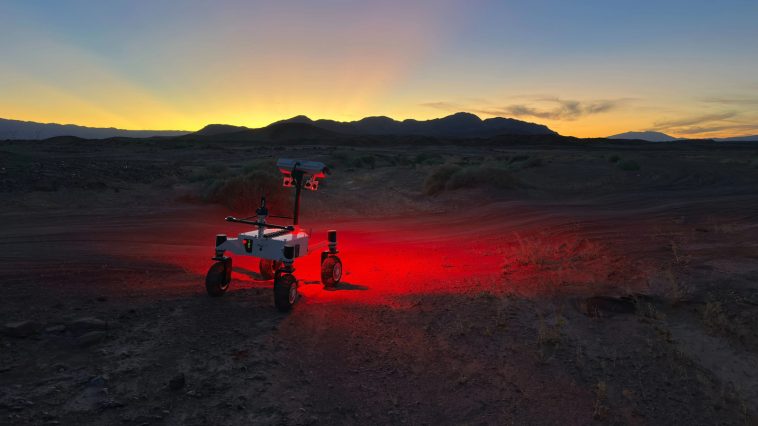
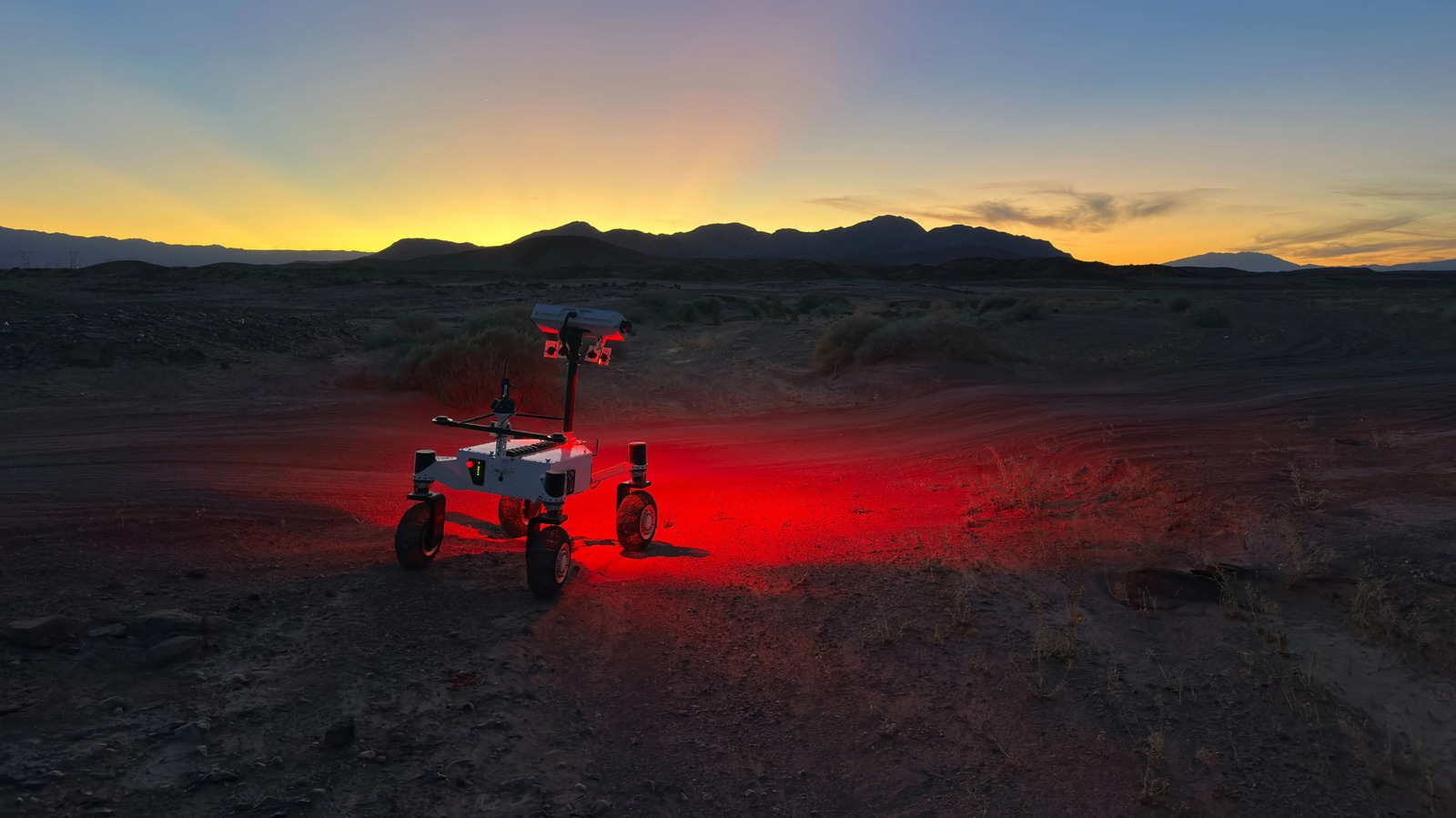
Ernest marks a notable departure from the six-wheeled architecture seen in current Mars rovers, featuring a more agile four-wheel configuration. While the prototype measures four feet in length, a mission-ready version is envisioned to be double that size, capable of carrying a larger suite of scientific instruments and payloads. Its defining feature is the ability to individually lift and articulate its wheels, allowing it to actively step onto or over formidable obstacles, a capability far exceeding the passive suspension systems of its predecessors.
## Revolutionary Suspension and Advanced Maneuvering
The shift from a passive rocker-bogie suspension system, which has been a staple since the Sojourner rover, to an active suspension system is central to Ernest’s enhanced capabilities. Engineers have integrated two powered joints in the front, articulating a gimbal that empowers the rover to employ a variety of unique gaits. These include “squirming” through tight spots, “wheel-walking” over uneven ground, and adeptly “obstacle-climbing” with precise control. This dynamic flexibility allows Ernest to adapt its movement to the specific challenges of the terrain.
Crucially, Ernest can seamlessly switch between active and passive suspension modes, optimizing energy consumption based on the task at hand. Its four steerable wheels further augment its maneuverability, enabling it to drive in any direction. This omnidirectional capability dramatically increases its operational efficiency and opens up pathways previously deemed inaccessible, offering a significant advantage in navigating complex geological features.
## Enhanced Autonomy and Decision-Making
Beyond its mechanical innovations, Ernest incorporates enhanced independent decision-making capabilities. This represents a critical evolution towards greater autonomy, reducing the reliance on constant human intervention from Earth-based controllers. For missions operating millions of miles away, where communication delays can stretch into many minutes, this advanced intelligence allows the rover to make real-time decisions, adapt to unforeseen obstacles, and optimize its exploration path without awaiting instruction. This capability not only accelerates discovery but also enhances mission safety and robustness.
Since the program’s inception in 2022, multiple iterations of the Ernest prototype have undergone rigorous development and testing. The team has explored nearly a dozen active suspension configurations, meticulously refining the design to achieve optimal performance. The overarching goal is clear: to develop a generation of rovers that can cover significantly more ground than their predecessors, at greater speeds, and with a substantially reduced reliance on human piloting.
## Promising Field Tests and Future Implications
Recent field tests in the challenging Colorado Desert have showcased Ernest’s potential, providing crucial data on its performance in environments analogous to extraterrestrial landscapes. Over seven days, the prototype demonstrated remarkable endurance, driving for a total of over 37 hours and covering approximately 16 miles. It achieved an impressive top speed of about 0.6 mph, a considerable improvement over current operational rovers. These results affirm the viability of its advanced mobility systems and autonomous functions.
As James Keane, a JPL planetary scientist involved in lunar missions, eloquently put it, “You could do a science road trip across the Moon — or Mars — with this vehicle.” This vision encapsulates the transformative potential of Ernest. Such a rover could dramatically expand the scope of scientific exploration, allowing for more extensive geological surveys, faster access to sites of high scientific interest, and detailed investigation of previously unreachable regions like deep craters or steep canyon walls. Ultimately, Ernest is not just a faster rover; it is a precursor to a new era of proactive and expansive robotic exploration, paving the way for both deeper scientific understanding and potentially, future human missions.
#TechTrends #AIRevolution #FutureIsNow #InnovationDaily #DigitalLife #Web3World #GamingCommunity #SpaceExploration #EcoFriendly #HealthAndWellness #ArtificalIntelligence #CreativeContent
Artificial Intelligence, Cloud, Cybersecurity