The “RAMageddon” Reality: Tech Prices Soar as AI Data Centers Dominate Component Supply
The tech industry is grappling with an unprecedented surge in hardware costs, a phenomenon being dubbed “RAMageddon.” This week alone has seen consumers facing significant sticker shock, with major players like Valve, Microsoft, Apple, and Xbox announcing substantial price hikes across their product lines. The root cause is a severe and persistent global shortage of memory (RAM) and storage (SSD) components, driven primarily by the insatiable demand from rapidly expanding AI data centers. This isn’t a temporary blip; it’s a structural shift that promises to redefine the landscape of consumer electronics pricing for years to come.
Valve’s Steam Machine Launch Reflects Harsh Realities
Valve kicked off the week by finally unveiling the pricing for its long-anticipated Steam Machine, a console-like PC designed to bridge the gap between desktop gaming and living room convenience. The base model, equipped with 512GB of storage, starts at a steep $1,049. This is nearly double the price of a six-year-old PlayStation 5, and it doesn’t even include a controller, which adds another $79. For those desiring the 2TB variant, an additional $300 will be tacked onto the cost.
Valve had previously cautioned that the ongoing component crisis would necessitate revised pricing, a sentiment echoed by Valve engineer Yazan Aldehayyat, who candidly wished the device could be “cheaper”. Insiders suggest the current pricing is roughly $250 to $300 higher than Valve’s initial projections, a direct consequence of soaring RAM and storage expenses, exacerbated by AI hyperscalers cornering the market. The company has even resorted to a randomized reservation system to combat scalping, with initial purchase invitations rolling out on June 29th. Early reviews highlight the Steam Machine’s innovative design but question its competitive edge against established consoles given its premium price point.
Microsoft’s Surface Strategy: Compromise for Affordability
Microsoft has also adjusted its strategy amidst the volatile component market, attempting to introduce more “affordable” options for its popular Surface devices. The company unveiled a 12-inch Surface Pro at $849 and a 13-inch Surface Laptop at $949. However, these lower price tags come with a notable compromise: a reduction in integrated RAM from 16GB to 8GB.
This move is particularly significant as previous base models of these devices had recently seen price increases, jumping to $1,049 for the Surface Pro and $1,199 for the Surface Laptop. Critically, this reduction to 8GB of RAM means these newly priced devices will not qualify for Microsoft’s coveted Copilot+ features, which demand a minimum of 16GB. While offering a more accessible entry point, these models also represent a step back in terms of performance potential and AI integration, raising questions about their long-term value for consumers. Meanwhile, the latest generation of Surface devices, featuring Snapdragon X2 chips and 16GB RAM, start at considerably higher prices, such as the 13-inch Surface Laptop at $1,599.
Apple Joins the Price Hike Wave
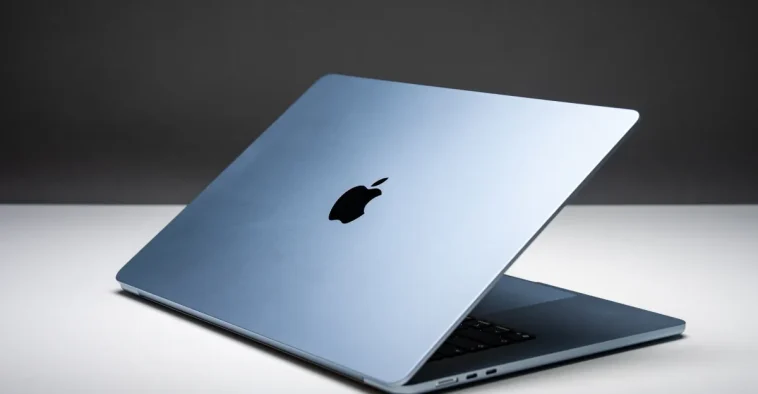
Even Apple, renowned for its formidable supply chain management and ability to control costs, has proven vulnerable to the market’s current dynamics. Just today, the Cupertino giant implemented widespread price increases across a significant portion of its hardware ecosystem, affecting MacBooks, iPads, HomePods, and even the Apple TV. For instance, the previously accessible MacBook Neo, once a compelling value at $599, now starts at $699.
In a statement provided to Bloomberg, Apple acknowledged that these adjustments were necessitated by component cost increases on a scale the company has “never seen”. This admission from a company known for its tight control over manufacturing and distribution underscores the severity of the global component crisis and its far-reaching implications, suggesting that virtually no consumer tech segment is immune. Interestingly, iPhone and Apple Watch prices remain unchanged for now.
Xbox Consoles See Steep Increases
Microsoft’s Xbox division also confirmed substantial price adjustments this week, with consoles seeing increases of $100 or more, effective August 1, 2026. The six-year-old Xbox Series S, for example, will now start at $499.99. The Xbox Series X will rise to $799.99, while the 2TB model is being discontinued entirely.
In an official blog post, Microsoft directly attributed these hikes to the ongoing component shortage, highlighting that console storage and memory prices have escalated by over 2.5 times and are projected to double again by the fall of 2027. This sustained inflationary pressure threatens the traditional console business model, where hardware is often sold at slim margins or even a loss, compensated by software and services. To help mitigate the impact, Microsoft is exploring options like “Buy Now, Pay Later” financing and promoting refurbished consoles.
The AI Data Center Imperative: A Market Reshaped
The underlying force driving these widespread price increases is the colossal expansion of AI data centers. Companies racing to build out the infrastructure for training sophisticated AI models and delivering AI-powered services are acquiring vast quantities of high-bandwidth memory (HBM) and high-capacity DDR5 RAM, as well as fast SSDs. This overwhelming demand has created a severe supply-demand imbalance, with memory manufacturers prioritizing these high-margin AI-related orders over consumer-grade components. As a Valve executive noted, failing to accept quoted prices from suppliers could mean being cut off entirely.
This dynamic means that individual consumers and traditional tech companies are now directly competing with hyperscalers willing to pay a premium for increasingly limited inventory. Industry analysts at Gartner project that surging memory costs will lead to a 10.4% decline in worldwide PC shipments and an 8.4% drop in smartphone shipments in 2026, compared to 2025 levels. They further predict that the sub-$500 entry-level PC market could effectively vanish by 2028, fundamentally altering device upgrade cycles as consumers hold onto hardware for longer. This component crunch is not merely a temporary market fluctuation but a foundational shift, signaling a future where advanced computing devices become inherently more expensive, driven by the relentless pursuit of AI innovation.
#TechGadgets #AIInnovation #FutureIsNow #GamingCommunity #DigitalMarketing #SocialMediaTips #TrendingNow #DailyMotivation #HealthAndWellness #TravelAdventures #FoodieLife #SustainableLiving
Artificial Intelligence, Cloud, Cybersecurity