Impulse Space Propels Forward with Half-Billion-Dollar Series D, Signaling New Era for In-Space Mobility
Impulse Space, the innovative aerospace startup founded by SpaceX propulsion maestro Tom Mueller, has announced a monumental $500 million Series D funding round. This significant capital injection underscores a burgeoning investor confidence in the critical domain of in-space mobility and positions Impulse Space to dramatically scale its operations, with plans to onboard up to 200 new employees. The substantial investment highlights a strategic pivot towards advanced space and defense technologies, fueled by escalating U.S. government spending on national security initiatives and the impending public offering of industry titan SpaceX.
The Strategic Imperative of In-Space Mobility
This landmark funding round, led by 137 Ventures and BANNER VC, with crucial participation from Founders Fund, Lux Capital, and Linse Capital, reflects more than just financial interest; it signifies a recognition of in-space mobility as a cornerstone for future space operations. The ability to precisely maneuver spacecraft, alter orbits, and service assets in the vastness of space is becoming indispensable for both commercial and defense applications. This includes everything from extending the lifespan of valuable satellites and enhancing orbital logistics to supporting advanced reconnaissance and protective measures for national assets.
The increasing congestion in Earth’s orbits, coupled with geopolitical complexities, amplifies the demand for responsive and agile space vehicles. Impulse Space is strategically positioned to meet these evolving requirements, offering solutions that promise greater flexibility, resilience, and operational efficiency for a new generation of space missions.
Pioneering Platforms: Mira and Helios Drive Innovation
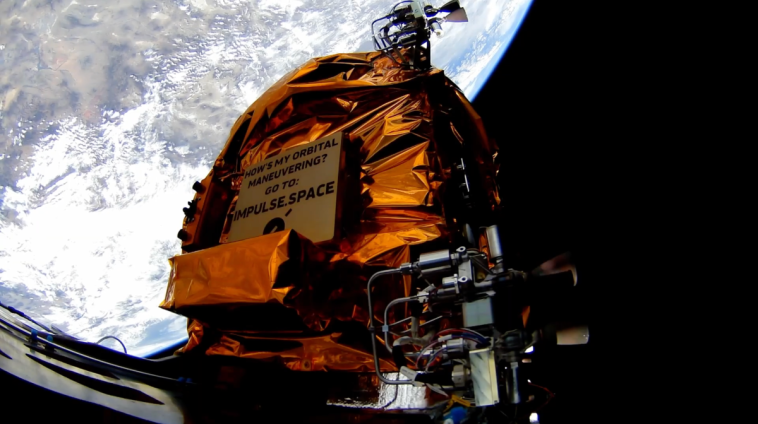
At the core of Impulse Space’s offering are its highly specialized spacecraft platforms: Mira and Helios. Mira, a highly maneuverable vehicle, is specifically designed to cater to the stringent requirements of U.S. Space Force buyers, providing an agile solution for various in-orbit tasks. Its capabilities are vital for dynamic missions, including reconnaissance, rapid deployment, and potential defensive maneuvers.
Complementing Mira, the Helios vehicle represents a leap forward in orbital logistics. Designed to transport satellites quickly and efficiently from lower Earth orbits, where they are typically deployed, to much higher operational orbits, Helios addresses a critical bottleneck in current space infrastructure. This rapid transit capability significantly reduces time to orbit and operational costs, offering a compelling value proposition for a wide array of satellite operators and government agencies.
Navigating the Talent Frontier in Aerospace
The infusion of capital will directly support Impulse Space’s ambitious growth trajectory, enabling the company to accelerate the development and rigorous testing of its next-generation space vehicles. As President and COO Eric Romo, an early SpaceX pioneer, emphasized, a key allocation of the new capital is to bolster the company’s workforce by as many as 200 new hires. This hiring spree occurs at a time when top-tier aerospace engineering talent is in exceptionally high demand globally.
Impulse Space’s strategic expansion, including the establishment of an office in Colorado, underscores a broader industry trend: the decentralization of aerospace talent. No longer solely concentrated in traditional hubs like Los Angeles, skilled engineers and technicians now have diverse opportunities in emerging aerospace ecosystems across Seattle, Denver, and Texas. This shift necessitates a proactive approach to recruitment and talent attraction, ensuring that Impulse Space can draw from the best minds in the field to fuel its innovations.
The AI Frontier: Engineering and the Human Touch
While Impulse Space’s software development teams are actively integrating AI coding tools to streamline their processes, the application of deep learning models to complex hardware engineering problems presents a more nuanced challenge. Romo, drawing on his extensive experience dating back to SpaceX’s nascent days in 2003, expressed measured skepticism regarding the immediate readiness of AI for prime-time hardware design. He recalled early computer simulations for engine design offering only about 20% accuracy, highlighting the historical gap between simulation and real-world performance.
Romo’s perspective underscores a fundamental truth in hardware development: there is currently “no real substitute for designing the thing, analyzing the thing, building it, and then getting it on the test stand.” This hands-on, iterative approach remains paramount. The scarcity of high-quality, specialized training data — such as optimal turbo pump seal designs — for hardware components, unlike the vast datasets available for text and code, continues to limit AI’s immediate transformative potential in this domain. This ongoing challenge necessitates a balanced approach, where AI augments human ingenuity rather than fully replacing it in critical engineering phases.
Looking Ahead: Impulse Space’s Trajectory
Impulse Space’s journey began with a focused expertise in propulsion systems and has since evolved into a full-fledged spacecraft developer, necessitating the integration of diverse engineering disciplines, including vehicle structures and advanced flight computers. This organic expansion highlights the company’s adaptability and comprehensive vision for in-space services.
The immediate horizon for Impulse Space includes another critical mission for its Mira spacecraft, following its third flight late last year. Despite an earlier flight experiencing navigation system issues that led to premature propellant expenditure, the company has diligently addressed these challenges. With a new Mira mission slated for launch before the end of the year, Impulse Space is poised to demonstrate its enhanced capabilities and solidify its position as a pivotal player in the rapidly expanding and strategically vital in-space mobility sector.
#TrendingNow #ExplorePage #ViralContent #DailyMotivation #Inspiration #LifeHacks #TechTrends #FitnessGoals #TravelBug #FoodieAdventures #FashionStyle #ArtisticVibes
Artificial Intelligence, Cloud, Cybersecurity