Humanoid Robotics Takes Center Stage: Latest Innovations Unveiled
The landscape of artificial intelligence and robotics is rapidly evolving, with recent developments pushing the boundaries of what humanoid machines can achieve. From advanced movement capabilities to sophisticated AI architectures, these breakthroughs signal a transformative era for automation and human-robot interaction, heralding a future where intelligent agents play an increasingly significant role in our world.
Galbot’s “Galaxy Star Kid” Leads with Agile Intelligence
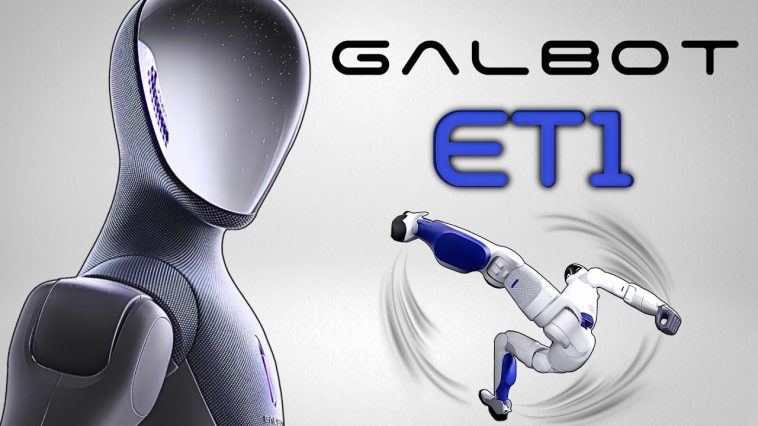
Galbot has made a compelling debut with its ET1 humanoid robot, affectionately dubbed “Galaxy Star Kid.” At its core is an advanced three-part “Astrobrain” AI architecture, a significant leap in robotic cognitive function. This innovative design grants the ET1 exceptionally fluid physical motion, enabling real-time dance learning and impeccable body balance. The implications extend beyond mere entertainment, suggesting potential for highly adaptable robots in dynamic environments where precision and graceful interaction are paramount.
Engine AI’s T800 Demonstrates Industrial Prowess
In a testament to practical application, Engine AI’s T800 humanoid robot is already deployed in a factory setting, showcasing its robust capabilities. Utilizing a sophisticated vision-language-action model, the T800 is equipped with three-finger dexterous hands, allowing it to perform a range of complex real-world tasks. These include efficient sorting, precise obstacle detection, and the critical ability to maintain heavy balances. This industrial integration highlights the growing viability of humanoids for intricate manufacturing and logistics roles, promising enhanced automation and safety.
1X Neo Pioneers Seamless, First-Take Movement
Further advancing the physical dexterity of humanoids, American robotics company 1X has released new footage of its Neo robot, demonstrating remarkable progress in natural movement. The Neo now exhibits significantly smoother, first-take movement capabilities, effortlessly executing commands such as squatting and walking. This achievement is crucial for wider adoption, as intuitive and reliable physical interaction is key to integrating robots seamlessly into human-centric environments, from assistive roles to collaborative workspaces.
Meta’s Muse Spark 1.2: The Brain Powering Future Robotics
Underpinning these physical advancements are equally impressive developments in AI models. Meta’s Muse Spark 1.2 multimodal model stands out by demonstrating high-level task planning seamlessly paired with low-level physical execution for robotics. Beyond its competitive visual reasoning, Spark 1.2 introduces a new “Wild Artifact Bench” evaluation system, setting a higher standard for assessing robotic intelligence in complex, unpredictable scenarios. This model represents a significant step towards truly intelligent agents that can understand, plan, and execute intricate tasks in the real world.
The Dawn of the AI Agent Economy: Future Implications
The synergy between these hardware and software innovations is propelling us towards a robust AI agent economy. The rapid maturation of humanoid robotics, powered by advanced AI like Meta’s Spark 1.2, suggests a future where autonomous agents will become increasingly common across diverse sectors, from industrial operations and healthcare to personal assistance and entertainment. As these capabilities expand, the focus will increasingly shift towards developing robust safety protocols, ethical guidelines, and ensuring seamless human-robot collaboration, redefining productivity and daily life.
#TrendingNow #ForYouPage #ViralContent #ExplorePage #Innovation #Motivation #Inspiration #TechTrends #DailyVlog #LifeHacks #FitnessJourney #TravelGoals
Generative AI, Large Language Models, Cloud