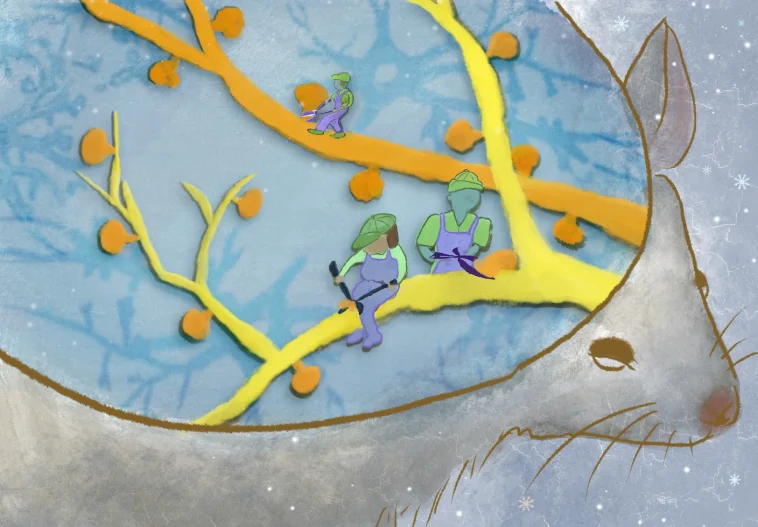
The Enduring Enigma of Memory: How Brains Reconstruct What’s Lost
For decades, the bedrock understanding of long-term memory has rested on the stability of synapses – the vital connections between neurons. These intricate structures, residing on tiny dendritic spines, were thought to physically embody our learned experiences. The prevailing theory suggested that learning spurred the growth of these spines, creating stronger, more enduring synaptic connections. Conversely, diseases like Alzheimer’s, which erode these connections, were believed to irrevocably dismantle memories. Yet, a groundbreaking study from the Okinawa Institute of Science and Technology (OIST) now challenges this long-held paradigm, unveiling a surprising resilience in our cherished memories.
This new research indicates that memories may be far more robust and distributed than previously imagined, capable of surviving even massive synaptic loss and being reconstructed from a “higher-level architecture.” This paradigm shift offers profound insights into the fundamental mechanisms of memory and opens exciting avenues for understanding, and potentially treating, neurodegenerative conditions.
The Dynamic Dance of Neurons and Synapses
Neurons are often heralded as the brain’s fundamental computational units, yet each operates as a sophisticated micro-processor in its own right. Their elaborate, branching arms receive incoming signals, while a lengthy extension transmits outgoing messages. Dendritic spines, protruding from these branches, are the sites of synaptic connections. These structures are remarkably dynamic, constantly strengthening, weakening, appearing, and disappearing in response to neural input. This inherent plasticity allows synapses to simultaneously gather data, facilitate learning, and store information. The well-known adage, “neurons that fire together, wire together,” aptly describes how repeated co-activation strengthens these vital connections, primarily through the enlargement of dendritic spines.
For our rich tapestry of episodic memories – the “who, what, when, and where” of our lives – these synaptic modifications initially concentrate in the hippocampus. This region is crucial for both forming and retrieving memories, and it is notably one of the first areas to suffer damage in Alzheimer’s disease. During waking hours, the hippocampus forms nascent memory traces, or engrams. Then, during sleep, a selective process of consolidation occurs, where some engrams are refined or transferred to other cortical regions for long-term storage, while others may be pruned. The hippocampus also plays a crucial role in enriching memory recall by integrating contextual details, such as the associated emotions or sensory experiences.
Traditional neuroscience has long posited that these complex processes necessitate relatively stable brain circuits, believing that “long-lasting changes in synaptic connections are widely thought to provide the structural basis of memory.” However, a growing body of research has revealed the brain to be anything but static. Synapses are in a perpetual state of remodeling. Even the specific neurons recruited into a particular engram can shift over time, suggesting a dynamic reallocation of information as some synapses potentially hand off data to others, thereby freeing themselves to encode novel experiences. This raises a critical question: if the physical substrates of memory are constantly in flux, why do our memories not simply dissipate? This paradox formed the crux of the new OIST investigation.
Artificial Hibernation Unlocks Memory’s Secrets
To unravel this enduring enigma, the research team, led by Yu-Ju Lin and Kazumasa Tanaka, employed an ingenious and unconventional approach: artificial hibernation. Mimicking the natural processes observed in animals like bears and chipmunks, artificial hibernation dramatically lowers body temperature and metabolic rate, inducing a profound sleep-like state. As the brain’s activity significantly decreases to conserve energy, a widespread pruning of synapses occurs.
Intriguingly, naturally hibernating animals retain vivid memories. Chipmunks, for instance, reliably recall the locations of their food caches upon awakening, demonstrating memory resilience despite drastic physiological changes. This observation presented artificial hibernation as a powerful experimental tool to probe how memories survive significant alterations in brain structure. As Professor Tanaka, head of OIST’s Memory Research Unit, noted, “Our brains are incredibly complex. If hibernation can reduce and simplify brain activity and structure, it could make studying these convoluted systems a bit easier.”
The researchers meticulously trained mice on two distinct memory tasks: a fear conditioning paradigm where a chamber was associated with a mild electrical stimulus, and a maze navigation task leading to a sugary reward. Subsequently, a specific neural circuit was activated to induce artificial hibernation for two days. Using sophisticated fluorescent proteins, the team precisely tracked the real-time changes in the animals’ synapses.
The results were astonishing. Within minutes, dendritic spines began to remodel, with many rapidly shrinking and disappearing. Within 24 hours, over half of the synapses were eliminated, including the larger spines traditionally deemed crucial for long-term memory. Yet, the memories persisted. Upon arousal, the mice exhibited immediate fear in the conditioned chamber and efficiently navigated the maze to their reward, demonstrating complete memory retention. Remarkably, approximately 80% of the pruned spines regrew in their original locations along the neurons’ branches, suggesting the brain’s capacity to reconstruct lost circuits.
In a critical control experiment, another group of mice underwent anesthesia combined with a drug known to block synaptic changes and induce amnesia. These mice also experienced substantial synapse loss but failed to recover their memories, highlighting the unique resilience observed during hibernation.
The Resilience of Engram Architecture
The key to this remarkable memory preservation appears to lie in a core cluster of unusually resilient synapses. These specialized synaptic clusters formed a distinct “higher-order synaptic architecture” where one neuron connected to multiple neighbors, akin to a central hub. These clusters were frequently situated in areas where spines were tightly grouped, making them more likely to receive concurrent inputs from various sources. This unique arrangement somehow enabled them to keep memories intact even as surrounding synapses vanished.
As Professor Tanaka explained, “This suggests that for long-term memory, only particular clusters of synapses matter — the rest may be dispensable.” This pivotal finding suggests that memory retention relies not on the persistence of every individual synaptic connection, but on maintaining broader patterns of neural organization. The brain, it seems, possesses a remarkable ability to rebuild its circuitry while safeguarding stored information through these resilient architectural motifs. Co-first author Yu-Ju Lin emphasized the unexpected nature of the findings, stating, “It was astonishing. Logically, if all our engram synapses were essential in memory retention as traditionally thought, memory should have massively deteriorated.”
The precise mechanisms by which these clusters preserve memories remain an active area of investigation. Researchers are now exploring how the brain creates and maintains these resilient structures, whether they anchor multiple memories, and if this same protective mechanism could explain why some memories endure even as synapses are lost in neurodegenerative diseases. The team is deploying advanced genetic and molecular tools to unravel the secrets of their extraordinary resilience, hoping to identify potential therapeutic targets for conditions like Alzheimer’s in their earliest stages.
Beyond the immediate implications for neuroscience and medicine, this newfound understanding of memory’s enduring nature could profoundly influence the development of next-generation artificial intelligence. The ability of the brain to preserve essential information and reconstruct complex circuits from a robust, higher-level architecture offers a compelling blueprint for neuromorphic chips and advanced AI models. Envisioning AI systems that can dynamically adapt, prune non-essential connections, yet retain core knowledge and even “rebuild” corrupted data presents a fascinating future. Ultimately, these findings offer a sophisticated twist on our understanding of memory: it may not demand the preservation of every single synapse that helped forge it, but rather the strategic safeguarding of the right ones to intelligently reconstruct the rest.
#TrendingNow #ViralContent #ExplorePage #ForYou #InstaDaily #ReelsInstagram #TikTokFamous #SocialMediaMarketing #DigitalMarketing #ContentCreator #EngagementBoost #DailyVibes
Artificial Intelligence, Generative AI, Cloud