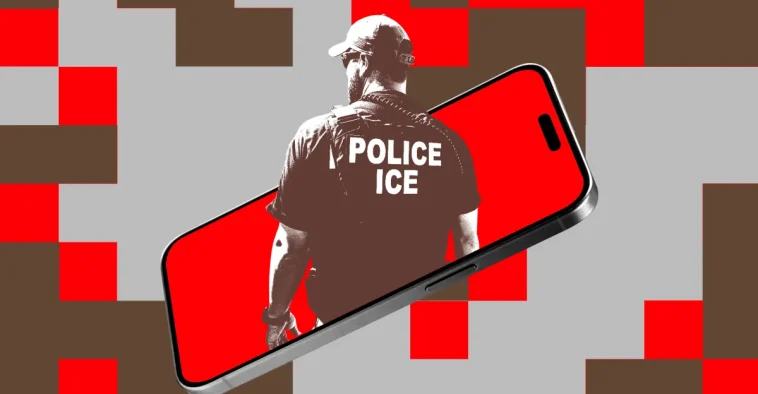
The Expanding Reach of Digital Surveillance at U.S. Borders
In an increasingly digitized world, the sanctity of personal information stored on our devices is paramount. Yet, for travelers entering the United States, even U.S. citizens, the expectation of digital privacy often evaporates at the border. The seemingly routine act of presenting a passport can swiftly escalate into a complete forfeiture of one’s digital life, as Customs and Border Protection (CBP) asserts broad authority to search and even seize electronic devices.
A Case Study in Digital Seizure: Janette Zahia Corcelius
The alarming reality of this power is starkly illustrated by the experience of Janette Zahia Corcelius, a labor organizer from Minnesota. Upon returning from a three-week trip to Europe in late April, Corcelius was subjected to extensive scrutiny at Minneapolis-St. Paul International Airport. Customs agents reportedly searched her luggage twice, confiscated political literature, and, critically, seized her phone, which has yet to be returned.
This incident forms the basis of a federal lawsuit filed by the Council on American-Islamic Relations (CAIR) on Corcelius’s behalf. The civil rights group contends that the confiscation of her device violates the Fourth Amendment, which protects against unreasonable searches and seizures, as well as CBP’s own established regulations. CAIR alleges that Corcelius is being specifically targeted due to her vocal opposition to Immigration and Customs Enforcement (ICE) raids in Minneapolis.
The Broader Systemic Issue: Targeting Activists
The Corcelius case, while individual, points to a troubling broader pattern. CAIR argues that CBP is engaged in “systematic” searches of activists’ devices, appropriating the language and tools traditionally reserved for counterterrorism efforts to target left-wing critics and organizers. This alleged strategy aligns with past presidential administrations’ stated intent to confront perceived “Violent Left-Wing Extremists, including Anarchists and Anti-Fascists.” The implications extend far beyond a single phone, suggesting a chilling effect on legitimate political expression and association.
During her detention, Corcelius attempted to contact her attorney, handing her phone to a CBP manager to facilitate the conversation. It was at this juncture that she was informed of her phone’s confiscation. Her other belongings were also searched by both CBP agents and personnel from Homeland Security Investigations (HSI), a division of ICE primarily focused on international crime, drug trafficking, and national security. The involvement of multiple agencies underscores the gravity and multi-layered nature of these border interactions.
CBP’s Search Authority and Technological Capabilities
CBP’s authority at the border permits two main types of electronic device searches. Basic inspections involve agents reviewing content while the device is in airplane mode. More invasive are advanced forensic searches, where devices are connected to external tools, such as those from companies like the Israel-based Cellebrite, to extract and potentially copy their entire contents. While U.S. citizens cannot be denied entry for refusing a phone search, their devices can still be seized. If agents successfully unlock a device—whether through manual means, biometrics, or forensic tools—its contents become fully accessible.
This technological capability raises significant privacy concerns. The use of advanced forensic tools represents a powerful expansion of state surveillance, transforming personal devices into open books for government scrutiny without a warrant. This digital dragnet could capture sensitive personal, professional, and political information, regardless of its relevance to any alleged wrongdoing.
A Rising Trend Amidst Political Tensions
The data confirms a discernible upward trend in these searches. In the 2025 fiscal year, CBP conducted 55,318 searches of electronic devices, a substantial increase from 41,767 in 2023 – a 32 percent surge. This rise coincides with a period marked by intensified political rhetoric and policies targeting perceived domestic threats, particularly those labeled as “left-wing.”
The CAIR complaint highlights a critical loophole: border agents can only confiscate property if they have “reasonable cause to believe that any law or regulation enforced by Customs or Border Protection or Immigration and Customs Enforcement has been violated.” However, a broad exception exists for “national security concern.” This exception has become a significant point of contention, providing a potentially expansive justification for searches that might otherwise lack sufficient legal grounding.
Weaponizing “National Security” Against Dissent
The post-9/11 security apparatus, originally designed to combat international terrorism, appears to be increasingly deployed against domestic political dissent. Following the assassination of conservative activist Charlie Kirk last September, a presidential executive order designated “Antifa”—which is not a formal organization—as a terrorist entity. A subsequent presidential memorandum called for an “all-of-government approach to dismantle left-wing terrorism.” This governmental framing has seemingly provided a pretext for authorities to harass and intimidate critics of the administration by linking them to ill-defined “terrorist conspiracies.”
This strategy was further evidenced in January, when resistance to ICE raids in the Twin Cities was characterized by the administration as a “coordinated plot.” The FBI reportedly investigated Signal chat groups where Minnesotans were organizing against ICE. Such actions illustrate a troubling conflation of activism with extremism, potentially stifling civic engagement and legitimate protest under the guise of national security.
The Fragmented Legal Landscape and Future Implications
Janette Corcelius is seeking judicial intervention, requesting that a federal court halt any advanced searches of her phone, order the deletion of any data already extracted, and mandate the return of her phone and other belongings. She also seeks a prohibition on future non-routine searches of her property and a change in DHS policy regarding such searches.
However, even a favorable ruling for Corcelius might offer limited, localized protection. The legal landscape surrounding border searches remains a confusing patchwork. A 2024 federal court ruling in New York prohibited warrantless phone searches by CBP, but this decision applies only to New York’s Eastern District, encompassing JFK Airport. Conversely, a 2021 U.S. appeals court ruled that CBP agents can conduct warrantless device searches. This judicial inconsistency creates a challenging environment where travelers’ digital rights vary dramatically depending on their port of entry.
The continuing legal battles and the increasing reliance on “national security concerns” to justify expansive digital searches at the border highlight a critical juncture for digital privacy and civil liberties. Without clearer, universally applied legal standards, the personal data of millions of travelers remains vulnerable to unchecked governmental scrutiny, posing a significant threat to individual freedoms and the principles of democratic dissent in an interconnected world. The outcome of cases like Corcelius’s will undoubtedly shape the future of digital rights for all who traverse U.S. borders.
#TrendingNow #Innovation #TechGadgets #FutureIsHere #DailyInspiration #MotivationMonday #HealthyLiving #TravelDreams #ArtisticVibes #FoodieAdventures #FashionForward #SustainableLiving
Artificial Intelligence, Cloud, Cybersecurity