Apple Intelligence Redefines Accessibility, Setting a New Industry Benchmark
Cupertino, CA – In a strategic move ahead of Google’s annual developer conference, Apple has unveiled a suite of transformative accessibility updates, deeply integrated with its powerful Apple Intelligence platform. These advancements are poised to significantly enhance user experiences across critical features such as VoiceOver, voice control, live recognition, and real-time video captioning, underscoring Apple’s unwavering commitment to inclusivity and innovation. The announcements highlight a future where technology adapts more seamlessly to individual needs, rather than the other way around.
Enhanced Sensory Perception with VoiceOver
At the forefront of these innovations is a significantly upgraded VoiceOver, now boasting advanced image recognition capabilities powered by Apple Intelligence. This allows the feature to not only identify objects but also interpret and describe them with unprecedented detail and contextual awareness. Visually impaired users can now expect a richer, more informative auditory experience.
For instance, VoiceOver can meticulously analyze a document like a bill, accurately relaying crucial details such as the total amount due and the payment deadline. Beyond mere text, this intelligence extends to personal photographs and records, offering more nuanced and comprehensive descriptions that enrich everyday interactions and information access. This marks a profound shift from basic object labeling to genuinely intelligent scene understanding.
Real-Time Interaction and Intuitive Control
The Live Recognition feature is also seeing substantial enhancements, empowering users to leverage their iPhone’s camera to identify real-world content and engage with it through follow-up questions. This creates an immediate, interactive bridge between the user and their environment. Individuals with low vision will particularly benefit from the ability to assign Magnifier to the action button, instantly presenting content in a high-contrast interface.
Further augmenting control, natural language voice commands like “zoom in” or “turn on flashlight” now seamlessly integrate with Magnifier, streamlining its usability. This intuitive approach extends beyond a single application, allowing users to describe tasks in plain language to manipulate on-screen elements across the entire Apple ecosystem. For example, navigating Apple Maps becomes as simple as saying “tap the guide about best restaurants,” or managing files with a command like “tap the purple folder.” This evolution towards conversational interfaces is a significant step in making technology truly accessible for everyone.
Redefining Document Comprehension with Reader
Apple’s Reader application has received a substantial overhaul, now capable of adeptly handling complex document structures, including scientific papers laden with multiple columns, intricate images, and detailed tables. This represents a significant leap forward in making scholarly and professional content accessible to a broader audience.
The updated Reader provides AI-powered summaries, enabling quick comprehension of lengthy texts, while also supporting native language display with retained custom fonts and colors. Critically, these enhancements are specifically designed to cater to various cognitive and visual disabilities, such as dyslexia and low vision, ensuring a personalized and effective reading experience. Such features promise to democratize access to information that was previously challenging to navigate for many.
Universal Video Accessibility Through AI
A pivotal new feature is the introduction of AI-generated subtitles for videos lacking pre-existing captions. This includes personal footage recorded on an iPhone or clips shared by friends and family, addressing a long-standing gap in content accessibility. This capability transcends devices, functioning uniformly across iPhone, iPad, Mac, Apple TV, and the Apple Vision Pro, with users retaining full control over subtitle appearance and style.
This advancement significantly benefits deaf and hard-of-hearing communities, unlocking a vast library of previously inaccessible personal and informal video content. The ability to generate accurate, on-the-fly captions for dynamic media represents a powerful application of AI in promoting universal communication and inclusion across Apple’s expansive ecosystem.
Pioneering Mobility with Vision Pro
Perhaps one of the most groundbreaking announcements is the upcoming capability for Apple Vision Pro users to control compatible wheelchairs purely with their eyes. This marks a monumental step in leveraging spatial computing for physical mobility, offering a new degree of independence to individuals with severe motor disabilities.
Apple has confirmed that this feature will function reliably under diverse lighting conditions without requiring frequent recalibration, ensuring consistent performance. The initial rollout will support Tolt and LUCI alternative drive systems in the U.S., with comprehensive accessory support for both Bluetooth and wired connections. This initiative exemplifies how cutting-edge technology can be harnessed to deliver profound, life-changing benefits.
Broader System-Wide Accessibility Refinements
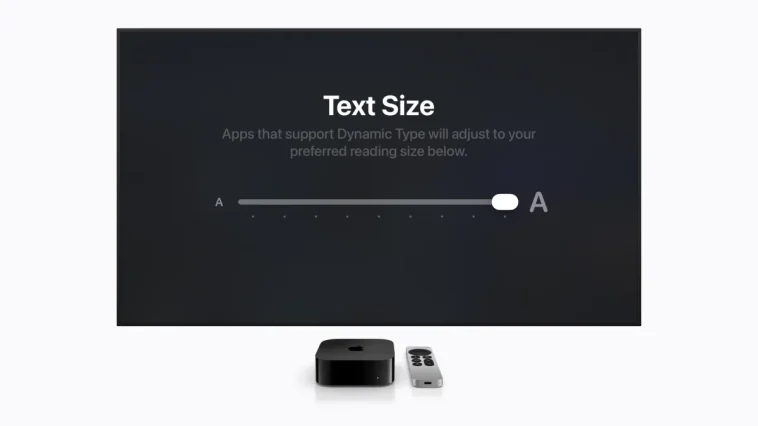
Beyond these headline features, Apple is rolling out several other critical accessibility enhancements. The name recognition feature, designed to notify users with hearing disabilities when their name is spoken, now boasts support for an impressive 50 languages, reflecting a global commitment to inclusive communication. Furthermore, tvOS will gain large text support, enhancing readability on larger screens, and Made for iPhone hearing aids will experience improved handoff functionality between various Apple devices, ensuring seamless audio experiences.
These updates are anticipated to be available to users later this year, likely as integral components of the upcoming iOS 27 release. They collectively reinforce Apple’s philosophy that accessibility is not merely a feature, but a fundamental right and a core pillar of its product development strategy, continually pushing the boundaries of what assistive technology can achieve.
#TrendingNow #Innovation #FutureIsNow #TechSavvy #DigitalLife #AIRevolution #WorkSmart #LifeHacks #MotivationMonday #InspirationDaily #GrowthMindset #SuccessJourney
Artificial Intelligence, Generative AI, Cybersecurity