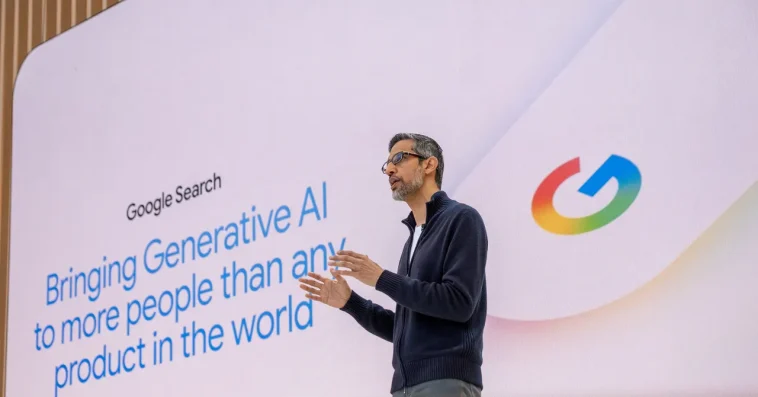
Google Unveils Gemini Spark: The Dawn of Proactive AI Agents
The landscape of artificial intelligence is undergoing a profound transformation, shifting from reactive chatbots to intelligent, proactive agents. At this year’s I/O developer conference, Google made a significant stride into this new era with the announcement of Gemini Spark, an advanced AI agent designed to fundamentally redefine how users interact with their digital lives. Positioned as a 24/7 personal AI agent, Spark moves beyond mere task execution to anticipating user needs and acting autonomously across various applications.
The Evolution of AI Assistance: From Reactive to Agentic
For some time, the tech industry has been buzzing with the potential of AI agents, which are software systems capable of pursuing goals, completing multi-step tasks, and making decisions with a degree of autonomy. Early examples like Anthropic’s Claude Cowork showcased impressive capabilities, such as organizing desktop files into labeled folders without explicit user clicks. Similarly, the viral OpenClaw bot captivated early adopters with its ability to automate aspects of their entire online lives, from managing inboxes and calendars to even running unconventional systems like vending machines.
However, the rapid ascent of these early agents also highlighted inherent risks, particularly concerning data control and potential for unintended actions. OpenClaw, for instance, nearly resulted in the deletion of a Meta employee’s entire email archive during an experiment. This underscores the critical balance between powerful automation and robust safeguards necessary for user trust and data privacy.
Gemini Spark’s Proactive Edge
Google’s Gemini Spark is poised to set a new standard by leveraging “personal intelligence,” a unique differentiator that allows it to proactively gather details and initiate actions without constant prompting. Unlike traditional conversational assistants that await explicit commands, Spark maintains continuous context across your digital environment, learning from your behavior, apps, tasks, and even browsing history. This enables it to delve deep into personal information, such as daily schedules from Google Calendar or dinner reservations gleaned from Gmail, even before connecting to third-party integrations.
The agent’s capabilities extend to a wide range of practical applications, aiming to streamline tasks previously handled manually. Spark can be configured to regularly scrutinize credit card bills for unexpected fees, potentially rendering dedicated expense tracking apps redundant. It can also skim emails related to specific topics, like a child’s preschool activities, to generate a concise morning digest report of key dates and information. Furthermore, users can offload meeting notes to Spark, instructing it to draft Google Docs and even generate follow-up emails to relevant individuals. This shift from “information to action” promises a significant boost in personal and professional productivity.
Navigating Rollout, Integration, and User Control
The rollout of Gemini Spark is designed to be deliberate, commencing with a small group of trusted testers this week, followed by a beta launch next week for subscribers to Google’s AI Ultra plan, which offers access at $100+ per month. This initial pricing strategy positions Spark as a premium experimental offering. Google intends to expand Spark’s utility by enabling connections to third-party applications like OpenTable and Instacart via Gemini, opening up further automation opportunities.
Future enhancements on the roadmap include the ability for Spark to manipulate local browsers and respond to commands delivered via text or email, which is crucial for a truly seamless and distraction-free experience. Imagine delegating increasingly niche requests to your AI agent throughout the day, much like interacting with a highly efficient personal assistant.
Google emphasizes that Spark operates strictly under user direction, allowing individuals to choose whether to activate it and which applications it can access. Crucially, it is engineered to seek explicit permission before executing “high-stakes actions” such as spending money or sending emails. Josh Woodward, Vice President of Google Labs and the head of the Gemini app, likens this cautious approach to “giving a teenager their first debit card,” highlighting the need for careful limits and controls. This perspective underscores Google’s commitment to balancing the power of autonomous agents with essential security and privacy considerations.
Strategic Implications and the Future Horizon
The introduction of Gemini Spark signifies Google’s aggressive push to embed AI agents deeper into the public consciousness, paralleling its integration of agentic task automation within Search. By shifting AI from a reactive application to an embedded, proactive runtime layer across its ecosystem, Google aims to redefine the very infrastructure of digital interaction. The global AI agent market is projected for exponential growth, potentially reaching over $52 billion by 2030, driven by advancements in multimodal AI and enterprise adoption.
As AI agents become more sophisticated, they will increasingly impact how individuals and businesses operate. The move towards “agentic marketing,” for instance, suggests a future where human teams manage autonomous AI agents to achieve strategic goals, demanding a shift in skillsets from execution to governance. The long-term success of Gemini Spark, and the broader agentic AI movement, will hinge on its ability to deliver tangible value, ensure robust security, and cultivate user trust in a world where AI is no longer just a tool, but an active partner in our daily lives.
#TrendingNow #Innovation #TechNews #AI #FutureIsNow #DigitalMarketing #SocialMedia #CreatorEconomy #Motivation #SuccessMindset #DailyInspiration #LearnWithMe
Artificial Intelligence, Cloud, Cybersecurity