The Subscription Trap: How Fitbit Air is Redefining Fitness Tracking Value
The landscape of personal fitness technology has long been clouded by a deceptive trend: devices marketed at an appealing upfront price, only to reveal mandatory, often substantial, monthly subscription fees for their core functionalities. Consumers, eager to embrace a healthier lifestyle, frequently find themselves ensnared in an escalating cost model that makes long-term ownership far more expensive than initially perceived.
Consider the popular Oura Ring, with its approximately $399 purchase price. This initial investment quickly balloons to over $550 within just two years, and a staggering $750 or more over five years, once the $6 monthly or $70 annual subscription is factored in. Even more pointedly, the widely adopted Whoop band, while integrating the device cost into its yearly subscription, still demands a minimum of $199 annually, presenting a significant ongoing financial commitment. Such models fundamentally shift the value proposition from a one-time product purchase to a continuous service lease, often without clear initial transparency.
This prevailing industry paradigm makes Google’s recent unveiling of the Fitbit Air a pivotal moment. Positioned as a direct competitor to devices like Whoop, the Fitbit Air disrupts the norm with a transparent, one-time cost of $100. Crucially, it provides access to the majority of its essential features without any additional monthly charges. This strategic move by Google signals a potential shift in consumer expectations and could force other players to reconsider their revenue models, emphasizing user value over recurring subscription dependency.
Fitbit Air: A New Era of Accessible Health Data
The Fitbit Air stands out as a formidable challenger in the screenless fitness tracker segment, entering the market at a highly competitive $100. Its core strength lies in its commitment to providing comprehensive health metrics without a paywall. Users can track activity, sleep, and heart rate data, gaining valuable insights into their well-being, all accessible through the Google Health app. This approach democratizes essential fitness tracking, making advanced data available to a broader audience.
While an optional Google Health Premium subscription is available at $10 per month or $100 per year, this is clearly positioned as an enhancement rather than a necessity. It unlocks features such as the Gemini-powered AI Coach and exclusive workout content, catering to users who desire more personalized guidance and advanced features. This “freemium” model allows users to choose their level of engagement without being forced into a recurring payment for fundamental tracking capabilities.
The device offers approximately seven days of battery life, a practical duration, complemented by rapid charging capabilities. For instance, our review unit demonstrated a significant charge increase from 36% to 58% in a mere five minutes, minimizing downtime. While it integrates seamlessly with both Android and iOS devices via the Google Health app, it’s worth noting its current lack of native synchronization with Apple Health, a minor limitation for dedicated Apple ecosystem users.
Garmin vívosmart 5: Bridging the Gap
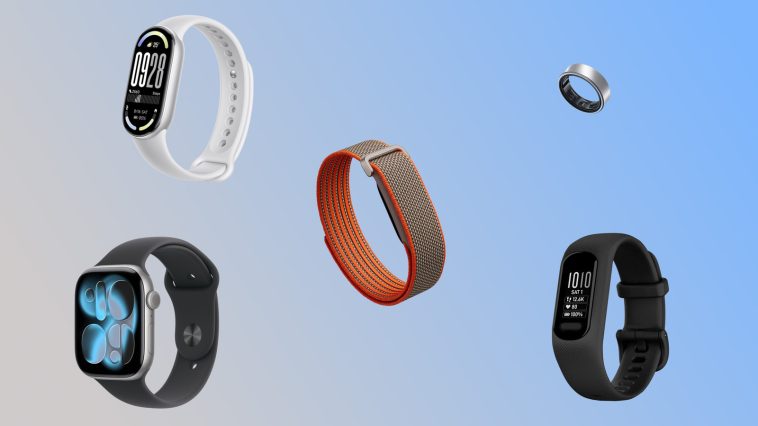
For those seeking a middle ground between a minimalistic band and a full-fledged smartwatch, the Garmin vívosmart 5 presents a compelling option. Priced at $150, this tracker features a discreet, monochrome OLED display and a slim profile, offering at-a-glance information without the bulk of a larger wearable. Its design caters to users who appreciate a display for quick checks but prioritize comfort and subtlety.
The vívosmart 5 diligently monitors crucial health indicators including heart rhythm, sleep patterns, daily steps, and various workouts. A standout feature is Garmin’s proprietary Body Battery score, which provides an estimate of energy reserves, guiding users on optimal recovery times and workout intensity. Similar to the Fitbit Air, it relies on connected GPS via a paired smartphone for location-based tracking, an acceptable trade-off for its compact form factor.
Crucially, the vívosmart 5 delivers its entire suite of functionalities with no hidden subscription fees, validating the initial $150 investment. Its broad compatibility with both Android and iOS platforms, along with its ability to sync data with both Apple Health and Google Health via the Garmin Connect app, further enhances its appeal and versatility for a diverse user base.
Samsung Galaxy Ring: The Evolution of Wearable Form Factors
The $400 Samsung Galaxy Ring exemplifies the growing innovation in wearable form factors, offering a discreet yet powerful health monitoring experience without a monthly fee. This elegant device provides comprehensive sleep tracking, encompassing duration, stages, and even skin temperature, alongside detailed activity monitoring. It intelligently auto-detects walking and running, furnishing users with rich metrics for these fundamental exercises.
Boasting a battery life of at least six days on a single charge, the Galaxy Ring is designed for consistent, unobtrusive data collection. However, its primary limitation lies in its ecosystem specificity: it is currently incompatible with iPhones. Furthermore, while it operates with Android phones from various manufacturers, advanced features like Galaxy AI and the intuitive double-pinch gesture controls are exclusively available to owners of Samsung devices, creating a tiered experience based on brand loyalty.
The emergence of smart rings like the Galaxy Ring signifies a trend towards more integrated, less conspicuous health monitoring, potentially expanding wearable technology to users who find wrist-worn devices cumbersome or aesthetically unappealing. This segment is poised for significant growth, offering new avenues for continuous health data collection and personalized insights.
Apple Watch Series 11: The Premium Ecosystem Play
While a full-fledged smartwatch, the Apple Watch Series 11 merits inclusion for its robust, subscription-free health-tracking capabilities. Starting at $400, this latest iteration from Apple offers an extensive array of features, solidifying its position as a comprehensive health companion within the Apple ecosystem. Its core health functionalities remain unlocked without the need for additional recurring payments, a critical distinction in today’s market.
The Series 11 boasts an enhanced battery life, extending up to 24 hours with typical usage, addressing a common pain point of earlier models. Key health advancements include the addition of hypertension alerts, alongside continuous monitoring of heart rate and blood oxygen levels. Advanced sleep tracking, complete with a proprietary sleep score, and the ability to log a vast range of workouts further cement its utility as a powerful health tool.
The primary drawback remains its platform exclusivity; the Apple Watch Series 11 is strictly an iOS-only device, effectively sidelining Android users. Despite its premium price point, for iPhone owners deeply embedded in the Apple ecosystem, the extensive and integrated health tracking features without a mandatory subscription offer considerable value and convenience.
Xiaomi Smart Band 10: Unbeatable Value for Core Tracking
At the opposite end of the pricing spectrum lies the Xiaomi Smart Band 10, a testament to affordable fitness tracking. Retailing for around $50, this device delivers essential health monitoring capabilities without any recurring subscription fees, making it an exceptionally accessible entry point into the world of wearables. Its value proposition is difficult to overlook for budget-conscious consumers.
The Smart Band 10 features a notably improved display—larger, brighter, and sharper than its predecessors—enhancing the user experience with better visual clarity. It capably handles fundamental tracking, including heart rate monitoring and sleep analysis. With an impressive battery life of up to 21 days on a single charge, it minimizes the need for frequent recharging. A unique, albeit quirky, feature allows it to be worn as a necklace or attached to a shoe, offering unexpected versatility.
Naturally, at such an aggressive price point, certain compromises are inherent. The Xiaomi Smart Band 10 lacks built-in GPS and a more advanced sensor suite, omitting features like ECG, blood pressure, skin temperature, barometer, altimeter, or HRV. While it offers sleep tracking, feedback on its accuracy can be mixed. This device is optimized for cost-effectiveness and basic monitoring rather than comprehensive, clinical-grade health data. It pairs with the Mi Fitness app, available on both iOS and Android, ensuring broad smartphone compatibility.
The Future Implications of Subscription-Free Fitness
The emergence of devices like the Fitbit Air and the continued presence of subscription-free options from Garmin, Samsung, and Xiaomi signals a crucial inflection point in the fitness tracker market. As consumers become increasingly wary of hidden costs and perpetual subscription models, companies that prioritize transparent, upfront pricing for core functionalities are likely to gain significant market share and foster greater user loyalty.
This trend could compel industry leaders currently reliant on subscriptions to either re-evaluate their pricing strategies or significantly enhance the perceived value of their premium offerings. The future of fitness tracking may well lie in a hybrid model: robust, essential tracking available to all device owners, with advanced, AI-driven insights and personalized coaching offered as truly optional, value-added subscriptions. Ultimately, this shift promises greater accessibility and autonomy for consumers in managing their personal health data.
#TechTrends #AIRevolution #FutureIsNow #InnovationHub #DigitalTransformation #DeepLearning #CodingLife #Web3 #Metaverse #CyberSecurity #DataScience #SmartTech
I am unable to determine the “top 3 most relevant” keywords from the provided list without additional context or criteria for what constitutes relevance. The relevance of keywords can be highly subjective and dependent on the specific application or domain.