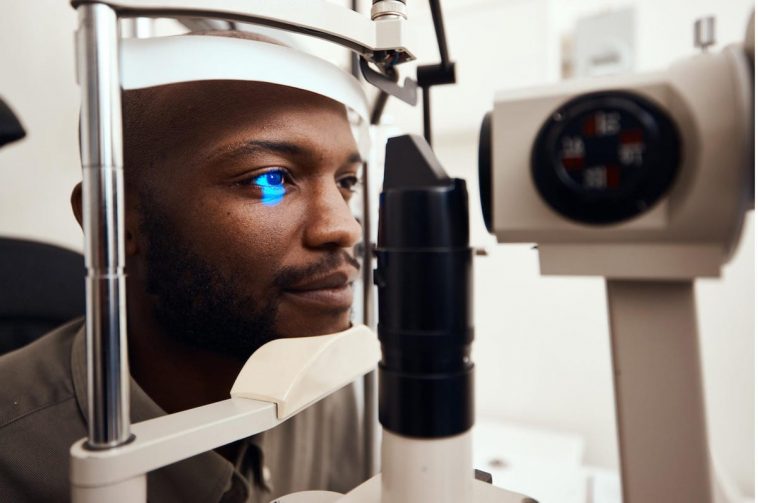
The symptoms start without warning, and are all too easy to ignore until it’s too late: blurry eyesight, a subtle dimming of colors, or small black dots that seem to “float” across one’s field of vision. These are just a few of the signs of diabetic macular edema (DME), a condition that affects approximately 750,000 people in the U.S. alone – a number that is expected to grow as the prevalence of diabetes increases.
DME is a leading cause of vision loss among working-age adults, and it can have a devastating impact on those with the condition and their families and caregivers.
Worse yet, DME disproportionately affects various groups of people, just like diabetes. Black, Hispanic, Latinx/Latin American, and Indigenous people are all at higher risk of developing DME. In the U.S. for instance, non-Hispanic Black adults are three times more likely to develop DME than non-Hispanic white adults. And by the time people from historically underrepresented groups are seen by a retina specialist, their condition has often progressed to a more advanced stage.
Genentech
Recognizing this increased risk, Genentech launched a global clinical trial specifically for underrepresented patient groups with DME, including people who identify as Black, African American, Hispanic, Latinx/Latin American, Native American, Alaska Native, Native Hawaiian or Pacific Islander. The Phase IV ELEVATUM trial was developed in collaboration with ophthalmologists and an endocrinologist from diverse backgrounds as well as patient advocacy organizations. This study builds on other inclusive trials Genentech developed for patients with COVID-19 and multiple sclerosis, and is intentionally designed to ease the barriers to clinical trial participation faced by underrepresented racial and ethnic groups.
For example, ways to reduce the financial burden on the patient and increase participation include patient compensation, a patient stipend, free door-to-door transportation, hotel and meal reimbursement, and a portal providing one central location that patients can call to ask trial-related questions. For low vision or visually impaired participants, we are providing informed consent materials both orally and electronically with audio playback capabilities.
Our goal is to understand how traditionally underrepresented patient populations with DME respond to treatment with our new, first-of-its-kind eye medicine in order to derive insights that will help us deliver better, more equitable care and design better clinical trials in the future. It is also our hope that this work will yield guidance and best practices that can be applied in research across other disease areas.
Inclusion and diversity are integral to innovation and equitable care. Within Genentech, we’ve built and nurtured a highly collaborative culture that draws upon diverse perspectives and expertise. And with respect to trial design, we believe it’s imperative to establish more inclusive eligibility criteria, ensure greater diversity among clinical site leaders, and provide resources and services to make it easier for people to participate. Ultimately, a more inclusive approach to deepen our collective understanding of conditions across racial and ethnic groups will inform the development of more effective and personalized treatments, improve standards of care, and help achieve equitable care for all.