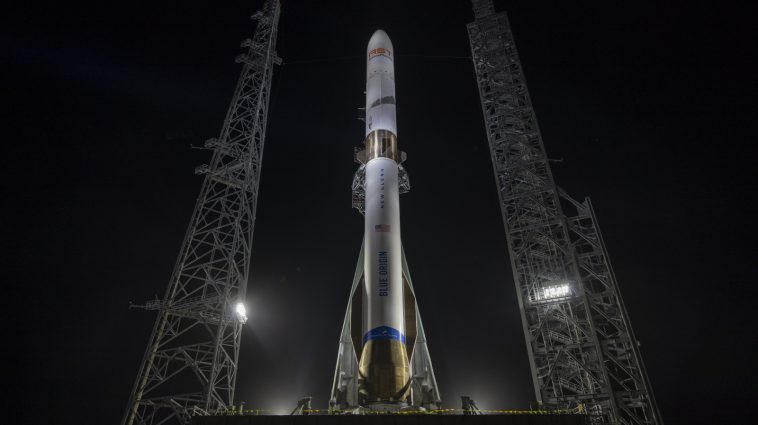
Catastrophic Anomaly Halts Blue Origin’s New Glenn Program
A critical setback has struck Blue Origin’s ambitious New Glenn heavy-lift rocket program. The company experienced a devastating anomaly during a hotfire test at its Cape Canaveral Space Force Station launchpad, resulting in a significant explosion that severely damaged both the rocket and the vital ground infrastructure. This incident casts a long shadow over the company’s aspirations in the burgeoning commercial space sector.
Immediate Fallout and Bezos’s Resolute Response
The incident, which occurred during what Blue Origin described as a “hotfire test” designed to validate engine performance ahead of an upcoming mission, led to the immediate destruction of the New Glenn rocket and its dedicated launch facility. While the full extent of the damage is still being assessed, initial reports and visual evidence suggest a complete obliteration of the vehicle and surrounding equipment.
Crucially, Blue Origin confirmed that all personnel involved in the test were safe and accounted for, a testament to stringent safety protocols in a high-risk environment. Company founder Jeff Bezos swiftly addressed the incident via X, acknowledging a “very rough day” but expressing unwavering resolve: “We’ll rebuild whatever needs rebuilding and get back to flying. It’s worth it.” This statement underscores the high stakes and inherent challenges of pioneering heavy-lift launch capabilities.
Significant Setback for Space Exploration Initiatives
The destruction of the New Glenn rocket and its solitary launchpad at Cape Canaveral Space Force Station’s Launch Complex 36 represents a substantial blow to Blue Origin’s operational timelines. Repairing and rebuilding the specialized launch infrastructure is projected to take several months, if not longer, directly impacting the company’s launch manifest.
This delay has significant ripple effects, particularly for Blue Origin’s crucial partnerships with NASA. The New Glenn rocket is central to the company’s commitments to the Artemis program and the Moon Base initiative, where it is slated to provide a commercial lunar lander for both cargo and crew missions. NASA had notably selected Blue Origin over SpaceX for the pivotal Moon Base I mission, initially planned for this fall. The current situation necessitates a re-evaluation of these ambitious lunar exploration schedules.
NASA Administrator Jared Isaacman publicly acknowledged the anomaly, emphasizing the unforgiving nature of spaceflight and the inherent difficulty in developing new heavy-lift capabilities. He assured that NASA would support a thorough investigation and assess the near-term mission impacts, reiterating the agency’s commitment to its partners and the broader goals of space exploration.
Previous Challenges and the Path Forward
This incident is not the first hurdle for Blue Origin’s New Glenn program. The Federal Aviation Administration (FAA) had previously grounded the rocket following a failure during its third mission, which saw the payload fail to reach orbit. The subsequent investigation determined that a “cryogenic leak that froze a hydraulic line and led to a thrust anomaly during the second-stage engine burn” was the root cause. The FAA had only recently granted clearance for New Glenn to resume launches, making this latest explosion a particularly ill-timed and severe setback.
The path forward for Blue Origin will be arduous. The company must conduct a meticulous investigation to identify the precise cause of the explosion, implement corrective actions, and then undertake the lengthy and costly process of rebuilding its launch capabilities. This not only involves significant financial investment but also the immense engineering effort to restore confidence and resume testing. The highly competitive landscape of the commercial space industry means that such delays can have lasting strategic implications, pushing back market entry and potentially impacting future contracts.
#TrendingNow #ViralContent #ExplorePage #ForYou #InstaDaily #LoveIt #Fashion #Travel #Motivation #TechGadgets #HealthAndWellness #FitnessGoals
Artificial Intelligence, Cloud, Cybersecurity