## Starship V3 Ignites a New Era: SpaceX’s Latest Leap Towards Interplanetary Travel
SpaceX has successfully completed the inaugural test flight of its highly anticipated Starship V3 rocket and Super Heavy booster, marking a pivotal moment in the ambitious development of humanity’s most powerful launch system. This latest flight, characterized by largely positive results, underscores SpaceX’s relentless iterative approach to engineering, bringing its visions of lunar outposts and Martian colonization closer to reality.
## The Ascent of an Upgraded Titan
At 5:30 pm CDT on Friday, the colossal 408-foot (124-meter) Starship, the largest rocket ever constructed, majestically ascended from SpaceX’s Starbase launch facility in South Texas. Propelled by a formidable array of 33 methane-fueled Raptor engines, the integrated vehicle cleared its newly designed launch tower and quickly arced eastward over the Gulf of Mexico, demonstrating immense power and precision. The sheer scale of the launch system highlights the significant engineering challenges SpaceX is overcoming to achieve its super heavy-lift capabilities.
## A Testament to Iterative Engineering
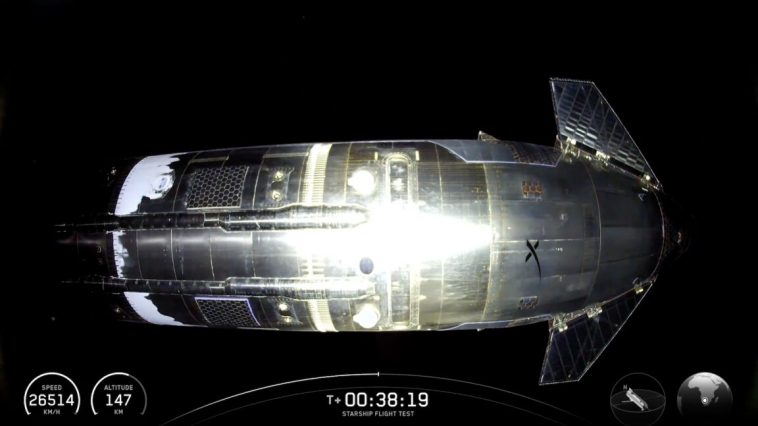
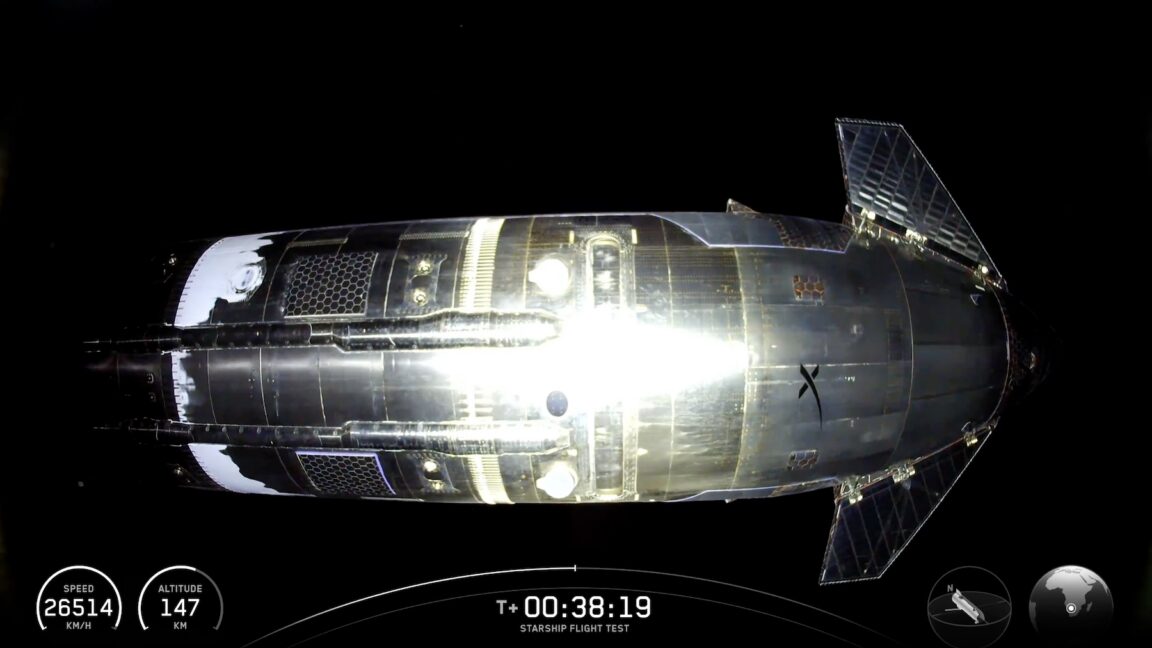
Approximately an hour after liftoff, the Starship V3 spacecraft executed a precise splashdown on target in the Indian Ocean, culminating a critical test of its in-flight performance. This successful outcome represents a notable advancement over previous iterations, with Starship V1 (launched in 2023) and Starship V2 (which experienced setbacks in 2025) both encountering anomalies during their maiden flights. SpaceX’s development philosophy, famously characterized by rapid prototyping, testing to the point of failure, and immediate incorporation of lessons learned, is clearly yielding increasingly robust designs. The V3 variant boasts a redesigned propulsion system, simplified aft section, and upgraded flap actuation, all contributing to enhanced reliability and performance.
## Paving the Way to Interplanetary Futures
The success of Starship V3 is a critical milestone for SpaceX’s overarching mission: to enable humanity to become a multi-planetary species. This upgraded system is designed for full reusability and boasts the highest payload capacity of any launch vehicle to date, promising to revolutionize space access. It is central to NASA’s Artemis program, providing the Human Landing System intended to return astronauts to the Moon as early as 2028, with a docking test scheduled for 2027. Beyond lunar missions, Starship’s capabilities—including a redesigned propulsion system for longer missions and mechanisms for in-orbit refueling—are essential for ambitious endeavors like deploying next-generation Starlink V3 satellites, establishing lunar bases, and ultimately enabling crewed missions to Mars. In-orbit refueling, in particular, is seen as the key to unlocking deep-space travel, allowing Starship to carry over 100 tons of cargo to the Martian surface.
## Economic and Strategic Imperatives
This successful test flight also carries significant strategic weight for SpaceX, particularly as the company eyes a potential initial public offering (IPO) with a valuation reportedly targeting $1.75 trillion. The ability of Starship to reduce launch costs and increase flight frequency is paramount to its business model, driving both the expansion of the Starlink satellite internet constellation and the realization of deep-space exploration goals. As the global space race intensifies, Starship V3’s performance reinforces SpaceX’s position at the forefront of innovation, demonstrating a tangible progression towards a future where space travel is not just possible, but routine.
#Trending #Viral #Explore #FYP #Innovation #Motivation #Inspiration #Success #Love #Life #Fashion #Travel
Artificial Intelligence, Cloud, Cybersecurity