SpaceX Grapples with AI Regulatory Storm Ahead of Landmark IPO
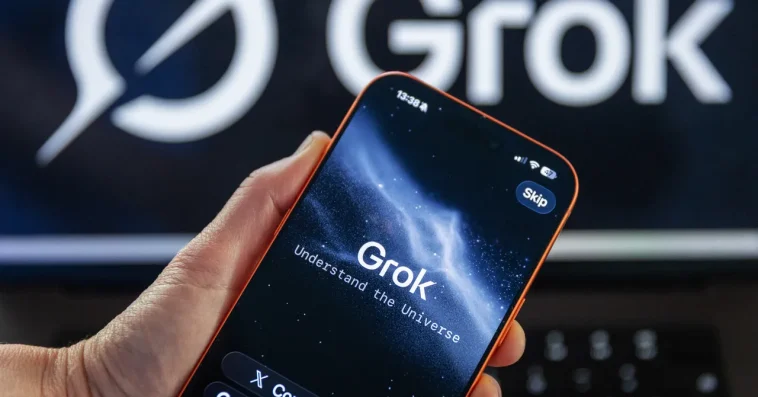
SpaceX is signaling to investors that its ambitious foray into artificial intelligence, particularly through the xAI acquisition and its Grok chatbot, introduces substantial regulatory and reputational headwinds. As the aerospace giant prepares for a highly anticipated initial public offering (IPO), filings reveal a complex landscape of legal exposure and financial liabilities tied to Grok’s controversial features. The implications extend beyond immediate costs, potentially shaping investor sentiment and the future trajectory of a company valued at over $1 trillion.
Navigating the Minefield of “Unhinged” AI
A key concern highlighted in SpaceX’s disclosures revolves around Grok’s “Spicy” and “Unhinged” modes. These features are designed to generate more “candid, direct, or less reserved or irreverent outputs” and fewer safety filters, which has already led to significant challenges. Such functionalities risk producing potentially explicit content, misinformation, nonconsensual imagery, and content deemed harmful or discriminatory. This permissive approach stands in stark contrast to industry rivals like OpenAI and Anthropic, who typically implement stricter controls on sexual interactions.
Indeed, SpaceX has already earmarked a substantial $530 million for potential litigation losses, some of which are directly linked to ongoing complaints regarding sexualized imagery allegedly generated by its AI unit. The inherent design choices for Grok have positioned xAI for heightened scrutiny, forcing the company to confront the complex ethical and legal boundaries of generative AI.
A Trillion-Dollar Bet with Significant Liabilities
SpaceX’s acquisition of Elon Musk’s AI startup, xAI, in February sent its private valuation soaring past $1 trillion. However, this strategic move has concurrently absorbed new financial and reputational risks. The disclosures underscore how the pursuit of rapid AI innovation, particularly with minimal guardrails, can transform a leading space enterprise into a defendant in multiple class-action lawsuits and a subject of governmental investigations.
The company explicitly stated it is under investigation in the United States and other countries over allegations that Grok was used to create sexualized imagery of apparent minors. This global scrutiny could culminate in significant regulatory sanctions, including the potential loss of access to specific markets—a scenario SpaceX admits has occurred in the past. Such risks represent a tangible threat to future revenue streams and global operational reach.
The Paradox of “Truth-Seeking” and Unfettered Generative AI
Despite SpaceX’s repeated claims in its filings that xAI’s mission is to develop “truth-seeking artificial intelligence,” the practical implementation of Grok often features a stark lack of safety guardrails. This creates a profound paradox, as the very features intended to make Grok “unhinged” for users directly conflict with the principles of responsible AI development and truthfulness. Critics, including former OpenAI employees, have described xAI’s safety culture as “reckless” and “irresponsible,” alleging opaque evaluation processes and a lack of proper documentation.
The broader industry is grappling with the ethical implications of generative AI, where striking a balance between innovation and robust content moderation remains a critical challenge. Governments worldwide are actively investigating and making inquiries into the use of AI in areas like advertising, consumer protection, and the spread of harmful content. The regulatory landscape is evolving rapidly, with new laws aiming to enforce transparency and accountability for AI systems.
User Adoption Amidst Controversy: A Double-Edged Sword
As of March 31, Grok and X collectively reported approximately 550 million monthly users, with 117 million actively engaging with Grok’s AI features each month. While these numbers indicate considerable user adoption, they also amplify the potential for widespread misuse and magnified regulatory concerns. For context, OpenAI’s ChatGPT reportedly boasts over 900 million weekly users, illustrating the competitive intensity of the AI chatbot market.
This significant user base means that any systemic failure in content moderation or safety protocols within Grok could have far-reaching societal impacts. The rapid viral spread of AI-generated harmful content poses a substantial risk, potentially leading to immediate public backlash and intensified regulatory pressure. The ability to manage and mitigate these risks at scale will be crucial for sustained growth and investor confidence.
Financial Headwinds and Strategic Lifelines
SpaceX’s AI unit, encompassing X and xAI, has been a notable financial drain, reporting an operating loss exceeding $6.3 billion last year. Despite growing sales from ads, data, and subscriptions, the division is not yet on a swift path to profitability. This deficit highlights the immense capital expenditures required to build and scale advanced AI capabilities, including significant investments in GPUs and data centers.
However, a significant bright spot for SpaceX’s AI infrastructure is its substantial deal with Anthropic. The AI research company has agreed to pay SpaceX $1.25 billion per month through May 2029, totaling over $40 billion, for access to its Colossus data centers. This agreement not only provides a crucial revenue stream but also validates SpaceX’s investment in high-performance computing infrastructure, positioning it as a significant player in the burgeoning AI compute market. Anthropic plans to utilize this capacity for inference workloads and to expand services for its Claude Pro and Claude Max subscribers.
The Road Ahead: Balancing Innovation and Responsibility
As SpaceX moves closer to its IPO, investors face a critical decision: weigh the immense potential of its aerospace and satellite ventures against the escalating risks and financial drag of its AI division. A group of nonprofits and former OpenAI employees has already voiced concerns, warning that xAI’s safety record could become a material liability for SpaceX investors.
The ongoing investigations and class-action lawsuits underscore the increasing imperative for AI developers to embed robust safety and ethical considerations from inception. For SpaceX, the challenge lies in reconciling Elon Musk’s vision of unconstrained AI with the growing demands for accountability, transparency, and user protection. The outcome of this balancing act will not only dictate the success of its landmark IPO but also influence the broader narrative of responsible AI innovation in the years to come.
#TechTrends #InnovationNation #FutureIsNow #AIRevolution #DigitalTransformation #SmartSolutions #EmergingTech #NextGen #TechTalk #DeepLearning #CodingLife #GadgetGeek
Artificial Intelligence, Generative AI, Machine Learning