The Unseen Architecture of the Lanes: How Automation is Redefining Professional Bowling
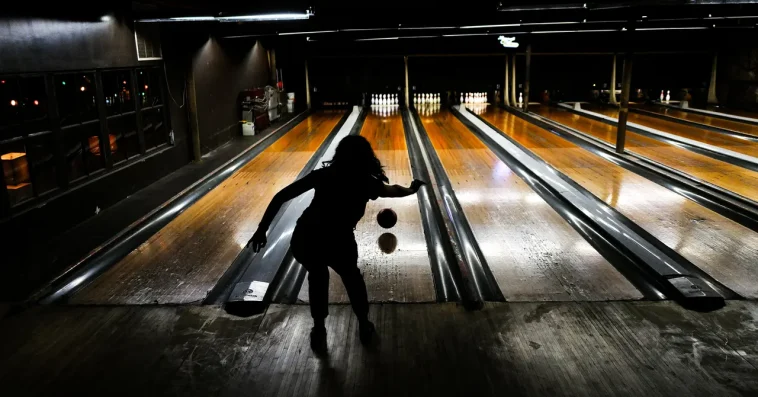
In the high-stakes world of professional bowling, victory hinges on precision, adaptability, and an intimate understanding of the playing field. Yet, the most crucial element remains largely invisible to the casual observer: the intricate patterns of lane oil. These meticulously applied oil layers, once a laborious manual task, are now sculpted with unparalleled accuracy thanks to advancements in automation, fundamentally transforming the competitive landscape.
Automated Precision: Kegel’s Technological Revolution
At the forefront of this revolution is Kegel, a name synonymous with lane maintenance innovation. The company has steadily refined its automation technologies, culminating in machines capable of executing complex oiling patterns with absolute consistency and without human intervention. This leap forward ensures that every board of a 60-foot lane can be treated with exact specifications, eliminating variables and elevating the scientific rigor applied to the sport. The implications extend beyond mere convenience, promising a future where pattern design can become even more sophisticated and dynamic, pushing the boundaries of strategic play.
Amateur vs. Professional: A Tale of Two Surfaces
The difference in lane conditions between your local bowling alley and a professional tournament is stark. Recreational lanes typically feature a “high” oil ratio, with the center of the lane boasting eight to ten times more oil than the drier edges. This design, as explained by bowler Tackett, incorporates a degree of “autocorrect.” Shots that drift wide encounter less oil, allowing the ball to slow and hook more effectively back towards the coveted “pocket” – the ideal strike zone between the headpin and the adjacent pin. This forgiving setup is designed to enhance the amateur experience, making the game accessible and enjoyable for all skill levels.
In stark contrast, professional lanes present a far more formidable challenge. The Professional Bowlers Association (PBA) utilizes oil ratios often as low as 3:1, and sometimes even approaching 1:1, meaning the difference in oil volume from the center to the edges is minimal. This reduction in the “bumper effect” demands extraordinary precision in ball placement, speed, and rev rate. Bowlers must meticulously map out their shots, board by board, to navigate these unforgiving conditions, transforming each frame into a complex equation of physics and finesse.
The Tactical Canvas: Where Strategy Meets Skill
Beyond mere ratios, oil patterns also vary significantly in length, dictating how far down the 60-foot lane the oil extends before tapering off. Common patterns might run for 40 feet, but countless variations exist, each presenting unique challenges. As lane oil technology advances, understanding and adapting to these complex patterns has become an increasingly critical tactical element for professional bowlers. Tackett aptly likens it to golf, where the course layout with its water hazards, bunkers, and rough defines the difficulty. In bowling, the oil pattern “adds obstacles to the lane,” turning a seemingly simple roll into a strategic minefield.
This intricate dance between technology and athletic prowess elevates bowling from a test of brute force to a sophisticated mind game. Bowlers must not only possess exceptional physical skill but also keen analytical abilities to decipher patterns, make real-time adjustments, and strategize multiple shots ahead. This intellectual component is a key driver of the sport’s growing appeal.
PBA’s Vision: Elevating the Challenge
Far from standardizing conditions, the PBA actively embraces the latest advancements in lane oil technology to diversify challenges across its events. This deliberate strategy, as articulated by PBA Commissioner Tom Clark, is designed to test the full spectrum of a bowler’s abilities. “It forces players to think, adapt, and create, which is how we test greatness,” Clark explains. This approach ensures that every competition offers a fresh puzzle for athletes to solve, making the sport more dynamic, exciting, and entertaining for fans.
For the 2026 season, the PBA boasts a library of 20 distinct lane oil patterns from Kegel, each with unique ratios, lengths, and even specific oil formulations. These patterns, often named after legendary bowlers like the “Don Johnson 40,” are rotated throughout the season, ensuring that players never face identical conditions week after week. This commitment to varied challenges not only pushes bowlers to continually evolve their game but also fosters a deeper appreciation for the nuanced artistry involved in achieving professional-level success.
Future Lanes: The Evolving Science of Bowling
The relentless march of automation and data analytics promises even more sophisticated futures for lane oiling. We can anticipate the integration of artificial intelligence and machine learning to design patterns that dynamically respond to environmental factors or even tailor conditions to specific competitive narratives. Imagine patterns that subtly shift throughout a tournament, demanding constant adaptation from athletes, or virtual reality training simulations that allow bowlers to master hundreds of unique oil patterns before ever stepping onto a physical lane. These innovations will continue to push the boundaries of human performance and strategic thinking, ensuring that the unseen architecture of the lanes remains a captivating and ever-evolving frontier in professional bowling.
#TechTrends #FutureIsNow #InnovationHub #DigitalLife #AIRevolution #GadgetGoals #SmartLiving #VirtualReality #TomorrowTech #DataDriven #TechTalk #FutureOfWork
Artificial Intelligence, Cloud, Cybersecurity