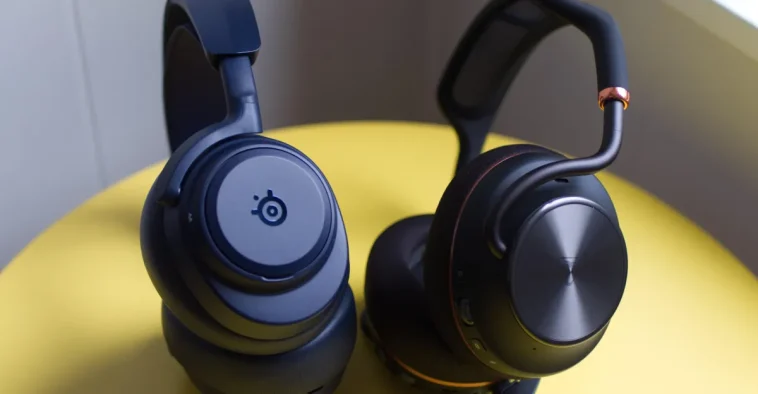
High-Stakes Audio: SteelSeries Arctis Nova Pro Omni vs. Turtle Beach Stealth Pro 2
The landscape of high-fidelity wireless gaming audio has intensified, with two industry titans, SteelSeries and Turtle Beach, launching formidable contenders. As discerning tech journalists at InnovationWarrior.com, we’ve put the new SteelSeries Arctis Nova Pro Omni and the Turtle Beach Stealth Pro 2 through their paces to determine which reigns supreme in a fiercely competitive market. The battle for audiophile gamers’ ears is far from settled.
The Evolution of Premium Gaming Sound
SteelSeries has long set a high bar with its Arctis Nova Pro Wireless, a headset that earned significant acclaim for its comprehensive feature set and superior performance. Its successor, the $399 Nova Pro Omni, released on May 5th, maintains a strikingly similar design to the beloved 2022 model, yet introduces several key enhancements. These include robust support for wireless hi-res audio, delivering 24-bit/96kHz audio over a stable 2.4GHz connection, alongside markedly improved microphone clarity and universal console compatibility across all its variants. For those seeking the absolute pinnacle, the $599 Nova Elite distinguishes itself primarily through premium build materials and larger drivers, signaling a clear tiering within the SteelSeries ecosystem.
However, the playing field became significantly more crowded with the arrival of Turtle Beach’s Stealth Pro 2. Unveiled just weeks before the Omni, this $349 headset clearly draws inspiration from the innovations pioneered by SteelSeries. It integrates highly desirable features such as swappable batteries, a dedicated wireless base station for charging, a intuitive companion app for real-time audio adjustments, and the invaluable ability to simultaneously process both 2.4GHz and Bluetooth audio streams. Crucially, the Stealth Pro 2 also boasts wireless hi-res audio support, all while presenting a more accessible price point.
Hi-Res Audio: A Marketing Pinnacle or Audible Reality?
Our concurrent testing of both the Arctis Nova Pro Omni and the Stealth Pro 2 quickly revealed that while both headsets deliver exceptional audio experiences, their touted hi-res audio capabilities serve more as a marketing highlight than a practical differentiator for most users. Despite rigorous evaluation across lossless music libraries via Qobuz and immersive, sound-critical gaming sessions in titles like Marathon, the distinction between 24-bit/96kHz hi-res and the standard 24-bit/48kHz bitrate proved imperceptible.
This finding underscores a broader industry conversation: the tangible benefits of ultra-high-resolution audio often diminish beyond a certain threshold for the average listener. Factors such as individual hearing acuity, environmental noise, and the quality of the source material itself frequently outweigh the theoretical advantages of higher bitrates. While the technology is impressive, consumers should temper expectations regarding a transformative auditory experience solely based on the inclusion of hi-res audio. It’s a feature for the spec sheet, less so for the ears, particularly for those with auditory sensitivities like tinnitus.
Design Philosophy and Control: Centralized vs. On-Device
The functional disparities between these two premium headsets highlight differing design philosophies regarding user control and integration. For gamers whose setups are spatially distributed, the Stealth Pro 2 emerges as the more practical choice. Its intuitive button allows seamless toggling between multiple USB transmitters, a boon for those with consoles and PCs in separate locations, all while maintaining an uninterrupted Bluetooth connection to a mobile device.
Turtle Beach further enhances user agency with an abundance of on-device controls. The Stealth Pro 2 features a dedicated button for cycling through equalizer presets and three distinct dials for independent adjustment of USB source volume, Bluetooth volume, and the crucial game/chat audio mix. Its companion app also allows for extensive customization of additional inputs, empowering users to tailor their audio experience without interrupting gameplay. This design ethos prioritizes immediate, tactile control directly on the headset, catering to a dynamic, multi-device environment.
In contrast, the SteelSeries Arctis Nova Pro Omni, while functionally similar to its predecessor, centralizes control through its robust GameHub base station. This hub acts as the comprehensive audio command center for an entire gaming ecosystem, capable of accepting up to four wired audio sources (three USB-C and one 3.5mm line-in) and mixing three of these simultaneously, including Bluetooth. The Omni’s microphone also offers cross-platform compatibility. This configuration is ideal for those with a concentrated gaming setup where the GameHub is consistently within arm’s reach, making it a powerful, integrated solution for managing complex audio inputs.
The Sonic Showdown: Audio and Microphone Prowess
Both the Nova Pro Omni and the Stealth Pro 2 deliver rich, balanced audio that deeply immerses players in their digital worlds. Even with their active noise cancellation (ANC) disengaged, the ear pads of both headsets effectively attenuate a substantial amount of external noise, fostering focused gameplay. While both offer in-depth equalizer customization through their respective PC applications, the Omni subtly pulls ahead in overall sound reproduction.
The SteelSeries headset exhibits stronger, more defined mids and highs, coupled with a nuanced warmth when audio content demands it. Its bass response is notably more controlled, and the delineation between frequencies is superior, contributing to a clearer, more dynamic soundstage. While the Stealth Pro 2 comes remarkably close in its audio presentation, the Omni delivers a slightly more refined and precise sonic experience.
Where SteelSeries truly establishes a lead is in microphone quality. The Omni’s retractable boom mic demonstrably outperforms Turtle Beach’s detachable, flip-to-mute offering. Recordings reveal a warmer, more detailed vocal capture from the Omni, avoiding the somewhat telephonic quality present in the Stealth Pro 2’s output. While neither can fully rival the fidelity of a dedicated desktop microphone, the SteelSeries offering provides a significant advantage for in-game communication and casual voice chat.
The Verdict: Value, Convenience, and Future Outlook
Ultimately, the choice between these two exceptional headsets hinges on individual setup preferences and budget considerations. The Turtle Beach Stealth Pro 2 presents a compelling value proposition, priced $50 less than the Omni, and incorporates a suite of features that have historically been hallmarks of SteelSeries’ premium offerings. Its emphasis on on-device controls and multi-transmitter flexibility makes it a superb choice for dynamic, dispersed gaming environments.
However, the Arctis Nova Pro Omni remains a truly fantastic headset. For users who maintain a centralized gaming station and appreciate the sophisticated, multi-source mixing capabilities of the GameHub, its slightly higher price point is justified. The integrated design and superior microphone make it a formidable contender.
For those operating on a stricter budget under $300, the previous-generation SteelSeries Nova Pro Wireless continues to be an outstanding option, frequently available around $270. Its lack of wireless hi-res audio, as our testing suggests, is not a significant drawback, and its enduring appeal lies in its well-established comfort, performance, and sleek design.
The future of gaming audio points towards continued innovation in wireless technologies, with an increasing focus on spatial audio algorithms and even further reductions in latency. As AI-enhanced audio processing becomes more prevalent, we can anticipate headsets that not only deliver pristine sound but also intelligently adapt to game environments and user preferences. While hi-res wireless audio is a welcome step, the true revolution will lie in the intelligent integration of these technologies into an effortlessly immersive and personalized gaming experience.
#TrendingNow #Innovation #Tech #FutureIsNow #AI #Gaming #Explore #DailyDose #Motivation #Lifestyle #Fitness #Travel
Artificial Intelligence, Generative AI, Cloud