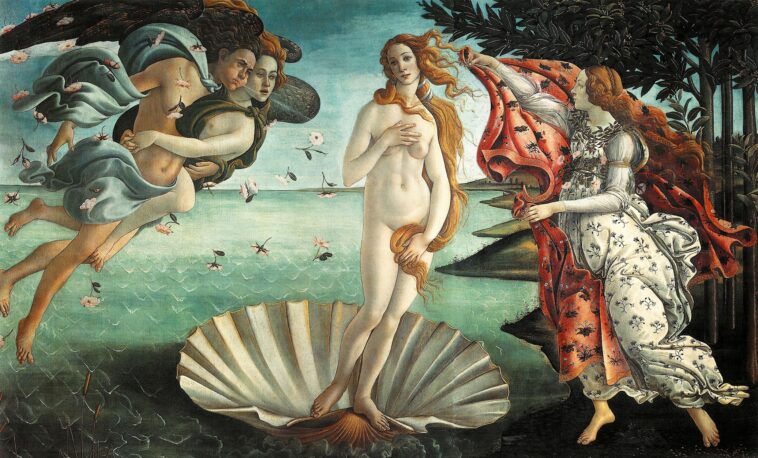

Italy’s Uffizi Galleries is suing French fashion line Jean Paul Gaultier for using images of Sandro Botticelli’s The Birth of Venus in a clothing line, the Guardian reported.
The Renaissance Botticelli painting, housed in Florence’s 257-year-old Uffizi, adorns shirts, skirts, dresses and pants within a Jean Paul Gaultier collection called ‘Le Musee.’
The galleries’ legal office sent a formal warning notice to Jean Paul Gaultier in April demanding payment, to which they received no response, according to a statement from the Uffizi given to ArtNet.
While Botticelli’s work is in the public domain, Italy’s code of cultural heritage heavily regulates the use of Italian-owned artwork for commercial purposes, requiring permission and licensing fees. “This is not a copyright manner, as such, these works are long out of copyright,” said Christine Steiner, an art law attorney and professor at Loyola Law School, in an email to the Observer. “It’s a patrimony issue, Italian laws authorize the museums to protect the merchandising of the works in the collections.”
This isn’t the first time Italy has taken legal action over unauthorized use of national artwork. In 2021, the Uffizi sued Pornhub for reproducing paintings, such as Titian’s Venus of Urbino, in porn videos without permission, which the company eventually removed.
“In the U.S., you’d be free to use that artwork,” said Leila Amineddoleh, founder of art and cultural heritage law firm Amineddoleh & Associates. But Italy is particularly protective of its artwork, she said. “So much of Italy’s tourism and so much of its GDP and value in the country is tied to its art and heritage.”
The fashion company allegedly ignored a warning back in April
However, Amineddoleh said that museums like the Uffizi are relatively liberal in granting licensing agreements, so long as companies pay the fee. “Here, there was no license request. Jean Paul Gaultier just went and used the image in its designs.” While it’s not uncommon for companies to attempt to bypass the process of licensing fees, the fact that the clothing brand, owned by Spanish fashion company Puig, ignored the Uffizi ‘s letter in April is unusual, Amineddoleh said.
“There’s a lot of views amongst some people that cultural heritage should be relatively free for the taking,” said Patty Gerstenblith, director of DePaul University’s center for art, museum and cultural heritage law. “So it can come as a surprise that places like Italy protect heritage and reap the benefits of that heritage.”
Italy and Egypt are the only two countries with laws regulating the use of heritage items for commercial purposes, according to Gerstenblith. “As far as I’m aware, those are the only ones. We have no such law in the U.S.,” she said.
However, Gerstenblith is not so confident that the Uffizi litigation attempts against the French-based fashion line will be successful. “Italy can only pursue assets that are within Italy,” she said. “So if Jean Paul Gaultier is selling clothing in other countries, I don’t think Italian law would reach that.”
Jean Paul Gaultier did not respond to requests for comment.