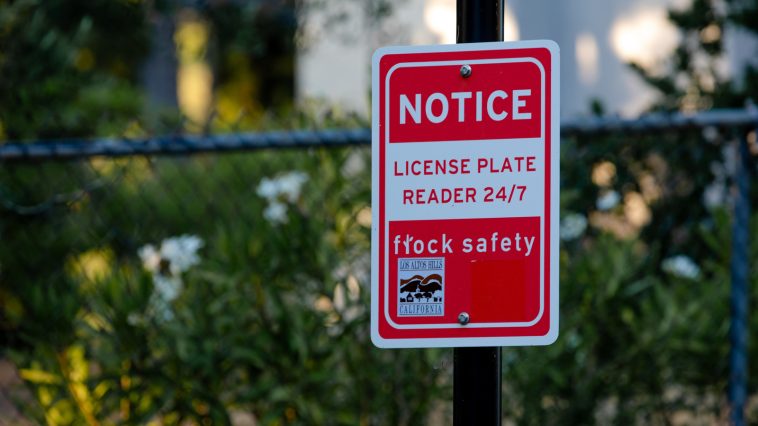
The Shadow Network: Unpacking the Alarming Rise of AI Surveillance and Flock Safety
“You can’t get a breath of fresh air… without us knowing.” This chilling statement, reportedly from a police officer, encapsulates the pervasive reach of a new generation of surveillance technology rapidly spreading across the United States. Driven by advancements in artificial intelligence, Automated License Plate Readers (ALPRs), particularly those from Flock Safety, are transforming public monitoring, moving far beyond simple traffic enforcement into uncharted territory for privacy and civil liberties.
The proliferation of these AI-powered cameras, now numbering over 100,000 nationwide with Flock Safety dominating the market, has ignited a fierce public debate. While often marketed as crime-fighting tools, their capacity to indiscriminately track every individual, regardless of their involvement in criminal activity, raises profound ethical and constitutional questions. The societal implications of such an “always-on” surveillance state demand rigorous scrutiny, particularly given the documented issues of security vulnerabilities, widespread misuse by law enforcement, and AI malfunctions that have ensnared innocent citizens.
Beyond License Plates: The True Scope of Flock’s Capabilities
While commonly referred to as ALPRs, the term “license plate reader” barely scratches the surface of Flock Safety’s true capabilities. These devices, typically mounted along roadways, are sophisticated AI-driven systems designed to log the movements and characteristics of every vehicle that passes within their field of vision. They leverage advanced algorithms, often running on modified Android operating systems, to not only identify license plates but also to discern vehicle make, model, color, and even minor details like bumper stickers or paint scratches. This granular data is then transmitted wirelessly to a central database, where it is cataloged and made searchable using natural language queries by any authorized user.
Flock Safety’s offerings extend beyond fixed ALPRs to include AI security cameras, mobile security trailers, and even quadcopter drones, all operating on the same principle of automated, intelligent surveillance. Unlike traditional surveillance cameras that require manual footage review, Flock’s systems empower users to search for specific vehicles or even individuals based on detailed descriptions, creating an unprecedented level of real-time and retrospective tracking capability. This massive data collection system creates a “data exhaust” for every driver, allowing for the construction of detailed profiles of movement patterns and associations.
The reach of this network is expansive, often extending beyond local jurisdictions. While contracts may be confined to specific areas, many police departments opt to join a nationwide network, granting them access to data collected across vast geographies. This includes, alarmingly, access for federal agencies like Immigration and Customs Enforcement (ICE) and other Homeland Security branches, often facilitated through data-sharing agreements with local police departments, bypassing the need for warrants. This data, collected without suspicion of wrongdoing, can be retained for up to 30 days, creating a detailed historical record of citizen movements.
While proponents argue that ALPRs are effective crime-solving tools, pointing to instances where they have aided in investigations like murder cases or stolen vehicle recoveries, the effectiveness in overall crime reduction is often overstated. The primary concern remains the fundamental shift in privacy: a system that indiscriminately tracks everyone, innocent or not, transforming public spaces into zones of constant digital scrutiny.
A House of Cards: Flock’s Persistent Security Flaws
Despite its role as a security provider, Flock Safety has been repeatedly plagued by significant security vulnerabilities, undermining the very trust it seeks to establish. The company’s fervent assurances of security often clash with realities exposed by independent researchers. A prominent example is the work of musician and YouTuber Benn Jordan, who, despite lacking a formal cybersecurity background, unearthed critical exploits.
In December 2025, Jordan revealed that dozens of Flock Safety cameras, including their “Condor” models designed to track individuals, were openly accessible via commercial search engines, requiring no password to view live footage. This meant intimate private moments, from children playing in parks to personal disagreements, were inadvertently exposed to anyone with minimal technical savvy. This incident followed earlier revelations in November where Jordan and researcher John Gaines demonstrated how physical access to the cameras allowed for root access via basic Android development tools, even enabling malware installation and exploitation of exposed USB ports. Flock Safety, however, has often dismissed these findings, accusing researchers of being “activist groups” rather than embracing responsible disclosure.
These vulnerabilities highlight a severe ethical lapse for a company entrusted with public safety infrastructure. The potential for malicious actors, beyond just curious individuals, to exploit these flaws is immense, ranging from sophisticated data theft to manipulating surveillance feeds for nefarious purposes. Such lapses erode public confidence and raise serious questions about the due diligence exercised by cities in adopting these technologies.
Unchecked Power: Misuse by Law Enforcement
The allure of an omnipresent surveillance network like Flock’s can be intoxicating for law enforcement, offering unparalleled capabilities to track individuals with a few keystrokes. However, this unchecked power has predictably led to rampant misuse. The absence of robust guardrails and the minimal oversight often associated with these systems create fertile ground for abuse. Warrants are rarely required for database searches, and the lack of comprehensive paperwork trails makes accountability elusive.
Instances of police officers exploiting the Flock network for personal gain are disturbingly common. 404 Media reported dozens of documented cases where officers used ALPRs to stalk ex-partners, current romantic interests, or other individuals. Many of these abuses only came to light when victims proactively investigated their own movements using tools like “HaveIBeenFlocked.” While Flock claims its “Audit Assistance” tool proactively flags unintended use, the true scale of such misuse likely remains significantly underestimated, as detection often relies on the victims themselves.
Even more egregious are revelations about internal conduct at Flock Safety. A shocking report uncovered that Flock employees had accessed camera feeds from a children’s gymnastics room and swimming pool at a community center in Atlanta, using the footage as part of sales demonstrations to police departments. Flock’s dismissive response, portraying these employees as “well-intentioned” despite the clear privacy violation, further fueled public outrage and highlighted a concerning lack of ethical responsibility within the company itself. This systemic vulnerability underscores the dangers of delegating such powerful surveillance capabilities to entities without stringent ethical frameworks and independent oversight.
The Cost to Innocence: AI Malfunctions and False Accusations
Beyond intentional misuse, the inherent fallibility of AI systems deployed in high-stakes environments has led to innocent individuals being wrongly targeted and accused. The city of Denver’s experience with Flock cameras provides a stark illustration. After installing 111 cameras, the city renewed its contract despite unanimous city council opposition, largely due to a mayoral override.
One poignant example is that of financial advisor Chrisanna Elser, who faced a summons for theft after a Flock camera allegedly placed her Rivian truck near a crime scene. “You can’t get a breath of fresh air in or out of that place without us knowing,” a police sergeant reportedly told her. Fortunately, Elser’s own vehicle cameras provided irrefutable evidence of her innocence, leading to the charges being dropped.
However, many others have not been so lucky. Numerous Colorado drivers have been pulled over at gunpoint and treated as suspected criminals because Flock ALPRs misread a “0” as an “O” or vice versa. These AI malfunctions, which some studies suggest can lead to misreading 1-in-10 license plates, can have terrifying consequences, placing citizens on “hotlists” from which they cannot be removed. The psychological toll of being under constant, erroneous suspicion, and the burden of having to prove one’s innocence against an unyielding automated system, represents a significant erosion of fundamental rights. This trend risks creating a justice system where algorithms hold more sway than human discretion and due process.
The Enduring Appeal: Why Cities Embrace Controversial Surveillance
Given the well-documented security flaws, widespread misuse, and potential for false accusations, the continued proliferation of Flock cameras in cities across the nation seems counterintuitive. Several factors contribute to this enduring appeal, often at the expense of citizen privacy and democratic accountability.
One primary driver is Flock Safety’s aggressive marketing directly to law enforcement agencies and city officials. For those focused solely on crime statistics, the promise of blanketing an area with AI-powered cameras, and the ability to rapidly search vast databases, is a tantalizing prospect. This often bypasses meaningful public input, leaving average citizens, especially marginalized communities disproportionately affected by surveillance, with little to no say in the deployment of such invasive technology. While Flock touts its products as powerful crime deterrents, empirical evidence definitively linking ALPRs to significant crime reduction remains limited and contested.
The case of Denver’s Mayor Johnston, who falsely claimed Flock cameras aided in a high-profile murder investigation to justify renewing the contract, highlights the tendency for officials to prioritize perceived effectiveness over factual accuracy and public concern. The victim’s mother publicly refuted these claims, revealing the mayor’s statements to be baseless.
Furthermore, Flock’s business model includes remarkably restrictive contracts, creating a vendor lock-in that makes it exceedingly difficult for cities to disengage. When Dayton, Ohio, and Evanston, Illinois, sought to terminate their agreements, they resorted to covering the cameras with garbage bags—a stark, almost farcical, symbol of institutional helplessness against pervasive surveillance technology. This illustrates a systemic challenge where municipalities, once entangled, find it nearly impossible to dismantle these pervasive networks, even in the face of overwhelming public disapproval.
The expansion of such surveillance represents a critical juncture for civil liberties and democratic governance. As the digital footprint of every citizen is meticulously cataloged, the potential for mission creep—where data collected for one purpose is used for another—becomes a pressing concern. The widespread deployment of ALPRs and similar AI-powered surveillance systems demands heightened transparency, robust oversight, and enforceable regulations to protect individual rights in an increasingly monitored world. Tools like the DeFlock map, which visualizes the spread of these cameras, are vital in empowering communities to understand and resist this creeping surveillance.
#Motivation #Inspiration #Success #Mindset #Productivity #Growth #Innovation #FutureTech #Wellness #HealthyLiving #FitnessGoals #TravelLife
Artificial Intelligence, Cloud, Cybersecurity