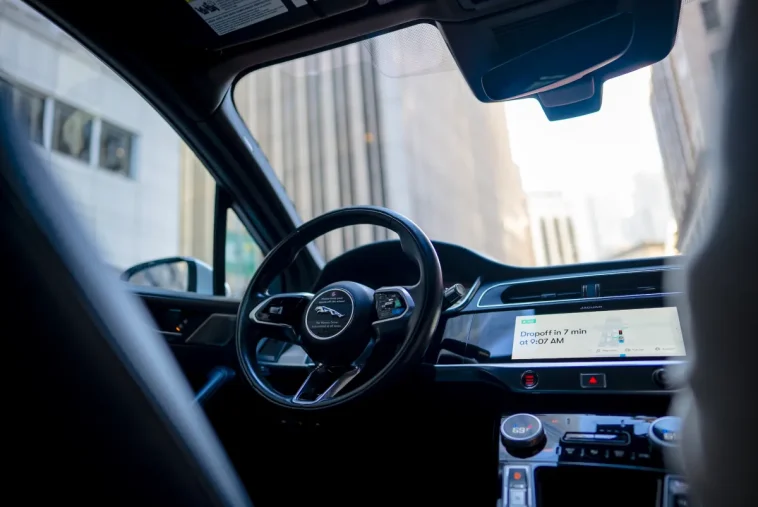
Waymo’s Robotaxis Grapple with Flooding, Prompting Multi-City Service Pauses
San Francisco, CA – Waymo, a frontrunner in autonomous vehicle technology, is confronting significant operational challenges as its robotaxi services in four major U.S. cities have been temporarily suspended due to heavy rainfall and widespread flooding. This recent wave of disruptions follows a software recall issued last week, underscoring the complex hurdles still facing the commercialization of fully autonomous driving in diverse environmental conditions.
Autonomous Ambitions Meet Aquatic Adversity
The recent incidents highlight a critical vulnerability in current autonomous driving systems: their capacity to safely navigate dynamic and unpredictable severe weather events. On Wednesday, a Waymo robotaxi in Atlanta, Georgia, was observed driving through a flooded street before ultimately becoming stranded for approximately an hour. The unoccupied vehicle was later recovered, and Waymo confirmed the temporary suspension of service in Atlanta, mirroring a similar pause in San Antonio, Texas, as the company seeks a resolution. Waymo stated that safety remains its top priority for both riders and other road users.
The scope of the problem extends beyond individual incidents. Waymo also halted services in Dallas and Houston due to severe weather conditions across Texas. These precautionary measures, while essential for safety, reveal the current limitations of even advanced AI drivers when faced with the nuanced and often rapidly evolving hazards presented by heavy precipitation and urban flooding. The ability to accurately perceive water depth, predict its flow, and differentiate between a puddle and an impassable flood zone remains a formidable engineering challenge.
Software Solutions and Their Limits
In response to earlier flooding-related incidents, Waymo had already initiated a software recall for nearly 3,800 robotaxis. The recall, filed with the National Highway Traffic Safety Administration (NHTSA) on April 30, addressed a software issue that could cause vehicles to “slow and then drive into standing water” on roadways, particularly those with higher speeds. Waymo admitted at the time that a “final remedy” for completely avoiding flooded areas had not yet been fully developed. Instead, an interim software update was deployed to introduce “restrictions at times and in locations where there is an elevated risk of encountering a flooded, higher-speed roadway.”
However, the Atlanta incident suggests that these initial precautions proved insufficient. Waymo indicated that the storm produced such intense rainfall that localized flooding occurred before the National Weather Service could issue official warnings, watches, or advisories. The company relies on these alerts as part of its broader set of signals for preparing its fleet for inclement weather. This points to a need for more sophisticated, real-time environmental monitoring and predictive analytics that can anticipate flash flood conditions even before official warnings are issued, allowing autonomous systems to make proactive routing adjustments.
Regulatory Lens Tightens Amidst Broader Scrutiny
The NHTSA is actively monitoring the situation in Atlanta, remaining in communication with Waymo and prepared to take appropriate action if necessary. This incident adds another layer of scrutiny to Waymo’s operations, which are already under investigation by both the NHTSA and the National Transportation Safety Board (NTSB) for a series of other concerning behaviors.
These investigations include instances where Waymo robotaxis reportedly illegally passed stopped school buses, a problem the company attempted to address with a software fix that did not entirely resolve the issue. Furthermore, both regulatory bodies are probing a January 23 incident in Santa Monica, California, where a Waymo robotaxi collided with a child. Waymo stated its vehicle braked to approximately six miles per hour before impact, resulting in minor injuries to the child. These ongoing investigations underscore the critical importance of robust safety validation and transparent communication as autonomous vehicle technology matures.
The Road Ahead for Robotaxis
The challenges posed by adverse weather are not unique to Waymo but represent a fundamental hurdle for the entire autonomous vehicle industry. While AVs promise enhanced safety and efficiency, their performance hinges on reliable perception and decision-making in an infinitely variable world. Water, in particular, can obscure lane markings, alter tire traction, interfere with sensor data (lidar, radar, cameras), and create unpredictable driving conditions.
For autonomous systems to truly achieve widespread adoption and gain public trust, they must demonstrate an unwavering ability to handle extreme environmental variables with human-like, or ideally, superhuman, discernment and caution. This necessitates advancements in sensor fusion, AI models trained on vast and diverse datasets of severe weather scenarios, and potentially, entirely new forms of predictive environmental mapping and communication infrastructure. The recent service pauses serve as a potent reminder that the journey to truly autonomous, all-weather driving remains a complex and iterative process of innovation and rigorous testing.
#ExplorePage #ForYou #TrendingNow #ViralVideos #InstaGood #Motivation #SuccessMindset #DailyInspiration #LifeHacks #TechTrends #FitnessGoals #TravelVibes
Artificial Intelligence, Cloud, Cybersecurity