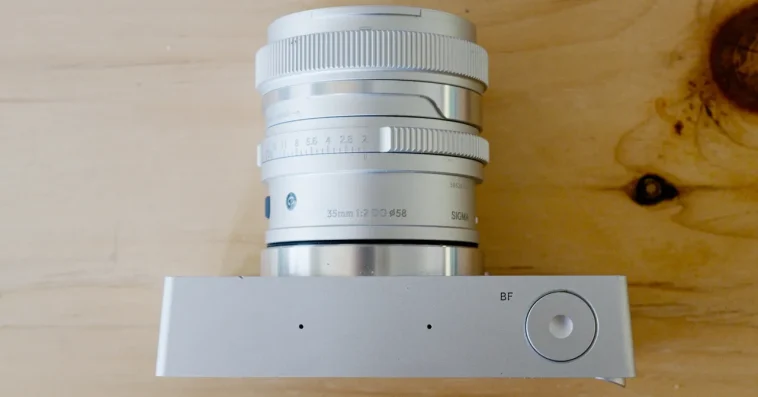
Sigma BF: A Divisive Vision in Modern Photography
The landscape of digital photography is constantly evolving, with manufacturers striving to balance cutting-edge technology with user experience. Sigma’s BF camera emerges as a curious case study, presenting a device that defies conventional expectations, for better or worse. While its design choices spark debate, they also hint at a deliberate philosophy, potentially carving out a unique niche in a crowded market.
Internal Storage: A Double-Edged Sword
One of the immediate points of contention with the Sigma BF is its approach to storage. The absence of a removable memory card slot is a notable departure from industry norms, requiring photographers to rely solely on the generous 256 gigabytes of internal storage. While this capacity is substantial—often more than sufficient for a non-professional photographer’s typical outing before needing to offload files—it introduces a rigid workflow that professional users, accustomed to quick card swaps in the field, might find restrictive.
This design decision streamlines the device by eliminating a potential point of failure or complexity, but it simultaneously forces a more tethered approach to data management. In an era where cloud integration and seamless wireless transfer are increasingly prevalent, a fixed internal storage solution, even a large one, presents a trade-off between simplicity and ultimate flexibility. It underscores a design ethos that prioritizes a self-contained unit over universal adaptability.
The Viewfinder Dilemma: A Purist’s Peril?
Perhaps the most significant design choice, and a potential deal-breaker for many, is the complete omission of a physical viewfinder. For seasoned photographers, the act of bringing a camera to the eye is almost instinctual—a deeply ingrained “muscle memory” that connects them intimately with their subject and composition. The viewfinder offers unparalleled stability, immersion, and clarity, especially in challenging lighting conditions.
This deliberate absence forces users to rely entirely on the rear display for framing and focusing. While some photographers, particularly those migrating from smartphone photography, might find this natural, it fundamentally alters the photographic experience. It suggests a camera designed for a more detached, perhaps more contemplative, mode of operation, moving away from the instantaneous, immersive feedback that traditional viewfinders provide. This could be a nod to a future where computational photography and screen-based interfaces dominate, but it leaves traditionalists yearning for a foundational element of photographic craft.
Screen Visibility and Power Management: Practical Hurdles
The reliance on the rear screen is further complicated by its performance in real-world scenarios. In bright sunlight, the display becomes notoriously difficult to use, often appearing too dark to accurately compose an image. This issue is compounded by the screen’s fixed nature; lacking any tilt or articulation, it severely limits creative angles, forcing photographers into awkward positions for low or high shots. Capturing an unusual perspective, such as from the ground, necessitates physically getting down to eye level with the screen, a considerable ergonomic inconvenience.
Attempting to mitigate the poor visibility by cranking up the screen brightness only exacerbates another significant limitation: battery life. Sigma claims approximately 260 shots per charge, but this figure plummets dramatically under bright conditions when the display is at maximum intensity. Real-world usage frequently reveals a paltry two to three hours of shooting time in direct sunlight. This synergy of a problematic display and an inadequate power source creates a frustrating user experience, demanding constant vigilance over battery levels and often interrupting creative flow.
The Philosophy of Limitation: Crafting Intentional Imagery
Despite these apparent drawbacks, the Sigma BF embodies a peculiar philosophy where limitations are not merely constraints but integral to its character. At a price point around $2,200, its specifications might seem underwhelming when compared to feature-rich competitors. However, the camera is clearly not designed for the “spray and pray” approach common in modern digital photography. Instead, it demands a deliberate, thoughtful, and measured workflow.
This camera challenges photographers to work within its defined boundaries, encouraging a more intentional photographic process. It’s a tool that requires understanding its quirks and adapting one’s technique accordingly. For those willing to embrace this disciplined approach, the BF is undeniably capable of producing exceptional images, rewarding patience and precision over speed and convenience. It aligns with a growing movement towards more focused, minimalist technology that aims to enhance creativity through deliberate restriction.
A Niche Masterpiece in the Making?
Ultimately, the Sigma BF is not a camera for the masses. Its unconventional design choices and inherent limitations will deter the majority of photographers seeking versatility and ease of use. However, it is precisely these eccentricities that will attract a specific subset of enthusiasts. This device is poised to become a “cult camera,” appealing to those who appreciate its distinctive character and the unique creative challenge it presents.
In two decades, the BF may well be celebrated not despite its quirks, but because of them—a testament to Sigma’s willingness to experiment and a beacon for photographers who value artistic expression forged through a unique interaction with their tools. It stands as a fascinating example of how innovation isn’t always about adding more features, but sometimes about redefining the core experience for a dedicated audience.
#TrendingNow #ExplorePage #ViralContent #InstaDaily #ForYou #MotivationMonday #TechGadgets #TravelAdventures #HealthyLifestyle #ArtisticVibes #FitnessJourney #FoodieLover
Artificial Intelligence, Cloud, Cybersecurity