Otter.ai Charts a Course for Conversational AI, Poised to Make Typing Obsolete
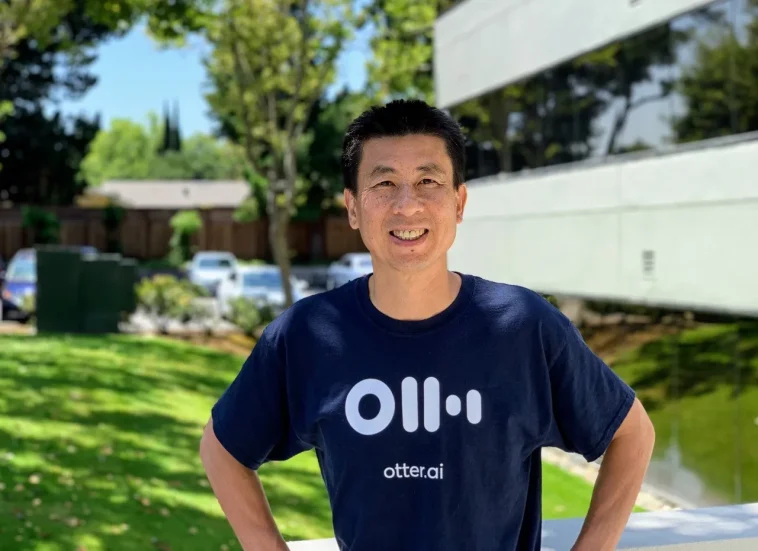
Sam Liang, the visionary co-founder of Otter.ai, launched his company in 2016, a period when Artificial Intelligence was far from the ubiquitous buzzword it is today. Fast forward to the present, and Otter.ai has not merely kept pace with AI’s rapid advancements but has actively shaped its evolution in the realm of communication and productivity. The platform’s sophisticated conversational knowledge engine now empowers users to derive profound insights from their vast repositories of meeting recordings, setting the stage for a future where typed input, even to advanced chatbots, may become a relic of the past.
Liang’s core philosophy centers on the paramount importance of context in AI applications. He astutely observes that a significant hurdle with current chatbots, such as ChatGPT or Claude, lies in the user’s burden of meticulously crafting prompts and providing extensive contextual information. Otter.ai, by contrast, seamlessly integrates AI directly into conversations, granting it immediate and comprehensive access to all relevant context. This inherent advantage allows for a much more intuitive and powerful interaction, unlocking new levels of efficiency.
Strategic Growth and Market Leadership
Otter.ai’s strategic focus on contextual AI has propelled it to remarkable success. The company announced exceeding $100 million in annual recurring revenue last year, a significant milestone demonstrating robust market adoption. Its reach extends deeply into the corporate world, with 86 percent of Fortune 500 companies leveraging its services. With over 35 million users by late last year and having secured $73 million in venture funding within its initial five years, Otter.ai is firmly established as a leader in the conversational AI space.
The platform’s strength lies in its ability to combine powerful external integrations, including Google Workspace and Anthropic’s Claude, with internal innovations like its agentic chat capabilities. This hybrid approach allows Otter.ai to not only transcribe and summarize but also to actively pull data and execute tasks based on conversational understanding. Even highly regulated sectors, such as large banks, are exploring integrating Otter.ai’s technology into their intricate workflows, a testament to its reliability and utility.
Differentiating in a Crowded Field
In a landscape increasingly populated by tech behemoths, Otter.ai has carved out a formidable competitive niche against giants like Microsoft and Google. While these larger entities benefit from the native integration of their note-taking features, such as Microsoft Teams’ capabilities or Gemini for Google Workspace, Otter.ai’s crucial differentiator is its remarkable platform agnosticism. It operates seamlessly across a multitude of environments, including Zoom, Google Meet, Microsoft Teams, and even in-person discussions via its mobile application.
This cross-platform compatibility offers users unparalleled flexibility, making Otter.ai an indispensable tool for diverse communication ecosystems. Liang posits that merely deploying AI agents is insufficient to resolve complex productivity challenges. True effectiveness, he argues, stems from providing these agents with rich, contextual data gleaned from past interactions, empowering them to execute tasks with far greater precision and relevance. This insight underscores a fundamental shift in how businesses can leverage AI to enhance decision-making and operational agility.
The Conversational Knowledge Engine: A Vision Realized
The concept of a conversational knowledge engine has been foundational to Otter.ai’s vision since its inception. While the initial years were dedicated to perfecting transcription and meeting summarization, the advent of large language models (LLMs) and advanced agentic technologies has now made the realization of this comprehensive knowledge engine truly possible. This technological leap has coincided with a critical “mindset change” among users and enterprises, fostering a growing willingness to embrace AI solutions for fundamental work transformation.
This evolving readiness to adopt AI for transforming workflows is crucial. Organizations are increasingly recognizing that unlocking the full potential of AI requires not just better models, but also a more intelligent way to feed those models with relevant, structured, and contextualized information. Otter.ai is at the forefront of this paradigm shift, offering a system that moves beyond simple automation to genuine conversational intelligence, thereby making enterprises significantly more productive.
Navigating Competition and Cultivating Innovation
Competing with Big Tech brings inherent challenges, primarily their vast distribution channels and pre-existing enterprise penetration. While these giants can easily bundle AI features, often for free, Liang shrewdly points out that this advantage can also be their Achilles’ heel. The ease of bundling can sometimes dilute the motivation to build the absolute best-in-class product. He suggests that large corporations often prioritize copying established successes rather than pioneering truly innovative concepts.
Liang’s prediction is that these tech titans may not fully acknowledge Otter.ai’s disruptive potential until it reaches the formidable milestone of $1 billion in revenue, drawing parallels to how Microsoft approached Slack only after it had achieved significant scale. This outlook underscores Otter.ai’s strategy: to innovate relentlessly and build a superior, specialized product that offers distinct value, thereby creating a lead that even the largest competitors will struggle to quickly replicate.
Balancing Productivity with Privacy and Authenticity
As conversational AI delves deeper into business and personal lives, concerns around privacy and data security are paramount. Otter.ai addresses this by implementing a robust security model akin to those found in Google, Microsoft, and Notion, allowing users to control access to their content. Features like private Otter channels ensure sensitive information remains protected, while also enabling selective sharing to break down organizational silos. This approach fosters a balance between enhanced workflow acceleration through information sharing and maintaining stringent data governance.
The question of authenticity in an AI-driven world also demands careful consideration. While video AI grapples with the proliferation of deepfakes, Liang argues that voice communication inherently possesses a higher degree of authenticity, especially in live interactions. He believes that even when an AI avatar speaks, its authenticity can be preserved if it draws from the user’s own “brain dump” or personal knowledge base. The future, he suggests, involves leveraging AI not to fabricate, but to intelligently synthesize and convey human ideas.
The Rise of Personal Meeting Avatars
Looking ahead, Otter.ai is actively exploring the frontier of personal meeting avatars. Liang revealed that a rudimentary avatar representing him has already been developed and even participated in a live interview with a Bloomberg reporter, demonstrating the nascent potential of this technology. The vision is clear: busy professionals could dispatch these intelligent avatars to represent them in certain meetings, effectively multiplying their presence and efficiency.
However, Liang acknowledges the considerable challenges in perfecting this technology. Beyond the technical complexities, significant ethical considerations emerge, particularly concerning fraud. The potential for malicious actors to use AI-cloned voices for scams necessitates robust detection mechanisms and user awareness campaigns. As with any powerful new technology, the benefits must be carefully weighed against and safeguarded from potential abuses, highlighting the critical role of responsible AI development.
The Future: Enterprise Intelligence and Beyond
The next significant frontier for voice communication integrated with AI, in Liang’s view, is the widespread adoption of the conversational knowledge engine within enterprises. By consolidating all meeting intelligence into such a system, companies can dramatically enhance both human and AI agent workflows, leading to unprecedented levels of productivity and efficiency. This integrated approach promises to transform how organizations capture, process, and act upon their collective knowledge.
Otter.ai remains confident in its ability to out-innovate larger tech companies, maintaining its agility and specialized focus. The company aims to continue shaping the future of conversational AI, delivering solutions that not only streamline communication but fundamentally redefine how we interact with technology and with each other. The journey from transcribing speech to orchestrating intelligent conversations is well underway, with Otter.ai at the vanguard of this exciting technological revolution.
#Hashtags #Engagement #SocialMedia #Marketing #DigitalMarketing #ContentMarketing #Trending #Viral #TipsAndTricks #Community #Innovation #Inspiration
Artificial Intelligence, Cloud, Cybersecurity