Meta’s Muse Spark: An Appetizer in the High-Stakes AI Race
In a rapidly accelerating artificial intelligence landscape, Meta recently introduced Muse Spark, its latest foundational AI model and the first major release under Chief AI Officer Alexandr Wang. While Muse Spark demonstrates competitive performance against some benchmarks, it currently trails industry leaders like OpenAI’s GPT-5.4 Pro and Google’s Gemini 3.1 Pro, prompting discourse on Meta’s position in the fiercely contested AI arms race. However, Wang’s recent statements suggest that such a framing may overlook Meta’s long-term strategic vision.
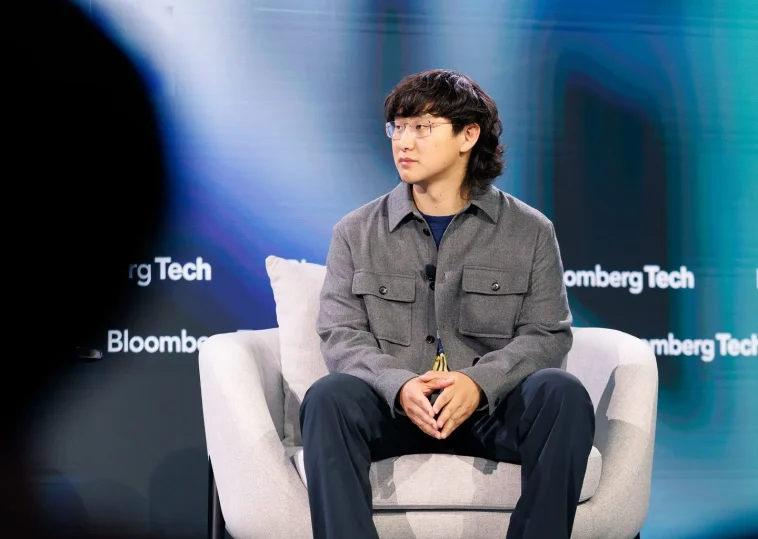
Speaking at the Bloomberg Tech Summit in San Francisco, Wang characterized Muse Spark not as a pinnacle, but as an “appetizer” – a crucial initial data point on a much broader developmental trajectory. “The new Muse Spark model that we released is not at the tier of the leading frontier models,” Wang acknowledged. “But we believe it’s a very exciting data point on the trajectory, and we expect the upcoming models we release to be quite competitive with the leading models in the world.” This clear articulation signals Meta’s intention to aggressively pursue frontier AI capabilities, with more powerful iterations already in advanced stages of development.
A Strategic Pivot: Proprietary Models and Multimodal Capabilities
Muse Spark represents a significant strategic shift for Meta. Unlike previous models which were often open-sourced, Muse Spark is a proprietary system deployed exclusively within Meta’s extensive product ecosystem. This move underscores a growing industry trend towards retaining control over advanced AI, enabling deeper integration, tighter security protocols, and direct monetization opportunities within proprietary platforms.
The model is engineered for sophisticated multimodal understanding, proficiently handling text, images, video, and audio. Its design also supports complex, multi-step tasks, laying the groundwork for advanced functionalities such as integrated shopping experiences across Instagram and Facebook content. This multimodal approach is critical for developing AI that can seamlessly interact with the rich tapestry of digital information users encounter daily.
Scaling for Superintelligence: The Compute and Data Imperative
The release of Muse Spark follows a challenging period for Meta’s AI division, notably after the mixed reception of Llama 4 in April 2025. Mark Zuckerberg’s recruitment of Alexandr Wang in June 2025 to head the newly formed Superintelligence Labs marked a decisive reset of the company’s AI strategy. Wang’s mandate is clear: scale operations across data, computing power, and research to accelerate breakthroughs.
Wang emphasized that the primary barrier to reaching the AI frontier is not merely financial capital, but rather the monumental effort required to “scale the data, the compute… as well as continuing to scale with research.” Meta is substantiating this commitment with unprecedented investments. The company projects capital expenditures of $125 billion to $145 billion in 2026, a substantial increase from $72.2 billion in 2025, with a clear target of deploying over 1.3 million GPUs and achieving approximately one gigawatt of AI computing capacity. This aggressive scaling positions Meta to compete directly with the immense computational resources wielded by other tech giants, signifying a belief that sheer scale is paramount for achieving advanced AI.
Navigating the Ethical Landscape: Safety and Responsible Deployment
The shift towards a closed, proprietary model for Muse Spark also reflects an increasing focus on safety and responsible AI deployment. During its development, Muse Spark reportedly triggered internal alerts, including concerns around potential biological risks. Such incidents highlight the inherent complexities and potential dangers associated with advanced AI systems.
“When the company launches a model in a product, we have a lot of ways to mitigate some of these risks,” Wang explained, contrasting this with the challenges of managing risk in open-source distributions. “It’s much harder to do that when you open-source the model.” While Meta has not entirely abandoned open-source AI and continues to develop models deemed safe for broader release, the decision for Muse Spark underscores a calculated approach to mitigate risks associated with powerful, potentially transformative AI technologies. The future of the Llama brand, long synonymous with Meta’s open-source contributions, remains a subject of internal debate, with no definitive plans yet announced.
The Rise of AI Agents and Internal Reorganization
Beyond foundational models, Meta is “doubling down” on the development of AI agents, with an ambitious goal to create “the best personal agents for everybody around the world.” Muse Spark’s inherent strengths in multimodal capabilities, health-related applications, and creative coding—such as generating simple games or digital tools—are seen as critical building blocks for these sophisticated AI agents. Wang himself uses such tools for personal health management and social connections, hinting at the deeply integrated and personalized experiences Meta envisions.
This strategic pivot is accompanied by significant internal restructuring. In May, Meta executed widespread layoffs affecting approximately 8,000 employees, while reassigning around 7,000 others to roles directly focused on AI development. This dramatic reallocation of talent underscores the company’s singular commitment to leading the AI revolution, albeit with the difficult human cost acknowledged by Wang, who stated, “It’s incredibly difficult to say goodbye to teammates. We don’t take any of it lightly.”
Future Trajectories and Industry Implications
Meta’s aggressive stance with Muse Spark and its subsequent “entrée” models signal a clear intent to move beyond previous setbacks and establish itself as a dominant force in frontier AI. The massive capital expenditure, the strategic shift to proprietary models, and the intense focus on scaling compute and data capacity indicate a long-term commitment that transcends immediate benchmark comparisons.
As Meta integrates increasingly sophisticated multimodal AI agents into its vast social and metaverse platforms, the implications for user interaction, digital commerce, and content creation are profound. The ongoing “cooking” of Meta’s next-generation AI models will be closely watched by the industry, as their performance could significantly reshape the competitive landscape and accelerate the transformative impact of artificial intelligence on daily life.
#AI #FutureTech #Innovation #Motivation #Wellness #TravelGoals #Foodie #DigitalArt #EntrepreneurLife #Mindfulness #SustainableLiving #TechTrends
Artificial Intelligence, Cloud, Cybersecurity