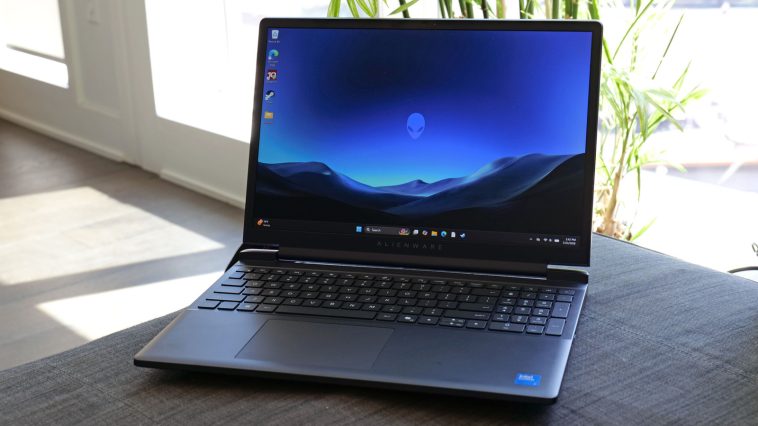
Alienware 15: A Strategic Shift for Budget-Conscious Gamers
For three decades, Alienware has stood as a titan in the premium gaming PC segment, synonymous with cutting-edge performance and distinctive, often extravagant, aesthetics. This long-held tradition saw even its more compact offerings, like the Alienware 13, positioned firmly within the high-end, portable computing sphere. However, the landscape of gaming hardware is ever-evolving, and this summer marked a pivotal moment for the brand with the introduction of the Alienware 15. This machine represents Alienware’s inaugural foray into the true budget gaming laptop category, a strategic maneuver that arrives at a particularly opportune juncture amidst escalating component costs across the global tech industry.
The Alienware 15, receiving a commendable 8.7/10 rating, is positioned as a welcome alternative for gamers navigating a market increasingly challenged by rising prices, especially for crucial components like RAM. Its arrival signals a potential recalibration of what consumers can expect from a reputable gaming brand at an accessible price point. While concessions have been made, particularly regarding its display quality, the overall package delivers respectable performance and a design philosophy that prioritizes substance over flash, echoing a broader market trend towards practicality in the entry-level segment.
Design Evolution and Practicality
Alienware is renowned for crafting machines that command attention, often featuring bold lines and extensive RGB illumination. With the Alienware 15, however, the design philosophy pivots towards a more understated, almost “stripped-down” aesthetic. This departure is not merely a cost-cutting measure but a thoughtful adaptation for a demographic that may value performance and a lower price tag over ostentatious flair. Not every gamer desires a laptop that illuminates like a digital carnival; many prefer a more subdued presence, especially for devices that double as productivity tools.
The chassis, constructed predominantly from black plastic, replaces the premium metal often found in its siblings. While less visually striking, it exudes a solid build quality, exhibiting minimal flex across its deck. The absence of RGB lighting, even in the iconic Alienware logo, reinforces this practical approach, with only a white backlight gracing the keyboard. This keyboard, notably firm and responsive, combined with a dedicated numpad, offers a comfortable typing experience suitable for both intense gaming sessions and everyday productivity tasks. Furthermore, Alienware has impressively maintained a robust port selection, including two USB-A 3.2, two USB-C (one with power delivery and DisplayPort 1.4), HDMI 2.1, a 3.5mm audio jack, and dedicated 1Gb Ethernet. Weighing in at just under five pounds, it strikes a manageable balance between portability and robust construction.
Display and Visual Fidelity: A Critical Compromise
While the Alienware 15 largely succeeds in its mission for affordability, its display emerges as its most significant compromise. The 15.3-inch 1,920 x 1,200 LCD panel, unfortunately, is the singular option available, precluding any upgrades for those willing to invest a little more. This lack of flexibility forces users to contend with its limitations, particularly concerning color accuracy and brightness.
On a positive note, the 165Hz refresh rate is a well-judged inclusion, providing ample headroom to leverage advanced graphics technologies like NVIDIA’s multi-frame generation, especially for configurations featuring 50-series GPUs. The peak brightness of 300 nits is generally adequate for indoor use, though it struggles in brighter environments or near sunny windows, impacting visibility and user comfort. The most glaring issue, however, is the display’s limited sRGB gamut coverage, reaching only 62.5 percent. This results in visibly washed-out and muted colors, diminishing the immersive quality of games and making it unsuitable for tasks requiring accurate color reproduction, such as photo or video editing. For users planning to connect to an external, higher-fidelity monitor, this might be a non-issue. However, for those relying solely on the laptop screen, it represents a substantial drawback that Alienware might consider addressing with optional panel upgrades in future iterations, akin to the more upscale Aurora 16.
The integrated 720p, 30fps webcam is similarly mediocre. While sufficient for basic video calls and meetings, its lack of sharpness and limited dynamic range make it wholly inadequate for aspiring content creators or professional streamers, necessitating an upgrade to an external camera.
Performance: Punching Above Its Weight
The Alienware 15 delivers a compelling performance package that belies its budget-friendly starting price. Beginning with configurations featuring an Intel Core i5 chip and an RTX 4050 GPU at $1,000, the system reviewed – equipped with an Intel Core i7 240H CPU, 16GB of RAM, 512GB of storage, and RTX 5050 graphics – represents a sweet spot for an additional $200 investment. This configuration offers a substantial performance leap without encroaching on the territory of significantly pricier systems like Alienware’s Aurora 16, which demands $1,500 for a comparable setup.
This particular loadout effortlessly handles daily productivity applications and renders respectable framerates in contemporary games. In a demanding title like Cyberpunk 2077 at 1080p with Ultra RT graphics, the Alienware 15 achieved 45 frames per second. Optimizing settings to plain Ultra graphics (without ray tracing) saw a significant jump to 78 fps, underscoring the laptop’s capability to deliver smooth, stable gaming experiences with minor adjustments. Similarly, in Control, the system excelled, hitting 96 fps at 1080p with Epic graphics. This level of performance is more than sufficient for the majority of modern 1080p gaming, offering a satisfying experience without the premium price tag. The availability of multiple GPU options, extending up to an RTX 5060, further enhances its appeal, allowing users to tailor performance to their budget and gaming demands.
A key consideration, however, is fan noise. Under heavy load, the Alienware 15’s cooling system can become audibly prominent, potentially warranting the use of headphones for an uninterrupted gaming experience. Additionally, the bottom-mounted vents mean that gaming with the laptop directly on one’s lap is not ideal, as it can impede airflow and lead to thermal throttling. This design choice, while common in gaming laptops, is a practical point of user experience.
Enduring Power: Battery Life Considerations
The Alienware 15 offers a notable improvement in battery capacity when stepping up from the base model. Opting for the review unit’s configuration grants a larger 70WHr battery, a significant 30 percent increase over the standard 54Whr cell. This enhancement is crucial for users who anticipate extended periods of untethered use.
In PCMark 10’s Modern Office battery test, the Alienware 15 demonstrated impressive longevity, lasting eight hours and four minutes. While this doesn’t quite match the endurance of some of Dell’s premium ultraportables, such as the XPS 16 (which achieves nearly twelve hours), it stands as a highly respectable figure for a budget-oriented gaming notebook equipped with a discrete GPU. Practical usage confirmed its capability for lighter tasks, with approximately two hours of play in less demanding titles like Teamfight Tactics on a single charge. However, for more graphically intensive gaming, keeping the power adapter readily accessible remains advisable. This balance of reasonable battery life for productivity and the expected need for a power source during gaming aligns perfectly with the expectations for a laptop in this category, offering valuable flexibility to the budget-conscious gamer.
Conclusion: A Strategic Triumph in a Challenging Market
The Alienware 15’s introduction is a masterclass in strategic product positioning, especially given the current turbulent climate in the tech market. With AI investments driving up the cost of essential components like RAM, and major consoles such as the PlayStation 5, Xbox Series S/X, and the upcoming Nintendo Switch 2 facing successive price hikes, the budget-friendly tech sector has become a minefield for consumers. Even new portable gaming devices from competitors are launching at prohibitive price points.
In this environment, the Alienware 15 emerges as a critical lifeline for gamers seeking genuine value without sacrificing performance entirely. While its display and webcam are undeniable weak points, these flaws are far more palatable within the context of its affordable price tag. For those who can stretch their budget slightly beyond the base model to configurations like the one reviewed, the Alienware 15 presents an exceptionally compelling proposition. It not only democratizes access to the revered Alienware ecosystem but also demonstrates a pragmatic evolution for the brand, proving that high-quality gaming experiences can be delivered without decimating one’s finances in an increasingly expensive digital world. This strategic shift is likely to cultivate a new generation of Alienware loyalists and set a new standard for what a “budget” gaming laptop can truly achieve.
#Love #Instagood #ExplorePage #TrendingNow #Motivation #Lifestyle #PhotoOfTheDay #Fashion #Travel #Fitness #ViralContent #TechForGood
Artificial Intelligence, Cloud, and Cybersecurity are widely recognized as the most relevant keywords in the current technology landscape. Artificial Intelligence (AI) and its sub-fields like Generative AI and Machine Learning are consistently highlighted as dominant forces shaping industries and daily life, with significant growth in demand for specialists. Cloud computing continues to be a foundational technology, enabling many other advancements, and is often mentioned alongside AI as a key trend. Cybersecurity is critical due to the increasing sophistication of threats, often amplified by AI, making it a paramount concern for businesses and individuals.
Artificial Intelligence, Cloud, Cybersecurity