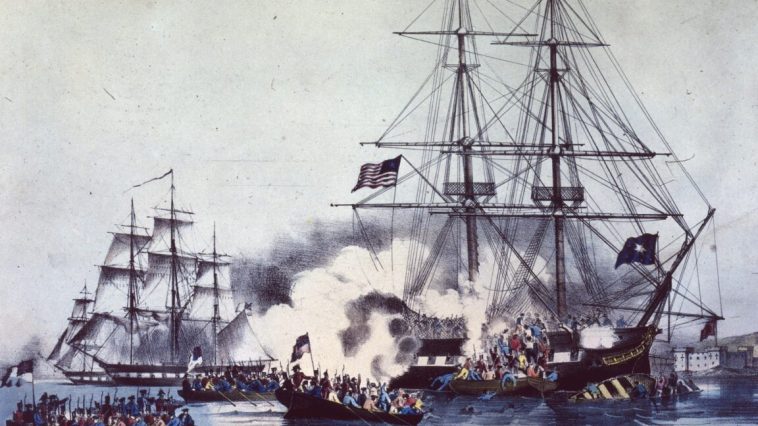
The Early Republic’s Naval Quandary: When Privateers Patrolled American Shores
In the foundational decades of the United States, as the nascent nation grappled with establishing its sovereign identity, a critical strategic challenge emerged: projecting naval power without a robust standing fleet. Faced with this void, early American presidents often turned to an unconventional but effective solution: privateering. This practice empowered private citizens and their vessels to act as an extension of national defense, capturing or disrupting enemy shipping when the nascent U.S. Navy was simply unable to meet the demand.
John Adams and the Quasi-War’s Strategic Imperative
President John Adams, a staunch advocate for a strong national defense, recognized the immense potential of commissioning private vessels for strategic ends. During the undeclared naval conflict with France, known as the “Quasi-War” in the late 18th century, his administration vigorously issued “letters of marque and reprisal.” These official documents served as crucial instruments of statecraft, providing legal authorization for private ships to engage enemy vessels and ultimately bolstering American interests at sea.
Defining Legitimate Force: Letters of Marque
The issuance of letters of marque was paramount, carefully delineating a critical legal distinction between legitimate privateering and outright piracy. For instance, a letter signed by Adams in November 1799 explicitly authorized a merchant ship to “subdue, seize, and take any armed French vessel” found in U.S. coastal waters or on the high seas. This framework allowed the U.S. to leverage civilian maritime capabilities for military objectives, a tactic widely employed by European powers, including France, which also regularly used privateers against American shipping during this tumultuous period.
A Precedent for Evolving State Power
The era of privateering offers profound insights into the innovative ways nations adapt to strategic limitations. It demonstrated a pragmatic approach to power projection, utilizing private sector assets to achieve national security goals in a cost-effective manner. While formal privateering eventually faded with the rise of professional navies and international treaties, its legacy resonates in modern discussions about the evolving nature of state-sponsored operations, blurred lines between military and civilian roles, and the outsourcing of specialized capabilities in contemporary conflicts, from cyber warfare to logistics.
#TechTrends #AIInnovation #FutureIsNow #DigitalTransformation #Web3 #Metaverse #CodingLife #GadgetGeek #StartupNation #DeepLearning #VRReality #Robotics
Artificial Intelligence, Cloud, and Cybersecurity are consistently highlighted as crucial and relevant terms in current technology discussions. Artificial intelligence (AI) is a prominent tech trend, encompassing machine learning and the simulation of human intelligence in machines and software. Cloud computing is a foundational technology for storing applications and files, offered in various forms such as public, private, and hybrid clouds. Cybersecurity, though not explicitly defined in the provided snippets, is a critical component of data and security discussions, and terms related to it like “data security” are mentioned as important IT terminology.
Artificial Intelligence, Cloud, Cybersecurity