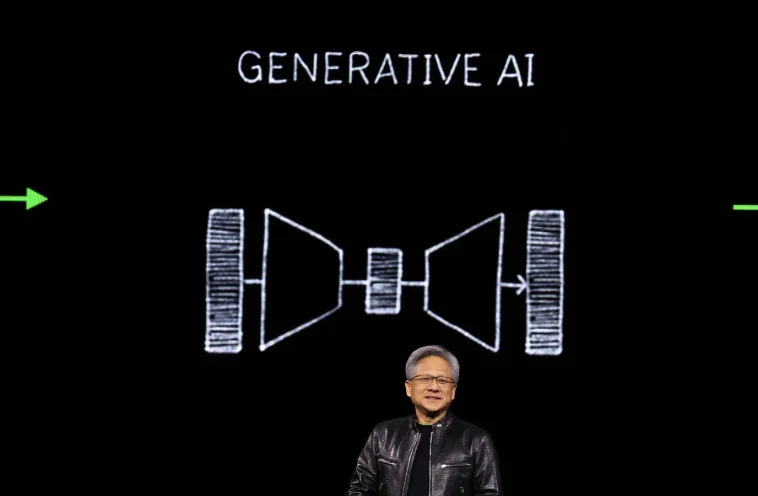
The Unprecedented Surge: Jensen Huang’s Open Weights Call Reshapes AI Policy Landscape
In a striking move that reverberated across the global technology industry, Nvidia CEO Jensen Huang utilized his inaugural post on X on July 24 to champion “Open Weights and American AI Leadership.” This public letter urged Washington to resist restrictions on downloadable AI models, immediately capturing headlines for its strategic implications and the impressive roster of initial signatories.
The immediate reaction from the tech world was palpable, largely focused on the notable absence of one key player: OpenAI. However, that status quickly changed, underscoring the dynamic and rapidly evolving nature of AI policy.
A Coalition Accelerates: Industry Unites Behind Open Weights
Huang’s initial X post showcased 25 prominent companies endorsing the letter. Yet, within a mere 24 hours, the coalition dramatically expanded, doubling its signatories to 50. This rapid accretion of support was a clear indicator of the immense industry alignment—or perhaps the intense pressure to align—on the issue of open-weight AI models.
The second wave of signatories brought formidable names into the fold, including OpenAI, Google, AMD, Cisco, Cloudflare, GitHub, Block, and Ollama. This diverse assembly of chipmakers, cloud providers, software developers, and venture capital firms signifies a broad consensus among a significant portion of the tech ecosystem regarding the imperative for open access to AI model weights.
The Strategic Absences: Amazon and Anthropic’s Deliberate Stand
Despite the surging tide of support, two significant players remained conspicuously absent from every version of the letter: Amazon and Anthropic. This pairing is particularly noteworthy given their deep commercial ties and philosophical stances within the AI landscape. Amazon, Anthropic’s largest investor, hosts Anthropic’s training and serving operations on its Trainium silicon.
While Google, another Anthropic backer, ultimately signed the letter, the steadfast omission of Amazon and Anthropic hints at a more nuanced position. Their absence is not merely an oversight but likely a calculated decision, potentially rooted in a combination of commercial interests—Anthropic sells access to its closed frontier models—and a substantive safety philosophy. Anthropic, in particular, has consistently argued for the challenges of recalling models once their weights are publicly released, a position that prioritizes control and managed risk.
The New Tempo of Tech Policy: From Hours to Dominance
The unfolding of the “Open Weights and American AI Leadership” letter serves as a potent case study in the accelerated pace of modern technology policy-making. This was not a painstakingly assembled coalition unveiled after months of discreet negotiations. Instead, it was launched with an initial cohort, garnered millions of views on social media, and saw signatures arrive in real-time as media coverage was still being written.
This rapid expansion reveals a critical insight for any organization navigating the regulatory landscape: the window between a nascent policy position becoming visible and transforming into a crowded, influential stance is now measured in mere hours. Companies weighing their alignment on public policy issues must recognize this new tempo, where swift action and clear positioning are paramount to shaping the narrative and influencing outcomes.
Navigating Open Weights: Essential Business Implications
For enterprises, the concept of “sovereignty” often associated with open weights extends beyond geopolitical trade terms. It fundamentally addresses the operational resilience and control a business can exert over its AI infrastructure. The core questions revolve around continuity: “Can you keep running if your vendor changes the deal?” and “Can you truly prove what your systems did?”
Open weights directly address the first half of this equation. By allowing businesses to download, examine, and retrain models on their own data, they gain unprecedented insight and customization capabilities. This fosters a degree of vendor independence and the potential for profound innovation tailored to specific organizational needs. However, the operationalization of these models still depends on chip access, which remains subject to export policies and allocation queues, a segment where Nvidia, the orchestrator of this letter, holds significant sway.
Furthermore, running models internally profoundly impacts data residency, transforming a contractual clause into a tangible architectural reality. Businesses can ensure their sensitive data remains within their control, addressing critical compliance and security concerns. Yet, a crucial unanswered question persists: “Who is acting in your name?” When an AI agent executes transactions or accesses confidential records, the ability to unequivocally prove authorization and reconstruct its actions for audit purposes remains a complex challenge.
The Unaddressed Frontier: Auditability and AI Governance
The “Open Weights” letter, while advocating for transparency and accessibility, notably leaves a significant gap in the realm of AI governance and auditability. The fundamental challenge lies in proving the provenance and authorization of actions taken by AI agents, especially in highly regulated environments. A model, even one whose weights are fully open and inspectable, cannot inherently provide the contextual metadata required for comprehensive auditing.
The letter acknowledges that once weights are public, developers cede control, making altered copies difficult to trace. It posits that a broad ecosystem of external researchers will collectively identify and address potential problems. While this collaborative approach holds merit for long-term industry-wide integrity, it falls short of providing the immediate, granular proof points a Chief Information Officer (CIO) or a regulator demands. Ensuring that an AI agent’s actions are fully auditable, traceable, and compliant with enterprise standards remains a complex, unsolved problem that requires a separate architectural focus beyond model choice alone.
Strategic Moves for an Open Weights Future
Regardless of how Washington ultimately shapes AI policy, the “Open Weights” movement signals a future where many companies are not yet architecturally prepared. Proactive measures are crucial for organizations to leverage the benefits while mitigating the inherent risks.
Consider these five strategic imperatives for the coming quarter:
- Map Model Dependency by Workload: Conduct a thorough audit of all AI-driven processes. Identify critical workloads and the specific vendors, models, and services they rely upon. Understanding the potential disruptions if a vendor alters pricing, terms, or availability is paramount for risk management and business continuity planning.
- Implement a Real Workload on an Open Weight Model: Move beyond pilots. Select a genuine business workload and deploy it using an open-weight model with defined service levels. A functional fallback strategy, proven in a production environment, provides credible leverage in vendor negotiations and robust operational resilience.
- Quantify Self-Hosting Liability Transfer: Before embracing self-hosting, engage legal and risk management teams to assess the full scope of liability. Running models in-house transfers responsibilities such as safety filtering, red teaming, and audit obligations from the vendor to your organization. Understanding the financial and reputational implications is critical.
- Decouple Agent Identity Architecture from Model Choice: Prioritize building a robust agent identity framework independently of your chosen AI models. Features like provenance, authorization, and comprehensive audit trails are not inherent to the model itself. A well-designed identity architecture ensures these critical governance capabilities persist across any future model swaps or upgrades.
- Develop a Restriction Scenario Plan: Proactively model potential future scenarios. If access to open weights is restricted in 2027, identify which strategic roadmap items would be impacted and estimate the costs and timelines for alternative solutions. Addressing these challenges as a planning exercise now will prevent a reactive crisis later.
The signatory list to Jensen Huang’s letter will continue to evolve, offering a dynamic barometer of industry sentiment and strategic alignment. Each addition or omission tells a story about where companies foresee future value and control residing in the AI ecosystem. While open weights offer unprecedented transparency and control over the foundational AI layer, the deeper challenge of proving agentic actions and ensuring comprehensive governance remains the demanding work for enterprises. Thoughtful engagement with the implications of open weights is no longer optional; it is a strategic imperative.
#TrendingNow #Innovation #FutureIsNow #TechSavvy #DigitalLife #AIRevolution #SocialMediaTips #CreatorEconomy #DailyInspiration #ExplorePage #ViralContent #NextGen
Artificial Intelligence, Cloud, Cybersecurity