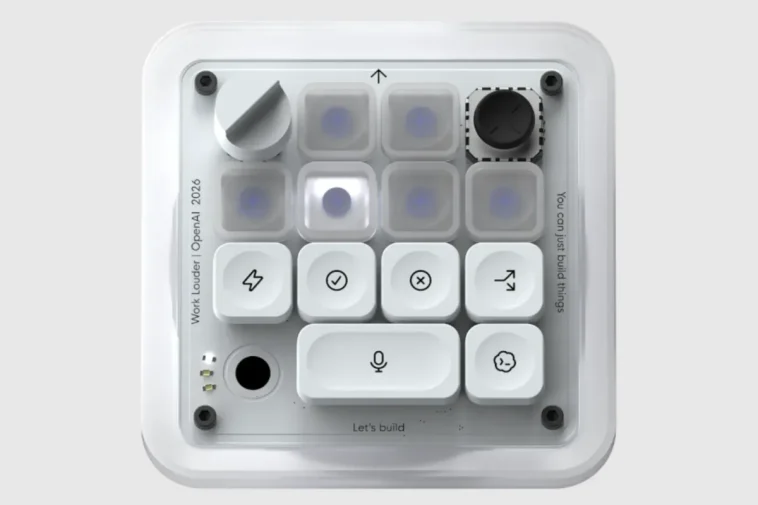
The Dawn of AI Hardware: OpenAI’s Micro Unveiled
OpenAI, a company synonymous with groundbreaking artificial intelligence software, recently took its inaugural step into the hardware arena. The debut product, dubbed Micro, is an intricately designed keypad developed in collaboration with specialty keyboard manufacturer Work Louder. Positioned as an artisanal workplace novelty, Micro aims to cater to a segment of tech enthusiasts, yet its niche appeal may leave many others questioning its purpose.
This foray into physical products signals a significant strategic pivot for OpenAI, moving beyond purely software-centric offerings. It suggests an evolving vision where AI is not just an abstract computational layer, but an integrated, tangible component of our daily digital interactions. Micro, in essence, is an early indicator of this ambition, hinting at a future where dedicated AI input devices become commonplace.
Navigating the Legal Landscape and Strategic Ambitions
OpenAI’s hardware debut has not unfolded without considerable external challenges and internal machinations. Weeks prior to Micro’s launch, Apple initiated a lawsuit against the AI research lab, alleging trade theft. This legal skirmish marks the beginning of what is anticipated to be a protracted and complex battle over intellectual property, potentially shaping the future of AI development and its commercialization.
Simultaneously, reports surfaced about another smart home product under development at OpenAI, reportedly designed to pair with ChatGPT and engineered by former Apple talent. These developments collectively underscore OpenAI’s aggressive expansion strategy into new market segments and its willingness to directly challenge established tech giants. The choice to recruit ex-Apple engineers and adopt design cues reminiscent of the Cupertino titan suggests a deliberate strategic play for market share in the burgeoning AI-driven hardware space.
Design, Ergonomics, and the ‘Apple-esque’ Aesthetic
For now, Micro stands as the primary tangible representation of OpenAI’s hardware aspirations, bridging the gap until broader ambitions materialize and legal disputes find resolution. Upon initial inspection, the device immediately conveys a sense of robust construction. Its sturdy build suggests durability, almost to the point where, should its primary function falter, it could serve as a premium paperweight.
The packaging itself, an immaculate white box with a sleek, minimalist aesthetic, has drawn notable comparisons to Apple’s distinctive product presentation. This stylistic choice is more than just an aesthetic preference; it strategically positions OpenAI’s hardware within a premium, design-conscious segment, subtly communicating an ambition to rival the industry’s design leaders. It is a clear statement of intent regarding the company’s long-term aspirations for user experience and product perception.
Empowering AI Workflows: A Deep Dive into Micro’s Functionality
The Micro keypad is engineered for streamlined interaction with AI agents. Its layout features six frosted “agent” keys positioned at the top, which users can customize to execute specific tasks within ChatGPT or OpenAI’s agentic coding tool, Codex. Below these are six command keys, providing direct control over the selected programs. Connectivity is versatile, offering both Bluetooth and USB options for seamless integration with a computer.
Perhaps one of Micro’s most compelling features is its dedicated voice dictation button. This allows users to simply articulate their commands or queries, which the AI application then processes. Holding down the dictation button initiates input, and a tap of the adjacent “send” button submits the request. This hands-free interaction paradigm represents a significant step towards more intuitive and efficient human-AI collaboration.
Further enhancing its utility, the Micro keypad offers extensive customization through a dedicated tab within ChatGPT itself. Users can fine-tune various aspects, from the brightness of the key backlighting to assigning specific commands and projects to individual keys. This level of personalization is crucial for adapting the device to diverse workflows and user preferences, making it a powerful tool for those deeply embedded in the ChatGPT ecosystem.
Industry Reception: A Divided Verdict
Despite its innovative design and specialized functionality, the Micro keypad has encountered a mixed reception, particularly among its presumed core audience of hard-core coders. Online forums like Reddit have seen largely negative feedback, with one user dismissively labeling it “a prank and not a real product,” and others asserting its irrelevance for serious coding professionals.
Independent reviews have echoed these sentiments, often focusing on the device’s pricing. Aftermath, a smaller independent outlet, delivered a particularly harsh critique, finding the $230 price tag difficult to justify when compared to more affordable DIY or off-the-shelf alternatives. The review’s pointed title, “OpenAI’s expensive macropad feels engineered to piss me off specifically,” encapsulates the frustration felt by some segments of the tech community regarding its perceived value proposition.
The initial learning curve associated with Micro also stands as a notable barrier to immediate adoption. New users will require time to familiarize themselves with its operation and programming. The keypad’s color-coded buttons — white for idle, blue for thinking, green for task completion, and red for error — necessitate memorization, alongside the specific projects assigned to each key. This complexity raises a fundamental question about its overall utility. Is the investment in learning Micro truly more efficient than simply leveraging the familiar mouse and keyboard?
The Path Forward: Micro’s Place in the AI Ecosystem
Ultimately, the utility and value derived from the Micro keypad will be directly proportional to an individual’s engagement with ChatGPT. While not a universal tool for every computer user, it undeniably offers a niche advantage for dedicated power users of OpenAI’s AI models. Once programmed to a user’s liking, the ability to assign various ChatGPT sessions to specific keys allows for seamless toggling between diverse projects, significantly enhancing workflow efficiency. This, combined with the voice dictation feature, can transform the AI interaction into a considerably more fluid and enjoyable experience.
For those who are deeply integrated into the ChatGPT workflow, possess a disposable income of $230, and appreciate the tactile satisfaction of vintage-inspired hardware with responsive, clicky buttons, Micro could indeed be a worthwhile investment. It may even add a touch of novel pleasure to their daily tasks. However, more broadly, Micro represents a crucial early experiment for OpenAI. It serves as a testing ground for how dedicated AI hardware might integrate into and reshape professional and personal computing. This initial step, while perhaps imperfect, paves the way for a future where specialized AI companion devices become an indispensable part of our technological landscape, constantly evolving to meet the demands of an increasingly AI-driven world.
#trending #viral #explore #fyp #instadaily #instagood #reels #love #picoftheday #lifestyle #motivation #inspiration
Artificial Intelligence, Cloud, Cybersecurity