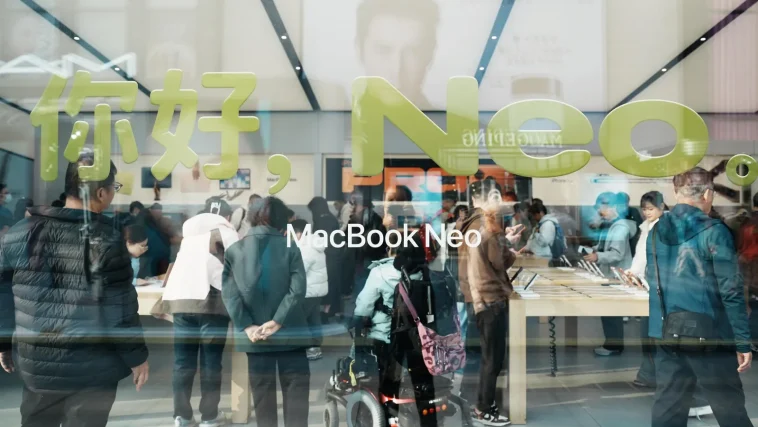
Apple’s MacBook Neo: Reshaping the Entry-Level Laptop Market and Driving Ecosystem Growth
Apple’s MacBook Neo has emerged as one of the most strategically pivotal products of 2026, defying traditional expectations for an entry-level device. Far from being merely the “cheap MacBook” that consumer demand had long articulated, the Neo represents a profound shift in Apple’s product strategy, establishing a pathway for annual refreshes and solidifying its formidable ecosystem. This device is not just a laptop; it’s a meticulously engineered gateway, designed to usher new users into Apple’s comprehensive services and hardware synergy.
The Strategic Brilliance of Apple Silicon Yields
The MacBook Neo’s remarkable commercial and critical success is deeply intertwined with Apple’s masterful utilization of its custom silicon. At its core, the Neo leverages “binned” A18 Pro chips—those initially produced for the iPhone 16 Pro and 16 Pro Max but which did not meet the stringent full-core certification. By repurposing these chips, typically with just one failed GPU core, Apple transforms potential waste into a significant competitive advantage.
This ingenious approach to silicon yield management allows Apple to drastically reduce manufacturing costs for the Neo. It ensures that the substantial investment in A-series chip fabrication lines yields maximum return, powering both premium smartphones and highly accessible laptops. This vertical integration provides Apple with an unparalleled degree of control over both performance and pricing, a feat rivals struggle to match without similar in-house silicon capabilities.
Looking ahead, the product roadmap for the MacBook Neo seems clearly defined by the evolution of Apple’s mobile processors. The transition to the A19 Pro as the flagship iPhone chipset has already created a new pool of binned A19 Pro silicon. This ensures that the next iteration, the MacBook Neo 2, will almost certainly receive a performance upgrade driven by these readily available, already amortized chips, maintaining the annual refresh cycle with minimal additional R&D overhead.
Strategic Pricing: A Gateway to the Apple Ecosystem
The MacBook Neo has consistently proven to be one of the best value-for-money laptops on the market, despite a mid-cycle price adjustment to $699. While factors like the resurgence of the A18 Pro fabrication line and the escalating global demand for memory and storage, fueled by the burgeoning AI industry, contributed to this increase, the Neo remains the most accessible entry point into the Mac universe.
This aggressive pricing strategy is not merely about selling hardware; it’s a sophisticated play to expand Apple’s lucrative services ecosystem. By offering a compelling device at an approachable price, Apple invites a broader demographic into its walled garden, encouraging subscriptions to iCloud, Apple Music, Apple Arcade, and other services. The long-term revenue generated from these subscriptions can significantly outweigh the initial hardware margin.
Should Apple maintain the $699 price point, or even revert to an initial $599 for the MacBook Neo 2, it will continue to disrupt the entry-level PC market. This strategy allows Apple to capture market share from competitors offering less integrated or less performant solutions, effectively leveraging its premium brand appeal and robust ecosystem at a price point previously dominated by Windows devices.
Mirroring the iPhone Upgrade Cycle: A New Paradigm for Laptops
One of Apple’s most ambitious goals with the MacBook Neo appears to be the “iPhone-ification” of the laptop upgrade cycle. Unlike traditional laptops, which are often considered long-term investments, the Neo is priced and specced to align more closely with smartphone replacement patterns. This encourages users to view their laptop as a device that can be refreshed more frequently, perhaps every 12 or 24 months.
This accelerated upgrade cadence offers multiple benefits. For consumers, it means access to the latest performance improvements and software features, enhancing their overall user experience. For Apple, it creates a predictable revenue stream and reinforces brand loyalty. The possibility of passing down older Neo models to family members further extends the device’s lifecycle within the Apple ecosystem, nurturing future generations of users.
By establishing a fixed launch window, much like the iPhone’s entrenched September tradition, Apple can streamline its production, marketing, and supply chain logistics. This economy of scale across its diverse product portfolio creates a competitive advantage that is incredibly difficult for rivals to replicate. The MacBook Neo, therefore, represents not just a new product line, but a strategic redefinition of consumer expectations and purchasing habits in the laptop market.
#TechTrends #FutureIsNow #Innovation #AIRevolution #DigitalLife #Web3 #Metaverse #GamingCommunity #SpaceExploration #SustainableLiving #HealthAndWellness #Mindfulness
Artificial Intelligence, Cloud, Cybersecurity