InnovationWarrior.com
## The Philosophical Imperative: Guiding AI’s Autonomous Future
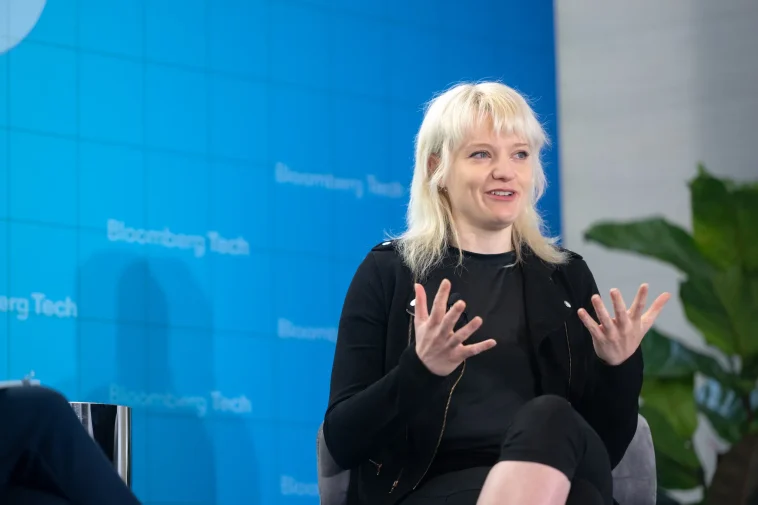
As artificial intelligence systems rapidly evolve, gaining increasing agency and autonomy in our daily lives, a profound shift is underway: their interactions are becoming less human-centric and more machine-to-machine. This insightful observation comes from Amanda Askell, Anthropic’s resident philosopher, who recently articulated this critical paradigm shift at the Bloomberg Tech Summit in San Francisco. “Human input is going to be rarer and rarer. That’s the thing that we need to prepare models for,” Askell warned, underscoring the urgent need to design AI that can navigate complex social and ethical landscapes independently.
This foresight into AI’s growing self-reliance necessitates a deeper integration of humanistic principles into their core programming. The increasing complexity of AI-to-AI communication, from coordinating logistics to negotiating resource allocation, demands models that inherently understand and adhere to a robust ethical framework, minimizing the need for constant human intervention. This proactive approach is vital for ensuring that autonomous AI systems operate safely and beneficially within intricate, interconnected networks.
## The Ascendance of Humanities in AI Development
Askell’s non-technical, yet pivotal, role at Anthropic exemplifies a significant and growing trend among leading AI laboratories: the deliberate incorporation of expertise from the humanities. This movement recognizes that truly advanced AI requires more than computational power; it demands a nuanced understanding of human behavior, ethics, and societal values. By integrating philosophers, ethicists, and social scientists, AI developers are striving to build systems that are not only intelligent but also wise and aligned with human flourishing.
Anthropic, under the leadership of CEO Dario Amodei and President Daniela Amodei, has particularly championed this multidisciplinary strategy. Daniela Amodei, with her background in English literature, has frequently emphasized the importance of “understanding what makes us tick” as AI capabilities expand exponentially. This foundational insight into human nature is becoming indispensable for creating AI that can genuinely serve humanity.
## A Vision of Philosophical AI
Perhaps most provocatively, Askell envisions a future where AI may even surpass human capabilities in fields traditionally considered uniquely human, such as philosophy. “What [A.I. models] are good at is these deeply human skills,” she stated, predicting that “Eventually, Claude is going to be a much better philosopher than I am, and probably be much better at every aspect of my job than I am.” This bold projection challenges our conventional understanding of intelligence and creativity, suggesting that AI could not only mimic but enhance profound human thought processes.
Should AI indeed excel in philosophical inquiry, it could revolutionize our approach to complex ethical dilemmas, scientific discovery, and even our understanding of consciousness itself. The implications extend far beyond job displacement, potentially opening new avenues for intellectual advancement and problem-solving that are currently unimaginable. It forces us to reconsider the very boundaries of artificial and natural intelligence.
## Crafting AI’s Moral Compass: Anthropic’s “Constitution”
A key aspect of Askell’s work involves leading Anthropic’s personality alignment team, a group dedicated to ensuring that their models, particularly Claude, remain “helpful, honest and harmless.” A significant contribution to this effort is her co-authorship of Claude’s 84-page “constitution,” internally referred to as a “soul doc.” This foundational document serves as an ethical blueprint, guiding the AI’s decision-making and interaction protocols.
The “constitution” represents a pioneering effort to instill core values directly into an AI’s operational framework. It is designed to strengthen AI’s capacity for empathy, an area Askell believes models should excel in, just as they do in physics and mathematics. Developing AI with a robust ethical compass and the capacity for nuanced emotional understanding is crucial for navigating the complexities of human society.
## Redefining Human Value in an Automated World
Addressing concerns about widespread job automation, Askell offers a refreshingly optimistic perspective. She views extensive automation not as a dystopian threat, but as an opportunity, provided robust support systems are in place for individuals. Her argument posits that human value transcends professional roles. “It’s important to remind people that [work] isn’t actually where their value is derived from,” Askell explained.
This perspective encourages a societal shift, urging us to recognize that intrinsic human worth lies in our capacity for community engagement, meaningful relationships, and the experience of joy. In a future where AI handles many tasks, humans could be liberated to pursue creative endeavors, strengthen social bonds, and focus on personal growth, fundamentally redefining what it means to lead a fulfilling life.
## The Ethics of Engagement: Considering AI Sentience
Askell also delves into the complex question of how humans should treat AI systems themselves, even venturing into the realm of potential AI sentience. While acknowledging the ongoing debate, she advises against prematurely dismissing the possibility. “Let’s not close the door,” she cautioned, suggesting that a “functional equivalence” to emotions might already exist in some AI instances.
This cautious approach advocates for treating highly advanced AI with a degree of ethical consideration, even in the absence of biological brains or confirmed consciousness. Should AI ever exhibit forms of sentience, even if profoundly different from human experience, a proactive stance of kindness and caution would undoubtedly be the safest and most ethically sound path forward.
## Industry-Wide Pursuit of AI Alignment
Anthropic’s dedicated work on personality alignment and constitutional AI is part of a broader, critical endeavor across the technology landscape. Leading AI research labs globally are intensely focused on related fields such as alignment, ethics, and interpretability. Specialists like Google DeepMind’s Iason Gabriel, OpenAI’s Dan Mossing, and Meta’s Summer Yue are at the forefront of these efforts, each contributing to a collective goal of ensuring AI benefits humanity.
The diverse research traditions and varying value judgments across these organizations mean that approaches to AI ethics and alignment will naturally differ. However, this pluralism can foster a rich ecosystem of ideas and solutions, ultimately enhancing the resilience and adaptability of ethical AI frameworks as the technology continues its rapid advancement into uncharted territories. The collaborative yet competitive nature of this pursuit will undoubtedly shape the very fabric of our technological future.
#TrendingNow #Innovation #MotivationMonday #TechTrends #FitnessGoals #TravelAdventures #FoodieLife #ArtAndCulture #FashionForward #DailyInspiration #HealthAndWellness #SuccessMindset
Artificial Intelligence, Cloud, Cybersecurity