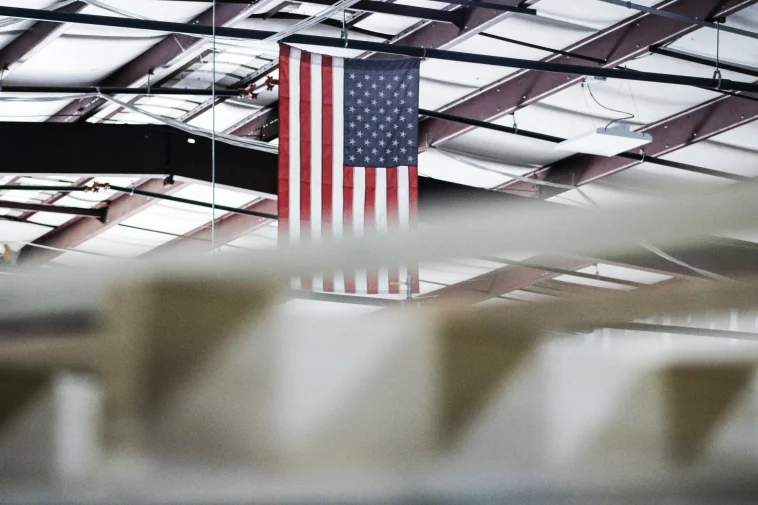
The Resurgence of American Manufacturing: A Strategic Imperative
As the United States approaches its 250th anniversary, the concept of “Made in America” is transcending mere patriotic sentiment, evolving into a critical strategic advantage for businesses. A confluence of geopolitical instability, persistent supply chain vulnerabilities, fluctuating tariff policies, and a discerning consumer base is fundamentally reshaping corporate decision-making, shifting focus from pure cost efficiency to operational resilience and transparency.
For decades, the global economy incentivized a relentless pursuit of cost optimization, driving companies to offshore production and construct intricate global supply chains. These systems, while efficient in stable times, proved inherently fragile when confronted with unforeseen shocks. The recent pandemic-era disruptions and escalating trade tensions have starkly illuminated the inherent vulnerabilities embedded within these once-sacrosanct models.
This profound reassessment arrives concurrently with the America 250 celebrations, which naturally prompt introspection on national identity, economic security, and industrial capacity. Consumers are increasingly connecting domestic production not only with patriotism but also with intrinsic values like product quality, ethical sourcing, and environmental transparency. Simultaneously, businesses are undertaking a critical re-evaluation, moving beyond a singular focus on cost to embrace a more holistic assessment of risk across their entire operational footprint.
Rethinking the Economics of Production
Recent shifts in global trade policy, particularly the imposition of tariffs, have compelled manufacturers across diverse sectors to fundamentally reconsider long-held sourcing strategies. Industries spanning furniture, home goods, electronics, and consumer products have been forced into complex adjustments as production costs fluctuate and the predictability of global supply chains diminishes. The volatility introduced by these external factors underscores a paradigm shift in how companies calculate true value.
Enterprises with robust domestic production capabilities are experiencing fewer severe disruptions. In this era of heightened global volatility, predictability itself has emerged as a powerful competitive differentiator. Localized manufacturing, while not entirely immune to global market dynamics, offers demonstrably more stable pricing, consistent production schedules, significantly shorter lead times, and reduced exposure to the capriciousness of tariff changes. Crucially, it also enables far tighter quality control and fosters a continuity of craftsmanship that is difficult to replicate through transient or outsourced arrangements. This invaluable institutional knowledge, cultivated over years, cannot be rapidly acquired or scaled, highlighting a critical capacity the U.S. allowed to atrophy for too long.
Operating with a domestic focus necessitates designing business models that prioritize and empower the workforce. This approach, while demanding considerable operational creativity, cultivates a continuity of skill that provides a unique strategic advantage. While domestic production inherently entails higher labor costs and often prioritizes craftsmanship over pure automation, leading to higher initial expenses, a growing number of companies are recognizing that the long-term dividends of resilience, quality, and brand trust provide an undeniable return on investment that outweighs upfront cost differentials.
Navigating Persistent Structural Challenges
Despite the undeniable resurgence of interest, domestic manufacturing still confronts significant structural limitations. American industrial capacity remains notably thin across too many critical categories, hindering the pace and scale at which companies can fully reshore production. Many industries remain heavily reliant on imported components, specialized materials, and overseas suppliers simply because viable domestic alternatives either do not exist or cannot currently meet demand. To ignore these realities would be to absolve policymakers and industry leaders of their crucial roles in addressing these gaps.
Furthermore, the decades-long trend of offshoring has undeniably hollowed out many manufacturing ecosystems, leading to substantial shortages in skilled trades and weakening critical supplier networks. This erosion of expertise and infrastructure cannot be rebuilt overnight; it requires sustained investment in education, training, and strategic industrial development.
Consequently, even companies deeply committed to domestic production operate within inherently globally interconnected systems. The aspiration for complete self-sufficiency, while romantic, remains largely unrealistic in the modern economy. The pragmatic approach for businesses is not to entirely extricate themselves from international supply chains, but rather to strategically identify and bring closer to home those capabilities that are most critical for resilience, innovation, and competitive advantage. For the “America 250” enthusiasm to translate into lasting impact, it must catalyze the unglamorous but essential work of rebuilding foundational capacity and making sustained investments in component supply chains and a skilled trade workforce. The market demand signal is now unequivocally present; the underlying infrastructure to fully meet it at scale is still very much in development.
The Enduring Value of Trust and Durability
Ironically, many of the advantages modern manufacturers are now seeking are deeply rooted in timeless principles. Companies across industries are rediscovering that an unwavering commitment to quality, combined with continuity of skills and genuine craftsmanship, consistently leads to fewer defects, enhanced product durability, and ultimately, stronger consumer trust. These qualities are increasingly paramount as consumers grow more skeptical of disposable products and demand greater transparency regarding how and where goods are made. Certifications, comprehensive material traceability, and visibly ethical supply chains are rapidly becoming crucial trust signals in diverse sectors, from food and apparel to home furnishings.
The marketing implications extend far beyond simply affixing a “Made in America” badge. The brands that will truly thrive in this evolving landscape will not be those making the loudest patriotic proclamations, but rather those that can genuinely demonstrate their commitment through tangible actions. Consumers today are astute and adept at discerning genuine manufacturing commitments from opportunistic marketing ploys; they demand verifiable proof, not just catchy slogans.
Defining the Future of “Made in America”
The businesses best positioned for this transformative moment are unlikely to be those relying on superficial patriotic appeals. Instead, success will be defined by demonstrating authentic resilience, unwavering transparency, and robust operational discipline. While America 250 may accelerate public interest in domestic production, the underlying forces driving this movement—geopolitical fragmentation, persistent tariff uncertainty, and rapidly evolving consumer priorities—are far more profound and enduring than any anniversary celebration. They are fundamentally reshaping how companies conceptualize and execute manufacturing itself.
The critical lesson from the turbulent past few years is clear: pure efficiency, devoid of resilience, is no longer sufficient. Reliability, earned trust, and agile adaptability are now commanding a significant premium in the marketplace. The products and businesses built to truly endure are rarely the cheapest or fastest to produce. Instead, they are the ones meticulously crafted with care, by individuals who intend them to last. This principle holds true for a nation as it does for the products we integrate into our daily lives. Building at home is reclaiming its profound meaning because, increasingly, it represents the more resilient and strategically sound path forward. After decades during which offshoring was perceived as an unavoidable economic inevitability, domestic manufacturing is now earning something far more valuable than mere nostalgia: a hard-won reputation for enduring resilience. And in an increasingly volatile and unpredictable world, that resilience may very well prove to be the ultimate strategic advantage.
#AI #FutureTech #Innovation #Motivation #TravelGoals #FitnessJourney #HealthyLiving #Foodie #TechNews #Mindfulness #Inspiration #Productivity
Artificial Intelligence, Cloud, Cybersecurity