The Quest for the Perfect Brew: Redefining Drip Coffee Excellence
For too long, the humble drip coffee maker was relegated to the realm of utilitarian appliances, producing merely “good enough” coffee. However, a quiet revolution has been brewing, transforming this kitchen staple into a sophisticated instrument capable of delivering truly exceptional cups. At InnovationWarrior.com, we believe in embracing technological advancements that elevate everyday experiences, and the modern drip coffee maker is a prime example. We delve deep into the latest innovations, offering insights into how these devices are meticulously engineered to unlock unparalleled flavor and aroma.
Our Rigorous Testing Methodology
Our journey to identify the leading drip coffee makers is rooted in a decade of immersive experience within the coffee industry, spanning roles as a coffee writer and reporter. This personal fanaticism for drip coffee is augmented by insights from leading internet coffee personalities like James Hoffmann and Lance Hedrick, alongside trusted baristas and roasters. Our extensive selection process involves hands-on evaluation of numerous machines, ranging from established giants to intriguing newcomers, ensuring a broad and discerning perspective.
Each machine undergoes a meticulous testing regimen. Initially, we strictly adhere to manufacturer guidelines, brewing both light and medium-dark roasts. Subsequently, we apply the universally acclaimed 1:17 water-to-coffee “golden ratio” across various batch sizes to ensure consistent comparison. Beyond these baseline tests, we embark on a phase of rigorous tinkering, experimenting with diverse roasts and machine settings to assess ease of achieving a genuinely excellent cup tailored to different preferences.
Our evaluation extends beyond subjective taste. We employ probe and infrared thermometers to precisely track brew and final temperatures, and meticulously time brew cycles for different batch volumes. The brew bed is carefully examined for signs of uneven extraction, a critical indicator of a machine’s performance. Furthermore, we scrutinize user experience, from the allure of subtle features that foster attachment to the practicalities of carafe temperature retention, programmability, and cleaning ease. Every detail, no matter how minor, contributes to the overall assessment of a truly invested device. Ultimately, while technical prowess is essential, the supreme arbiter remains taste, with side-by-side comparisons solidifying our recommendations.
The Evolving Value Proposition of Drip Coffee Makers
The landscape of drip coffee makers has undergone a significant transformation, moving beyond the market’s race to the bottom that characterized much of the late 20th century. The original Mr. Coffee, a luxury item at its 1970s debut, symbolized a new era of convenience. Today, while basic models remain widely accessible and affordable, a new generation of sophisticated machines commands higher price points, begging the question: do more expensive machines truly make better coffee? The answer, unequivocally, is often a resounding yes.
The inherent limitations of inexpensive coffee makers stem from their rudimentary heating and water dispersion mechanisms. These typically boil water beneath a burner plate, pushing steam through plastic tubes to an often-undersized showerhead. This results in inconsistent water temperatures – too cold at the start, too hot by the end – and uneven wetting of coffee grounds, leading to channeling and poor extraction. The consequence is coffee that is frequently thin, burnt, sour, and reminiscent of subpar diner brews.
Conversely, modern, higher-priced drip coffee makers meticulously mimic the precision of a skilled barista’s pour-over technique. They achieve this through advanced features such as dual heating elements, pre-infusion (bloom cycles), and precise water temperature control, maintaining the ideal brewing range of 195 to 205 degrees Fahrenheit. Innovations in showerhead design ensure uniform saturation of the coffee bed, facilitating optimal and even extraction. These machines are engineered to systematically coax out desirable flavors—notes of chocolate, fruit, and florals—while skillfully avoiding the bitter, acrid compounds that signify over-extraction. The future of drip coffee likely involves even more advanced sensors and AI-driven algorithms, allowing for real-time adjustments based on bean type, roast level, and user preference, pushing the boundaries of automated brewing.
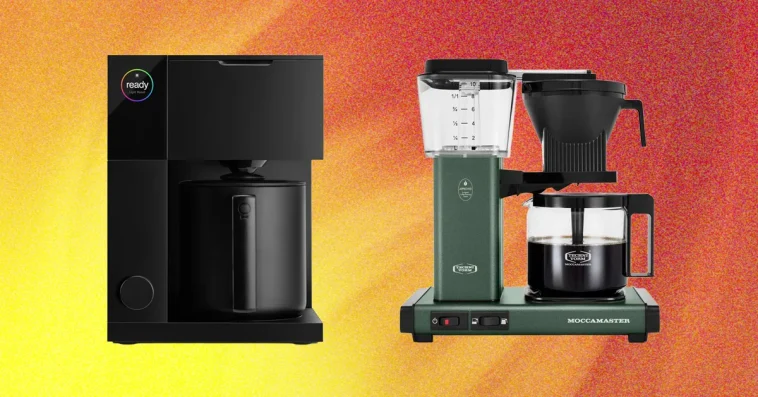
While high cost often correlates with superior performance, it’s not an absolute guarantee. Our rigorous testing uncovers instances where expensive machines fail to deliver. Our top recommendations, however, consistently surpass expectations, demonstrating an ability to produce exceptional drip coffee. Devices like the Technivorm Moccamaster achieve this through precise analog engineering, while others, such as the Ratio Four, leverage electronic controllers to create ideal temperature curves and extraction profiles at the push of a button. The advent of machines like the Fellow Aiden, offering customizable brewing parameters for individual coffee bags, signals a future where personalized perfection is within every coffee lover’s reach.
Understanding SCA Certification: The Gold Standard and Beyond
The Specialty Coffee Association (SCA) plays a crucial role in establishing benchmarks for quality within the coffee world. Their “Golden Cup” home-brewer certification represents a rigorous testing process, adhering to scientific criteria developed in the 1950s. While a relatively small number of brewers achieve and maintain this esteemed certification, it serves as a robust indicator of a machine’s capability to consistently produce high-quality coffee. Both established brands like Bonavita and Breville, and innovative newcomers like Ratio and Fellow, utilize SCA certification to validate their commitment to excellence.
SCA-certified brewers must consistently meet stringent criteria:
- Coffee-to-Water Ratio: The optimal “golden ratio” is generally considered to be between 1:16 and 1:18 (one gram of coffee per 16 to 18 milliliters of water), equating to roughly 8 grams of coffee per 5-ounce cup. This ratio, honed over years of taste testing, ensures a preferred strength.
- Brew Temperature: Water temperature must be maintained precisely between 195 and 205 degrees Fahrenheit (90 to 96 degrees Celsius) throughout the entire brewing cycle. Temperatures outside this range can lead to either burnt, unpleasant flavors (too hot) or weak, sour extraction (too cold). Adjustments may be necessary for higher altitudes.
- Brew Time: A batch of drip coffee should ideally brew within four to eight minutes to achieve full extraction without over-extracting and introducing bitter notes. Pour-over methods typically fall on the shorter end of this spectrum, around three to five minutes.
- Extraction Yield: The SCA quantifies the percentage of dissolved coffee solids in the brewed liquid, targeting an ideal strength of 1.15 to 1.35 percent. The overall extraction, representing the percentage of coffee particles removed from the grounds, should be between 18 and 22 percent. Exceeding this, particularly beyond the theoretical maximum of 30 percent, risks extracting undesirable bitter compounds.
It’s important to note that while SCA certification signifies a well-engineered machine, its objectivity has recently been debated, particularly in light of evolving tastes and regional preferences. While an SCA stamp is a strong indicator of quality, it doesn’t guarantee a personal preference for the resulting coffee. Conversely, the absence of this certification does not automatically imply a subpar product; some manufacturers prioritize in-house optimization over adherence to a universal standard, pushing the boundaries of what’s possible in custom brewing.
The Science of Flavor: Embracing the “Bloom” Cycle
The “bloom” cycle, a sophisticated technique borrowed from the artisan pour-over method, has become an increasingly prevalent feature in premium automatic drip coffee makers. This crucial step addresses the inherent gassiness of fresh, freshly ground coffee beans, which contain trapped carbon dioxide. When hot water first contacts these grounds, the rapid escape of CO2 can hinder optimal coffee extraction.
The bloom is essentially a pre-infusion phase, a poetic term for controlled degassing. A small amount of hot water is initially dispersed over the coffee grounds, allowing them to degas for approximately 30 seconds. The visible bubbling is the carbon dioxide escaping, preparing the coffee bed for more efficient and uniform extraction. Blooming fresh coffee significantly enhances flavor development, preventing thinness and sour notes often associated with under-extracted brews.
The integration of bloom cycles into modern drip machines reflects a growing consumer appreciation for high-quality, freshly ground beans. While stale, pre-ground coffee does not benefit from a bloom, its inclusion signals a machine designed for coffee enthusiasts seeking to maximize flavor potential. Another technique adopted from pour-over is controlled agitation, often achieved through wide showerheads that dispense water in large, deliberate droplets. This ensures even wetting and promotes optimal extraction across the entire coffee bed, showcasing the intelligent evolution of drip brewing technology.
Demystifying “Cup” Sizes in Coffee Makers
The term “cup” in coffee maker specifications is notoriously inconsistent, presenting a challenge for consumers seeking precise measurements. There is a notable lack of industry standardization, leading to varying definitions across manufacturers. In North America, a “cup” often translates to 5 ounces, meaning a 12-cup machine typically holds 60 ounces of water.
However, European manufacturers, such as Technivorm Moccamaster, may define a “cup” as 125 milliliters (approximately 4 ounces). Other brands might use 150-milliliter or 6-ounce designations. To accurately determine a machine’s “cup” size, users may need to consult the product manual carefully, utilize their own measuring tools, or engage in some online research. This lack of uniformity highlights a minor but persistent frustration in the otherwise advancing world of home coffee brewing.
Top Drip Coffee Makers: Our Expert Recommendations
Here, we present a curated selection of drip coffee makers that have impressed us with their performance, innovative features, and ability to consistently deliver an exceptional brew. These machines represent the pinnacle of modern drip coffee technology, designed for discerning palates.
Oxo Brew 9-Cup Coffee Maker ($250): This SCA Golden Cup-certified machine consistently produces flavorful drip coffee that would satisfy any connoisseur. While the drip coffee landscape continues to advance, the Oxo 9-cup remains a robust choice, offering significant value at a price point considerably lower than some premium alternatives. Its indispensable timer function, allowing for scheduled overnight brewing, ensures a fresh cup awaits upon waking.
Oxo 12-Cup Coffee Maker ($350): A formidable large-batch brewer, the Oxo 12-Cup is a commendable choice for those requiring greater volume. Despite its functional aesthetic, this SCA-certified machine boasts a delay timer and intelligently adjusts heat and flow rate to optimize various batch sizes. A standout feature is its integrated water tank, which pre-heats water to precise temperatures before brewing, a rarity among home brewers that significantly contributes to extraction quality.
12-Cup Breville Luxe Brewer ($350): For enthusiasts of large-batch brewing, the Breville Luxe, an evolution of the Breville Precision Brewer, offers an impressive array of features and capabilities. This machine reliably produces balanced, aromatic 60-ounce batches thanks to sophisticated internal technology, including PID temperature control, water sensors, and advanced brew algorithms. Its customizable settings and inclusion of thermocoils and pumps typically found in espresso machines elevate its performance. A notable addition is its excellent cold brew function, capable of producing genuine cold brew overnight with a drip stop. However, some quirks regarding water volume and an unintuitively explained small-batch mode have prompted a slight re-evaluation of its ranking, moving it to our honorable mentions despite its many merits.
Ninja Hot and Iced XL ($160): As Ninja’s flagship coffee maker, the 12-cup Hot and Iced XL offers a compelling blend of features for a diverse audience. It includes a timed brew function, the convenience of selecting batch sizes from a single mug to a full carafe without manual water measurement, and dedicated options for iced coffee and cold brew. While its extraction may not reach the nuanced heights of our top picks, particularly for delicate light roasts, its price point and extensive conveniences make it an attractive option for those who favor medium to darker roasts and appreciate versatility.
Ninja 12-Cup Programmable Brewer ($90): Priced under $100, this Ninja 12-cup model is a perfectly serviceable brewer for budget-conscious consumers. It features a bloom function, a programmable timer for morning convenience, and a half-batch setting to optimize smaller brews. While our budget pick, the Zojirushi Zutto, offers a superior small-batch experience, this larger Ninja remains a practical choice for offices or community spaces needing affordable, high-volume caffeine.
Ninja Dualbrew Hot & Iced Coffee System ($170): This “does-it-all” machine caters to households with diverse coffee preferences, offering hot, cold, iced, and even pod coffee capabilities. Its remarkable versatility earned it a spot among our top-pick pod machines. While its drip coffee performance doesn’t quite match our specialized top picks, it delivers a perfectly satisfactory brew for occasional carafe users who prioritize flexibility in their coffee consumption.
Gevi 10-Cup Touchscreen Brewer ($160): Gevi, an emerging brand from China, is disrupting the appliance market with innovative designs. This 10-cup batch brewer, often available around $160, stands out with its customizable brew settings, timed-brew delay, and a built-in conical-burr grinder – a feature rarely seen at this price point. While the grinder tends to be overly enthusiastic with coffee dosage and brew times can be lengthy, leading to potential bitterness unless the grind is adjusted to a coarser setting, it makes brewing fresh-ground coffee surprisingly accessible and affordable for non-aficionados. For those seeking a budget brewer for pre-ground coffee, however, our top budget picks may be more suitable.
Aarke Coffee Maker With Thermal Carafe ($480): This visually stunning, SCA-certified Swedish-made system embodies modernist design, reminiscent of a reimagined Turkish tea service. It produces delightful coffee, and in a unique offering, can be paired with a matching flat-burr grinder designed to dispense precise amounts of ground coffee. While the grinder pairing required some calibration, and online reports suggest potential jamming issues—a concern for such a premium device—we remain impressed by its aesthetic and brewing quality.
Other Notable Contenders
Our extensive evaluation process includes a wide array of machines, some of which, while commendable, didn’t quite reach our top recommendations for various reasons. They still offer valuable insights into the broader drip coffee market.
Oxo Brew 8-Cup Coffee Maker With Glass Carafe ($180): An updated iteration of Oxo’s classic 8-cup model, now featuring a glass carafe and warmer. In its debut, it earned a rare 9/10 score for its elegant simplicity, “rainmaker” showerhead mimicking pour-over agitation, and SCA Golden Cup certification. While its coffee flavor and extraction remain among the best in its class at a sub-$200 price, the rapid advancement of other drip coffee makers, including Oxo’s newer 9-cup and 12-cup models, has shifted its position. We note that the six-hole showerhead design, while innovative for its time, can lead to uneven extraction compared to more modern designs. We recommend considering its newer siblings for enhanced performance.
Mr. Coffee Perfect Brew ($169): This SCA-certified brewer represents a significant leap forward for the pioneering Mr. Coffee brand, delivering an aromatic and flavorful, albeit somewhat thin-bodied, brew. However, its control interface can be frustratingly complex, and its attempt to integrate too many functions, particularly a cold-brew feature that yields lukewarm, diluted coffee, falls short. The tea basket is a welcome addition, but the overall execution suggests a device striving for versatility without mastering all its aspirations.
Melitta Vision Luxe 12-Cup ($227): This striking machine, designed by Hong Kong firm Wabilogic under the Melitta brand, features intriguing touches like a glowing red water reservoir during heating and a swivel control panel. Despite its aesthetic appeal, we struggled to achieve consistent, even extraction, often resulting in coffee that was simultaneously thin and bitter. A significant drawback is the immovable water reservoir, which retains humidity post-brewing, demanding constant cleaning to prevent undesirable build-up.
Gevi 10-Cup Grind-and-Brew ($150): A more budget-friendly version of Gevi’s integrated grind-and-brew offering, this machine provides the convenience of a built-in conical-burr grinder at an accessible price point. Like its digital counterpart, it excels at making fresh-ground coffee convenient but tends to brew slowly and strongly, necessitating coarser grinds to avoid bitterness. However, for a mere $20 more, we recommend Gevi’s touchscreen device for its superior design, including a removable water tank and grinder access for cleaning and maintenance, features notably absent here.
Cuisinart Grind and Brew ($250): Cuisinart’s entry into integrated grind-and-brew machines highlights the inherent challenges of this category. Priced similarly to standalone drip brewers renowned for nuanced performance, the Cuisinart’s single-setting grinder limits flavor adjustment solely to brew strength. This makes it less ideal for the delicate light and medium-light roasts favored by third-wave coffee enthusiasts, the very demographic most insistent on fresh grinding. While the conical burr grinder is an improvement over blade grinders and adds versatility for medium-dark roast drinkers, the machine remains a somewhat niche offering.
De’Longhi TrueBrew ($700): Echoing the super-automatic design of many De’Longhi espresso machines, the TrueBrew features an integrated bean reservoir and purports to brew various coffee styles, from a dense 3-ounce “espresso” to a classic mug. Our testing, however, revealed a weak “espresso” and a disappointing drip coffee. Compounded by a messy operation and a premium price tag, this machine struggles to justify its position in the market.
GE Café Specialty Drip Coffee Maker ($299): Despite GE’s prominent brand name, its foray into high-quality coffee machines with this SCA-certified offering proved underwhelming. While initially promising, the Café Specialty Drip Coffee Maker consistently delivered uneven extraction and resulted in flat, coppery flavors, a critical flaw for a machine in this price segment.
Balmuda The Brew ($699): Balmuda is celebrated for its distinctive design, and The Brew coffee maker is no exception—petite, elegant, and featuring charming steam-blasting and ticking sounds during brewing. However, its unconventional brewing method, involving concentrate creation at low temperatures followed by dilution, produced unsatisfying coffee that required significant user intervention to improve. At nearly $700, its aesthetic appeal does not outweigh its performance shortcomings.
#TrendingNow #ExplorePage #Viral #ForYou #Innovation #DailyDose #Motivation #Inspiration #Lifestyle #TechTrends #TravelGoals #FitnessJourney
Artificial Intelligence, Cloud, Cybersecurity