Tech Giants Face Growing Emissions Crisis as AI Boom Fuels Data Center Expansion
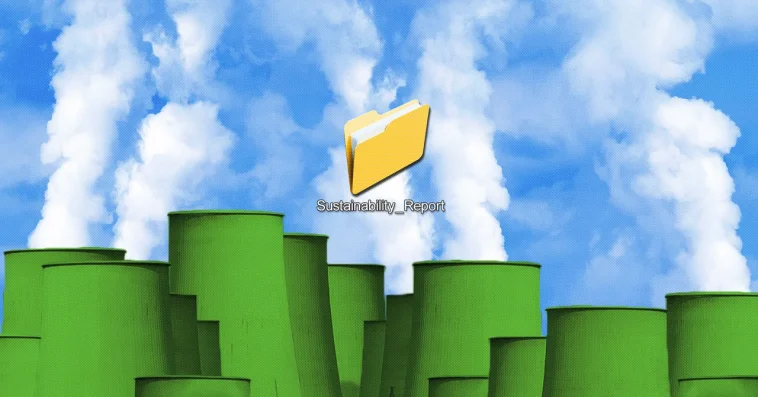
San Francisco, CA – Microsoft’s latest sustainability report has unveiled a stark reality: the company’s greenhouse gas pollution surged by approximately 25 percent last year. This significant increase, detailed in a report released on Thursday, mirrors a troubling trend emerging across the tech industry, driven predominantly by the escalating global race to build and power sophisticated, energy-intensive data centers.
The findings from Microsoft come on the heels of similar disclosures from Google and Amazon, both of which also reported substantial rises in their carbon footprints. This collective data paints a clear picture of the immense environmental pressure exerted by the rapidly expanding digital infrastructure, particularly with the explosive growth of artificial intelligence capabilities.
The Unintended Consequence of the AI Revolution
Microsoft executives, including Vice Chair and President Brad Smith and Chief Sustainability Officer Melanie Nakagawa, have directly attributed the company’s emissions spike to the aggressive expansion of its data center infrastructure. In a blog post accompanying the report, they underscored the inextricable link between the burgeoning demand for AI and the increased energy consumption.
A notable portion of this increase stems from Scope 2 emissions, which represent greenhouse gas pollution from energy purchased or acquired to run operations. These emissions accounted for 13 percent of Microsoft’s total, highlighting a critical area where the company’s energy sourcing decisions have a direct and measurable environmental impact. The sheer computational power required for training and running advanced AI models is pushing many large tech companies’ net-zero goals further out of reach with each passing year.
A Sector-Wide Challenge
The challenge is not unique to Microsoft. Amazon recently disclosed a 16 percent increase in its CO2 emissions, while Google reported an 18 percent rise in annual greenhouse gas emissions last year compared to 2024. This marks Google’s largest single-year increase on record. Despite aggressive investments in renewable energy, Google has also begun incorporating fossil fuel power for some of its data centers, illustrating the immense and immediate energy demands facing the sector.
The race to dominate the AI landscape necessitates a monumental build-out of computing capacity, demanding unprecedented amounts of electricity. This global digital arms race is testing the limits of grid infrastructure and forcing tech giants to confront the immediate trade-offs between rapid innovation and long-term environmental commitments. The sheer scale of data processing required for AI training models like GPT-4 or Gemini demands thousands of GPUs, each consuming significant power, operating non-stop in climate-controlled environments.
Future Investments and the Fossil Fuel Paradox
While Microsoft highlighted its achievement of matching 100 percent of its electricity consumption with carbon-free sources, concerns linger over its future data center investments. The report covers the 2025 fiscal year, which concluded last June, yet subsequent strategic deals point towards a potential acceleration of emissions. Several recent partnerships involve gas-powered data centers, presenting a complex paradox for a company committed to carbon neutrality.
Notably, Microsoft announced a partnership with Chevron last month to power a future data center in West Texas. Permits indicate this power plant could emit over 11.5 million tons of CO2 equivalent annually, a figure exceeding the entire state of Rhode Island’s emissions. Furthermore, the company has leased buildings at the Stargate campus in Abilene, Texas, which will be powered by an onsite plant potentially emitting more than 7.8 million tons of CO2 equivalent each year. A nonbinding letter of intent for a West Virginia data center, powered by off-grid gas, could add another 11 million tons of greenhouse gases annually. These commitments suggest a challenging path forward for mitigating their carbon footprint, raising questions about the immediate feasibility of transitioning entirely to renewables given the urgent demand for compute power.
Re-evaluating Sustainability Strategies
Microsoft’s approach to offsetting emissions is also undergoing a crucial shift. The company has ceased purchasing unbundled renewable energy certificates (RECs), a move that contributed, in part, to the reported rise in Scope 2 emissions. This strategic pivot comes amid increasing criticism that unbundled RECs often serve more as a “paper transaction” for corporate messaging rather than genuinely adding new clean power to the grid.
Experts like Danny Cullenward, a researcher at the University of Pennsylvania, commend Microsoft for moving away from this practice. He highlights the importance of prioritizing investments in new clean electricity through power purchase agreements and other long-term commitments that actively bring new renewable energy sources online. This shift, while potentially impacting short-term emissions metrics, signifies a more robust and impactful long-term strategy for decarbonization.
The Road Ahead: Ambition Versus Reality
Despite the current rise in emissions and continuous investments in AI, Microsoft remains steadfast in its ambition to become “carbon negative” by 2030. Smith and Nakagawa acknowledge the significant strain the global AI race is placing on critical resources, including “energy, water, land, and materials.” They emphasize the company’s responsibility to ensure technology “strengthens, rather than strains, the systems and communities on which it depends.”
Achieving such an ambitious goal will require unprecedented innovation and strategic maneuvering. The tech industry stands at a critical juncture, balancing the transformative potential of AI with the imperative of environmental stewardship. The next few years will be crucial in determining whether industry leaders can successfully decouple growth from emissions, establishing a sustainable blueprint for the future of technology.
#TechTrends #AIRevolution #InnovationDaily #FutureIsNow #DigitalTransformation #SmartSolutions #EmergingTech #Robotics #CyberSecurity #DataScience #CloudComputing #Metaverse
Artificial Intelligence, Cloud, Cybersecurity