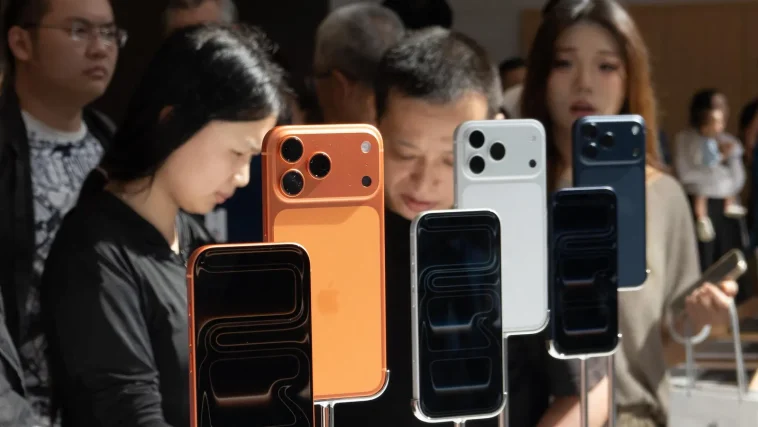
Apple’s Bold New Pricing Gambit: The iPhone Ultra and the Future of Premium Smartphones
The premium smartphone market is undergoing a profound transformation. As saturation levels rise and consumer upgrade cycles extend beyond the traditional two-year mark, Apple is strategically re-evaluating its approach to revenue generation. Rather than simply implementing price hikes across its entire portfolio, Tim Cook’s team is orchestrating a sophisticated overhaul, introducing the ultra-luxury iPhone Ultra foldable to court its most affluent users, while simultaneously safeguarding the critical audience for its core iPhone 18 Pro models.
This calculated maneuver signals Apple’s intent to navigate a maturing market by segmenting its offerings more aggressively. The goal is clear: maximize value extraction from diverse customer groups, ensuring both brand prestige and robust sales volume in an increasingly competitive landscape. This dual-pronged strategy could redefine how smartphone manufacturers approach innovation and monetization in the coming decade.
The iPhone Ultra: Forging a New Luxury Tier
Apple is set to establish a groundbreaking $1,999 price point with the iPhone Ultra, pushing the boundaries of luxury pricing in the consumer electronics space. This audacious move is designed to not only absorb escalating costs associated with next-generation components but also to carve out an entirely new, exclusive segment within its product ecosystem.
Consumers are increasingly discerning, often viewing annual hardware updates as offering only marginal improvements. By concentrating much of its cutting-edge engineering into a single $1,999 flagship, the iPhone Ultra becomes a high-margin device poised to attract the most discerning and affluent users. This strategy allows Apple to experiment with advanced technologies and premium materials, such as foldable displays, without the pressure of broad market adoption.
Rather than striving to boost overall sales across the entire iPhone 18 family, the iPhone Ultra can meticulously target the top five percent of Apple’s global user base. This exclusive handset, featuring bespoke luxury materials and state-of-the-art components, isolates a premium tier with robust margins. This strategic isolation further enables Apple to maintain the traditional price points of $1,099 for the iPhone 18 Pro and $1,299 for the iPhone 18 Pro Max, protecting their market position.
Stabilizing the Core: The iPhone 18 Pro’s Unwavering Price
Crucially, Apple intends to maintain the entry-level iPhone 18 Pro at $1,049, a move engineered to insulate its core ecosystem volume from the growing phenomenon of premium-hardware fatigue. This steadfast pricing reinforces Apple’s commitment to its vast loyal user base, ensuring continued accessibility to its flagship experience.
With the iPhone 17 Pro, Apple incrementally raised the base price to $1,049 from the iPhone 16 Pro’s $999, simultaneously increasing base storage from 128GB to a more generous 256GB. This critical adjustment, effectively setting the standard, is unlikely to be repeated in the current cycle. The $1,049 price point, coupled with 256GB of storage, appears firmly established.
In the face of aggressive pricing by Android flagships and rising component costs, Apple is prepared to absorb these expenses for its core Pro models. The iPhone 18 Pro and 18 Pro Max are not expected to feature radical hardware overhauls beyond the consistent, Moore’s Law-esque advancements in Apple Silicon. Instead, a renewed focus on manufacturing efficiencies and delivering a predictable, reliable upgrade path for carriers and enterprise clients will ensure gross margins and sales volumes remain consistent with previous years. This stability is paramount for ecosystem health and sustained recurring revenue.
Contrasting Strategies: Apple vs. Android Competitors
Interestingly, competing Android manufacturers, including industry giants like Samsung and Google, are implementing a contrasting strategy. They are increasingly removing entry-level storage configurations to accommodate necessary price increases across their flagship smartphone portfolios. This divergence highlights a fundamental difference in how major players are tackling market pressures.
Every smartphone manufacturer is contending with persistent supply chain disruptions, which have driven up the cost of memory, storage, and advanced chipsets such as Qualcomm’s Snapdragon 8 Elite Gen 5. Android brands are often masking these higher production costs by bundling increased base storage and highlighting enhanced specifications required for advanced on-device artificial intelligence software.
For instance, Samsung removed the 128GB option from its Galaxy S26 range upon its launch earlier this year, effectively increasing the baseline prices of its entry-level models. Concurrently, it aimed to keep the Galaxy S26 Ultra prices as close as possible to its predecessor, the Galaxy S25 Ultra. While the competition risks potential market alienation by raising their baseline entry prices, Apple is charting an alternative course, preserving its mass-market appeal at the core while creating a new, highly desirable premium model to shoulder the burden of increased costs and advanced innovation.
The Apple One Advantage: Fueling Ecosystem Revenue
The iPhone is no longer merely a standalone hardware purchase; it serves as the gateway to Apple’s expansive and increasingly lucrative recurring subscription model. Services like Apple Music, Apple TV+, iCloud online backups, and Apple Arcade form a robust digital ecosystem that represents one of the strongest defenses against consumers migrating away from Cupertino’s walled garden.
Looking ahead, Apple is poised to introduce a suite of advanced artificial intelligence tools, including an enhanced Siri AI, across the entire iPhone 18 family. Following an initial promotional period, it is highly probable that Apple will begin to charge for access to these sophisticated services, integrating them seamlessly into existing Apple One packages. This strategic move will help cover the significant recurring infrastructure costs associated with advanced AI processing and development. An early estimate suggests a potential additional cost of around $15 per month, which would strategically increase the total cost of iPhone ownership without directly altering the core iPhone 18 Pro or 18 Pro Max hardware price. This effectively shifts a portion of growth from hardware replacements to ongoing, high-margin subscription services, cementing Apple’s position as a services-first company.
Apple’s Portfolio: Balancing Luxury and Loyalty
Apple’s refined portfolio strategy represents a masterful balancing act. It emphasizes mass-market retention through stable pricing for its core models, while simultaneously extracting maximum value from the burgeoning luxury consumer segment. This innovative segmentation is a testament to Apple’s adaptability in a rapidly evolving tech landscape.
By strategically bifurcating the iPhone portfolio, the $1,999 iPhone Ultra confidently positions itself as the ultimate luxury model, priced to reflect its exclusivity and advanced features. This not only bolsters Apple’s premium image but also creates a crucial financial buffer, cushioning the margins of the iPhone 18 Pro and iPhone 18 Pro Max. These core devices can then retain last year’s competitive pricing and generous storage specifications, ensuring they remain highly attractive to a broader audience. Critically, all three models will leverage the seamless integration of agentic artificial intelligence into the comprehensive Apple One subscription package, enhancing their perceived value across the board.
While its Android-powered rivals contend with the dilemma of raising entry-level model prices and striving to maintain top-tier pricing, Apple’s shrewd iPhone strategy allows it to unlock significant value from cutting-edge technologies like foldables. This is achieved without jeopardizing its crucial mass-market appeal or the foundational loyalty of its extensive user base, setting a new precedent for strategic product differentiation in the highly competitive smartphone industry.
#TrendingNow #Innovation #TechGadgets #FutureIsNow #AIRevolution #DigitalLife #SmartLiving #ExplorePage #MustWatch #DailyDose #Inspiration #TechTrends
Artificial Intelligence, Cloud, Cybersecurity