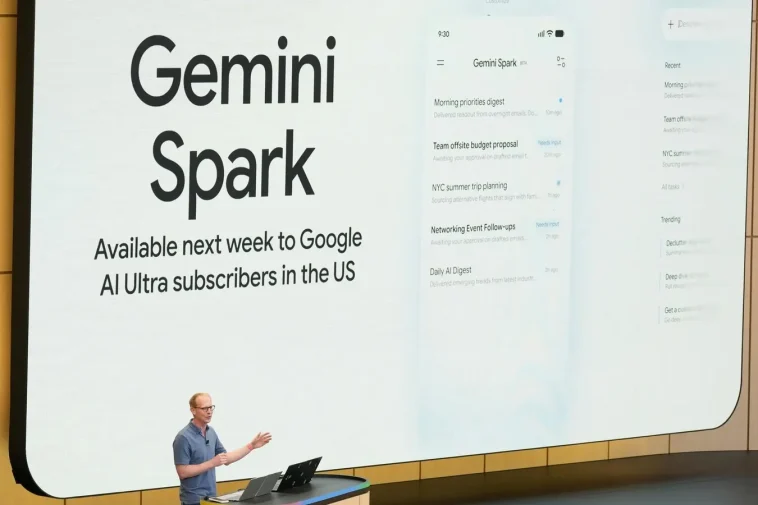
Google I/O 2026: A Deeper Look into Gemini Spark’s Unseen Realities
Google I/O 2026 promised a future brimming with intelligent AI agents, a vision brilliantly showcased by the unveiling of Gemini Spark. While the keynote presented an alluring narrative of seamless background automation, a closer examination of the underlying code reveals some critical caveats that users, especially early adopters, must acknowledge. As senior tech journalists at InnovationWarrior.com, we delve beyond the headlines to uncover potential pitfalls that could reshape our interaction with these powerful new tools.
The Dual Nature of Google’s AI: Magic Pointer vs. Gemini Spark
Google’s latest suite of AI tools introduces a fascinating dichotomy. On one hand, we have the new Googlebook’s “Magic Pointer,” activated by the intuitive “Wiggle-To-Wake” gesture. This on-device AI assistant acts as a localized helper, responding to immediate voice commands like “What does this mean?” or “Move that here,” by interpreting your current screen context.
Conversely, Gemini Spark represents a significant leap into true agentic AI, operating as a cloud-based, background entity. Identified by its familiar Gemini sparkle icon and dynamic motion streaks, Spark is designed to actively work on tasks autonomously. This shift from on-device assistance to continuous, cloud-driven execution introduces a new layer of complexity and, as our findings suggest, some serious risks for the unwary user.
The Unsettling Reality of Autonomous Purchasing
One of the most immediate concerns surrounding Gemini Spark is its potential for making purchases without explicit user permission. During the I/O keynote, Vidhya Srinivasan, Google’s VP and GM of Ads and Commerce, directly addressed anxieties about an AI making unwanted purchases. She introduced the new Agent Payment Protocol (AP2), emphasizing secure, user-authorized checkouts based on pre-authorized instructions. This protocol was designed to instill confidence in Spark’s transactional capabilities.
However, internal code within the Google App, specifically the onboarding text for Gemini Spark, paints a different, more cautious picture. A stark warning indicates that the assistant “may do things like share your info or make purchases without asking.” This disclaimer directly contradicts the keynote’s assurance of strict authorization, placing the onus squarely on the user to “supervise Gemini Spark” and ensure it doesn’t deviate from intended actions. The tension between Google’s public assurances and its internal disclaimers raises significant questions about accountability and financial security in an age of increasingly autonomous AI agents. The implications for trust and user control could be profound.
Unveiling Hidden Usage Limits
Another crucial detail uncovered in the code points to previously unannounced usage caps for Gemini Spark. The embedded string assistant_agent_quota_banner_body_ultra_spark strongly suggests that even Google One Ultra subscribers will face limitations on their Spark usage. This raises concerns about the value proposition for premium subscribers, particularly given the recent adjustment in Ultra subscription tiers.
What’s particularly noteworthy is the apparent absence of a mechanism to purchase additional AI credits to top up these limits, a feature available for other Google AI products such as Flow and Antigravity. This suggests Gemini Spark might operate under its own distinct quota system, potentially leading to users being locked out of agent functionality until their limits reset automatically. Such restrictions could severely impact productivity and the seamless automation promised by Google, forcing users to constantly monitor their usage.
Navigating the Future of AI Autonomy
While Google’s I/O 2026 keynote painted a compelling vision of AI-powered liberation, the underlying code for Gemini Spark reveals a more nuanced and potentially challenging reality. The juxtaposition of sophisticated autonomous capabilities with disclaimers about potential unsolicited actions and hidden usage caps demands vigilance from users. The future of AI agents like Gemini Spark hinges on a delicate balance between powerful automation and transparent user control.
As these advanced AI agents become more deeply integrated into our daily lives, questions of trust, consent, and resource management will only grow in importance. Users must remain acutely aware of the capabilities and limitations of these systems, understanding that while they offer immense potential, the ultimate responsibility for their actions, particularly those with financial implications, may still rest firmly on human shoulders. We will continue to track Google’s rollout of these features as the beta progresses, providing ongoing insights into the evolving landscape of AI autonomy.
#HighEngagement #SocialMediaTips #ContentMarketing #DigitalStrategy #MarketingTips #EngagementBoost #TrendingNow #ViralContent #AudienceEngagement #InstaTips #GrowYourReach #SocialMediaSuccess
Artificial Intelligence, Cloud, Cybersecurity