Reclaiming Orbit: NASA’s Commercial Crew Program and the Dawn of Private Space Stations
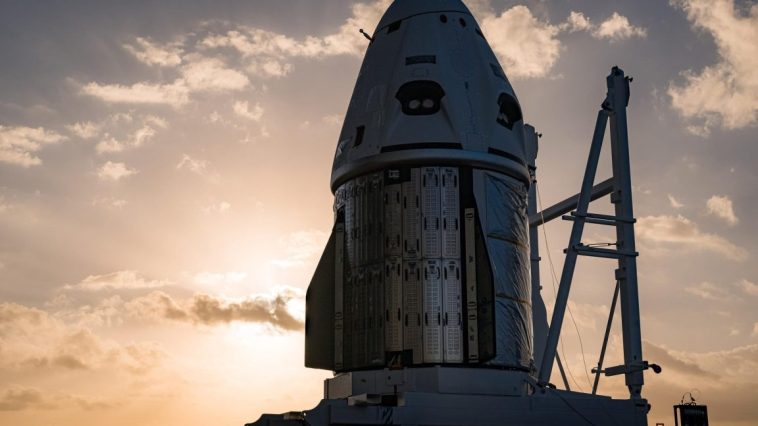
Six years ago, a pivotal moment in human spaceflight unfolded, marking a significant return to American crew launch capability. NASA, along with the entire space community, breathed a collective sigh of relief as SpaceX successfully launched astronauts Doug Hurley and Bob Behnken to the International Space Station (ISS). This historic mission, which culminated in the safe return of the Crew Dragon capsule, effectively ended a nearly decade-long reliance on foreign rockets for U.S. astronaut transport to low-Earth orbit. It was a clear demonstration of the power of public-private partnerships in revitalizing domestic space endeavors.
The Commercial Crew Program: A Dual-Track Strategy
The Commercial Crew Program, initiated by NASA with multi-billion-dollar contracts awarded in 2014, was designed to foster a competitive landscape for human space transportation. The ambitious goal was to secure two reliable U.S. providers for ferrying astronauts to and from the ISS. SpaceX, with its Crew Dragon, has demonstrably fulfilled its end of this bargain, consistently transporting crews and cargo, thereby validating the commercial model.
While SpaceX has become a cornerstone of current ISS operations, the program’s other intended provider, Boeing, has encountered significant hurdles. Its Starliner spacecraft has yet to complete a successful crewed test flight. A perilous uncrewed test flight in 2024 was later categorized as a Type A mishap, highlighting persistent technical and operational challenges. This setback means that Boeing’s Starliner is not expected to fly another crewed mission before 2028, significantly impacting NASA’s original vision for redundant crew transport.
Boeing’s Starliner: A Path Forward Amidst Delays
The ongoing delays and technical issues with the Starliner program represent a significant challenge for Boeing and NASA. While the initial vision was to have two independent and reliable crew transport systems, the reality has been a heavy reliance on SpaceX. The mishap classification for the 2024 test flight underscores the complexity and inherent risks of human spaceflight development, demanding meticulous attention to every detail.
Boeing’s eventual success with Starliner is crucial not only for fulfilling its contractual obligations but also for NASA’s long-term strategic goals. A second, distinct American crew vehicle would provide invaluable redundancy and resilience, ensuring continued access to low-Earth orbit even if one system faces unexpected issues. The lessons learned from Starliner’s development, though arduous, will undoubtedly contribute to the broader safety and reliability standards for future commercial human spaceflight ventures.
The Dawn of Private Space Stations
With the International Space Station slated for retirement in the early 2030s, NASA is already looking ahead to the next frontier of human presence in low-Earth orbit. The agency is actively partnering with several U.S. companies to develop a new generation of private space stations. This strategic shift represents a profound evolution in space exploration, moving from government-led platforms to commercially operated orbital outposts.
These private space stations are not just replacements for the ISS; they are designed to be multi-faceted platforms serving diverse commercial, scientific, and perhaps even tourism needs. As part of this transformative effort, NASA is collaborating closely with these companies to define the requirements and operational frameworks for astronaut transportation. These future crew transport systems will be integral to the viability of these new orbital habitats, some of which are optimistically projected to launch as early as 2030.
Future Implications and the Commercialization of LEO
The successful commercialization of crew transport, exemplified by SpaceX, provides a robust foundation for the upcoming era of private space stations. This paradigm shift signifies a future where private industry takes a leading role in designing, building, and operating orbital infrastructure, with NASA transitioning to a role of customer, regulator, and research partner. This model promises to reduce costs, foster innovation, and expand access to space for a wider range of users.
The development of these private stations, coupled with evolving crew transport capabilities, has profound implications for global space exploration. It paves the way for a more sustainable and economically driven presence in low-Earth orbit, freeing up NASA’s resources to focus on ambitious deep-space missions to the Moon and Mars. The continued success of commercial partners in providing reliable access to orbit will be paramount to realizing this audacious vision, ensuring that humanity’s reach beyond Earth continues to expand through innovation and collaboration.
#TechTrends #AIRevolution #FutureIsNow #InnovationHub #DigitalLife #Web3World #MetaverseMagic #DataScience #CodingLife #SmartGadgets #NextGenTech #FutureOfWork
Artificial Intelligence, Cloud, Cybersecurity