InnovationRx: Leadership Shifts, Health Outbreaks, and AI’s Ascent in Biotech
This week, the healthcare innovation landscape sees a significant leadership transition at cancer care navigation leader Thyme Care, a concerning spread of a serious intestinal illness, and a major funding affirmation for AI-driven drug discovery.
Thyme Care Navigates Future with New CEO
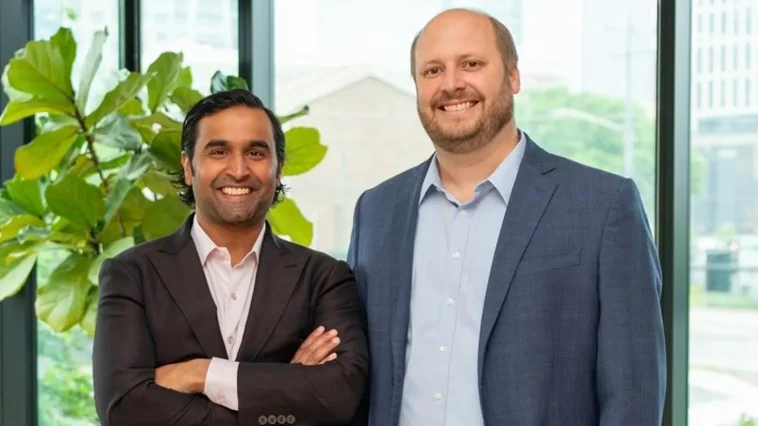
In a strategic leadership transition, Thyme Care founder Robin Shah will step down as CEO, effective September 1st, six years after establishing the company to revolutionize cancer patient navigation. His successor will be Dr. Brad Diephuis, a primary care physician and cancer survivor, who has served as the company’s co-president and chief operating officer for the past two years. This carefully orchestrated change reflects a mature approach to leadership succession within a rapidly scaling venture.
Shah, 39, characterized Diephuis as the company’s “Steve Ballmer,” indicating a deliberate choice for a leader focused on operational excellence and scaling capabilities. This foresight suggests a long-term vision that anticipates the evolving needs of a high-growth company. The transition comes nine months after Thyme Care achieved a robust $1.1 billion valuation, nearly doubling its worth from its previous funding round in 2024. The Nashville-based startup has successfully raised a total of $275 million from prominent investors, including CVS Health Ventures, Humana, Foresite Capital, Town Hall Ventures, and Andreessen Horowitz.
As Executive Chairman, Shah will pivot his focus to leading Thyme Care’s expansion into critical new domains such as drug affordability and clinical trial access. This strategic move leverages the power of AI and automation to enhance patient outcomes, ensuring “the patient wins” remains the core tenet. Co-founder Dr. Bobby Green, 60, a medical oncologist and fellow Flatiron Health alum, will maintain his vital role as president and chief medical officer, providing continuity in clinical strategy.
Leadership changes in venture-backed startups often signal pivotal moments, whether in overcoming challenges or preparing for significant market events like an IPO. Thyme Care, however, is transitioning from a position of undeniable strength. The company reported revenues surpassing $125 million last year, a five-fold increase from 2024, and is projected to more than double that figure this year. Operating profitably, Thyme Care currently manages over $6 billion in oncology spending, a figure anticipated to climb to $8 billion through new and expanded health plan collaborations.
Dr. Diephuis, 40, brings a unique blend of strategic experience and personal empathy to the CEO role. His background includes serving as a senior advisor at the Center for Medicare and Medicaid Innovation, where he spearheaded the development of alternative payment models. Crucially, his personal battle with a rare bone cancer in his twenties, involving extensive chemotherapy and hospital stays, instilled a deep understanding of the bewildering complexities patients often face. This lived experience fuels his commitment to streamlining the “crazy system” of cancer care.
Thyme Care’s model is proving profoundly impactful, currently serving 125,000 individuals navigating cancer treatment and collaborating with more than 14,000 oncologists and 14 health insurers, including industry giants Humana and Aetna. The company’s recent impact report reveals a remarkable 28% reduction in emergency room admissions for patients under its care. This not only signifies vastly improved patient experiences and better health outcomes but also translates into substantial cost savings for the healthcare system, demonstrating a powerful value proposition. For instance, one Medicare Advantage customer experienced a 10% reduction in costs.
Diephuis underscored the challenge: “It’s easy to reduce costs by doing less. It is hard to improve quality while reducing cost.” By demonstrating this capability, Thyme Care is poised to double its patient base within the next two years, signaling a transformative shift towards more efficient, patient-centric oncology care models driven by intelligent navigation and proactive support. The future implications for value-based care and integrated health systems are profound, as Thyme Care continues to set a benchmark for outcomes-driven cancer support.
Widespread Cyclosporiasis Outbreak Triggers Public Health Concerns
A concerning outbreak of cyclosporiasis, a severe intestinal illness caused by a parasite, is spreading across the United States, with 31 states now reporting its presence. The Centers for Disease Control and Prevention (CDC) has confirmed 843 reported cases and is analyzing over 1,500 additional potential infections. Michigan has emerged as a significant hotspot, reporting 3,309 cases, with 44 individuals requiring hospitalization. This widespread contagion highlights persistent vulnerabilities within the nation’s food supply chains and public health surveillance systems.
Michigan officials recently suggested that contaminated lettuce or salad greens might be the source of the outbreak. Further intensifying concerns, federal and state health authorities are reportedly investigating a potential link to Taco Bell restaurants. While Taco Bell acknowledged removing limited items from its menu, the company stated that “public health officials have not confirmed a link to Taco Bell or any specific ingredient, supplier, restaurant or retailer.” Despite this, local Detroit media reported some Taco Bell locations had posted notices regarding the unavailability of lettuce, cilantro, onion, pico de gallo, or guacamole due to a nationwide recall, underscoring the severity of the situation.
Previous cyclosporiasis outbreaks have frequently been traced back to fresh produce, including raspberries, basil, cilantro, and various types of lettuce. While thorough washing of produce can reduce the risk, it does not entirely eliminate the parasite. Cooking produce to 158 degrees Fahrenheit or higher is considered a more effective method for killing the parasite. The recurrent nature of such outbreaks underscores the complexities of ensuring food safety in a globalized supply chain.
The current situation also brings into sharper focus the critical role of robust public health infrastructure. Former CDC director Dr. Robert Redfield commented on the broader implications, stating, “I don’t think it’s in our country’s interest to cut these programs back.” His remarks allude to previous scaling back of foodborne illness surveillance programs, including those for cyclosporiasis, which can hamper early identification and rapid response. The current outbreak serves as a stark reminder of the imperative for sustained investment in public health surveillance to protect national well-being and economic stability.
Chai Discovery Secures $400 Million to Accelerate AI Drug Innovation
In a major validation for the burgeoning field of artificial intelligence in drug development, Chai Discovery, an AI drug discovery startup, has officially announced a $400 million Series C funding round. The investment, led by Index Ventures, propels the company’s valuation to a staggering $3.8 billion. This announcement confirms earlier reports and underscores the intense investor confidence in AI’s transformative potential within pharmaceuticals.
Drug discovery stands as one of the most promising frontiers for AI application. Scientists and investors are united in their belief that advanced AI models can fundamentally disrupt the traditionally arduous, costly, and time-consuming process of bringing new therapies to market. The ambition is to unlock treatments for previously “undruggable” targets and dramatically accelerate the development pipeline. San Francisco-based Chai Discovery has already forged significant partnerships with pharmaceutical giants Pfizer and Eli Lilly since the beginning of the year, signaling strong industry adoption of its cutting-edge molecular design capabilities. The successful integration of AI platforms like Chai’s holds the promise of ushering in a new era of precision medicine, leading to more effective and personalized treatments delivered to patients faster than ever before.
Deal of the Week: Apollo Bets on Bayer’s Contraceptives
In a significant financial move, Apollo Global Management has agreed to acquire a $3.4 billion minority stake in Bayer’s highly successful contraceptives unit. This strategic investment positions Apollo within a stable and growing segment of the pharmaceutical market, while allowing Bayer to retain its long-acting reversible contraceptives business as part of its core pharmaceuticals division.
The contraceptives business, known for products including hormonal intrauterine devices, reported robust sales of $1.6 billion last year, marking an impressive 8% increase from 2024. This consistent growth underscores the market’s demand for these products. The deal is expected to finalize in the third quarter, highlighting private equity’s increasing appetite for targeted, high-performing assets within the healthcare sector, providing large pharmaceutical companies with avenues to strategically optimize their portfolios.
What We’re Reading
- A father’s $70 million quest for gene therapy to save his daughter Grace reveals profound implications for the entire field of rare disease drug development.
- Eli Lilly, already a pharmaceutical behemoth, demonstrated its aggressive growth strategy by disclosing 11 biotech acquisitions in the first half of 2026 alone.
- A tragic and unsettling case: A mother who attributed the deaths of her 18-month-old twin toddlers to routine vaccinations, subsequently becoming an antivaxxer and plaintiff for RFK Jr.’s nonprofit, has now been charged with murder.
- Apnimed, a company developing a promising sleep apnea drug, has officially filed for an Initial Public Offering (IPO).
- Oxford University has commenced the first human trial of a vaccine specifically targeting the Bundibugyo strain of Ebola, currently spreading in Congo and Uganda.
- Family caregivers face dire financial consequences as states absorb Medicaid funding cuts, impacting those who previously received state payments for their vital services.
#Innovation #FutureTech #Motivation #Inspiration #Success #Entrepreneurship #DigitalMarketing #PersonalGrowth #PositiveVibes #Wellness #Creativity #Community
Artificial Intelligence, Cloud, Software Engineering