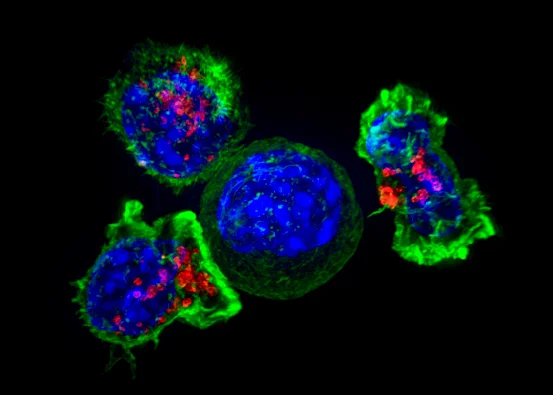
Revolutionizing Solid Tumor Treatment: A Dual-Action CAR T Target Emerges
CAR T-cell therapy has heralded a new era in cancer treatment, profoundly transforming outcomes for patients battling blood cancers. This innovative approach empowers a patient’s own immune cells, engineering them to meticulously identify and eradicate cancerous cells. However, its efficacy has been notoriously limited in the realm of solid tumors—a category encompassing some of the deadliest and most prevalent cancers, including breast, lung, and prostate. With millions of Americans projected to face a cancer diagnosis annually and hundreds of thousands succumbing to the disease, the urgent need for breakthroughs in solid tumor therapy remains paramount.
The Formidable Challenge of Solid Tumors
Unlike their blood cancer counterparts, solid tumors present a far more complex and heterogeneous landscape. These formidable foes rarely exhibit a singular, universally shared target protein that CAR T cells can latch onto. Even within the same tumor, cells display a diverse array of surface proteins, or a complete absence of the desired target, allowing resistant subclones to evade engineered immune cells, survive therapy, and fuel devastating relapses. This inherent variability is a significant hurdle, as articulated by Christopher Mount and Marcela Maus of the Massachusetts General Brigham Cancer Institute, who note that “Target discovery remains a considerable challenge in the development and translation of CAR T cell therapies for solid tumors.”
Beyond cellular heterogeneity, solid tumors are encased within a hostile and immunosuppressive microenvironment. This “cancer fortress” is a complex web of stromal cells, extracellular matrix, and hijacked immune cells that actively shield the tumor from immune attacks, including those mounted by CAR T cells. Overcoming this multifaceted defense system has been a central focus for researchers striving to extend CAR T therapy’s reach.
GPNMB: A Breakthrough Dual-Targeting Strategy
In a significant advancement, two independent research teams have converged on a highly promising new target for CAR T-cell therapy in solid tumors: GPNMB. This cell-surface protein has demonstrated a remarkable ability to not only mark cancer cells but also engage with the tumor’s supportive immune environment.
In one groundbreaking study, CAR T cells meticulously engineered to recognize GPNMB were shown to rapidly destroy glioblastoma cells—a particularly aggressive and lethal brain cancer—in patient-derived tissues. Crucially, these engineered cells also effectively shrank tumors in preclinical mouse models. The findings offer a much-needed beacon of hope for patients facing this devastating diagnosis.
A One-Two Punch Against Cancer’s Defenses
The true innovation lies in GPNMB’s dual role. Traditionally, CAR T-cell designers approach broadly shared targets with caution, fearing dangerous off-target attacks on healthy tissues. However, GPNMB presents a unique profile. While present on cancer cells, it also appears on specific immune cells that paradoxically promote tumor growth or suppress the body’s natural anti-tumor responses. This dual presence offers a strategic advantage.
As Sheila Singh, who led the glioblastoma study at McMaster, explained, their approach “attacks both the tumor and the environment that allows it to thrive.” This signifies a paradigm shift, moving beyond merely eradicating cancer cells to actively dismantle the immune shield that protects the tumor from treatment. By targeting GPNMB, CAR T cells deliver a powerful one-two punch: directly killing cancer cells while simultaneously neutralizing the very immune cells that foster tumor progression and resist conventional therapies.
Promising Clinical Signs and Future Horizons
The second independent team applied a similar GPNMB-targeting strategy against alveolar soft-part sarcoma, a rare but aggressive soft tissue cancer. Their research demonstrated that GPNMB-targeting CAR T cells effectively cleared tumors and prevented metastasis in organoids and mouse models. Building on this preclinical success, an early clinical trial involving a single patient yielded encouraging results: a single infusion of the GPNMB-targeted CAR T cells stabilized the disease for three months, importantly, without triggering serious side effects such as severe skin toxicity previously observed with antibody drugs against this protein. This suggests a potentially safer therapeutic window for CAR T cells engineered against GPNMB.
The potential implications of GPNMB extend beyond these specific cancers. The same gene fusion driving alveolar soft-part sarcoma is implicated in other malignancies, including certain kidney cancers, suggesting that GPNMB-targeted CAR T cells could have a broader therapeutic reach. The insights gained from these studies reinforce the growing understanding that effective CAR T strategies for solid tumors must consider both direct cancer cell killing and the simultaneous disruption of the tumor’s immunosuppressive microenvironment.
While challenges remain, including refining target specificity and optimizing CAR T cell persistence, these two independent studies robustly “indicate that GPNMB represents an actionable target for CAR T cell therapies in several solid tumors.” This innovative dual-action approach represents a significant leap forward, offering a promising new avenue for extending the transformative power of CAR T-cell therapy to the vast and complex landscape of solid cancers.
#TrendingNow #ViralContent #MustSee #ExplorePage #ForYou #InstaDaily #ReelsItFeelIt #ShortsBreak #EngageNow #SocialMediaMarketing #DigitalLife #ContentCreator
Artificial Intelligence, Cloud, Cybersecurity