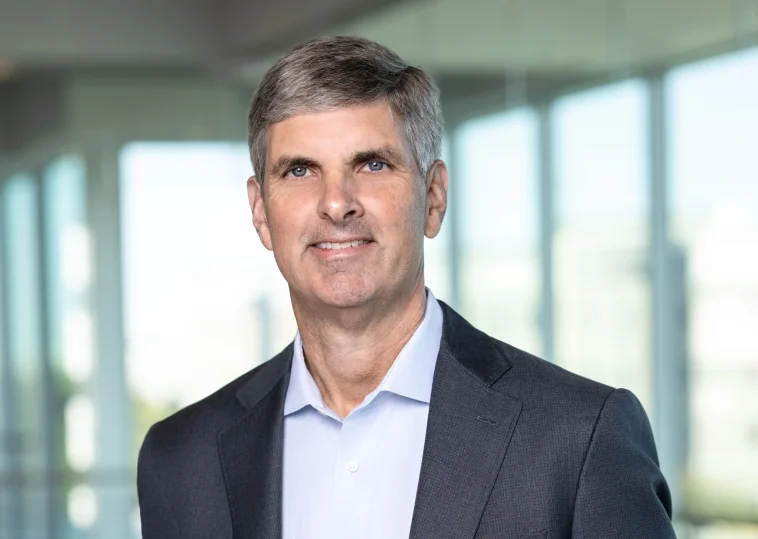
Kevin Ooley Ascends to CEO Amidst DataBank’s AI-Fueled Expansion
DataBank, a cornerstone of the digital economy, is ushering in a new era of leadership as Kevin Ooley prepares to take the helm as CEO on January 1, 2027. Ooley, who has served as President and CFO since 2011, assumes the role from Raul Martynek, who transitions to Executive Chairman. This unanimous board decision underscores a commitment to continuity and strategic vision during a period of unprecedented growth and transformation within the data center industry. Ooley’s promotion is a testament to his 15 years of instrumental contributions, particularly as DataBank navigates the intricate demands of the artificial intelligence boom, a phenomenon reshaping the very foundations of digital infrastructure.
For years, the complex mechanics of data centers remained largely unseen and misunderstood by the public, even by those closest to the industry’s architects. Today, however, the critical infrastructure that DataBank builds and operates is at the epicenter of global discussions, implicated in everything from energy consumption debates to the fervent speculation surrounding AI’s economic trajectory. This shift in public awareness highlights the profound impact data centers now have on daily life and the national conversation, positioning DataBank and its new leadership at a crucial juncture.
Riding the Digital Waves: A Decade of Explosive Growth
DataBank’s journey mirrors the seismic shifts in enterprise IT over the past decade and a half. Since Ooley’s arrival, the company has masterfully ridden three distinct technological waves. The first, beginning around 2011, saw a significant acceleration in the outsourcing of corporate data centers, as businesses sought to offload the complexities of on-premise infrastructure. This was swiftly followed by the mid-2010s cloud explosion, which propelled demand for scalable, interconnected facilities.
Most recently, DataBank has been at the forefront of the AI wave, which began in late 2022 and has fundamentally reshaped the scale and scope of the company’s operations. This triple-wave mastery has translated into staggering financial growth. When DigitalBridge acquired DataBank in 2016, the company’s annualized EBITDA stood at roughly $25 million. Today, DataBank anticipates closing the current year near a remarkable $1 billion run rate, a testament to its agile strategy and robust market position.
This financial ascent has been paralleled by an aggressive physical expansion. DataBank has grown from a modest six data centers across three markets to boasting the largest geographic footprint among U.S. data center providers, with approximately 65 to 66 facilities spanning 26 markets. With an additional ten facilities currently under development and a workforce that surpassed 1,000 employees (“data bankers”) in March, DataBank is not merely growing; it is strategically dominating critical digital arteries across the nation. This expansive reach is not just about quantity; it provides a distributed network crucial for low-latency AI applications and enhanced disaster recovery capabilities, distinguishing DataBank in a competitive landscape.
From Optionality to Hyper-Scale Campuses
The accelerating demand for digital infrastructure, particularly driven by AI, has necessitated a dramatic rethinking of DataBank’s construction strategy. Historically, the company embraced a modular approach, building 10-megawatt facilities, fitting out a few megawatts, and then selling that capacity before moving on. This model, while flexible, no longer suffices in an era where demand outstrips supply at an unprecedented pace.
The shift since 2022 has been profound. DataBank is now breaking ground on sprawling 200-to-300-acre campuses, designed explicitly for massive, rapid expansion. These sites are being pre-leased twelve to eighteen months in advance, a stark contrast to the 2019 norm of needing “white floor” availability for client tours. This forward-looking approach, securing permits and utility agreements well ahead of construction, underscores the intensity of current demand and DataBank’s proactive stance. It also requires significant upfront capital investment and sophisticated logistical planning, signalling the company’s confidence in sustained growth and its ability to manage large-scale, complex projects.
Addressing the “Water Thing”: A Commitment to Sustainability
The rapid expansion of data centers has unfortunately coincided with increased public scrutiny regarding their environmental impact, particularly concerning water consumption. Kevin Ooley is acutely aware of this “civic anxiety” and is keen to set the record straight on DataBank’s practices. He acknowledges that some older DataBank facilities, built as far back as 2008, utilize evaporative cooling technologies which, by nature, consume water. However, he emphasizes that these are legacy sites, smaller in scale, and distinct from the new, sprawling AI-era campuses under public focus.
Crucially, DataBank transitioned in 2017 to closed-loop cooling systems for its larger, modern builds. These advanced systems fill once and then recirculate water in sealed pipes, effectively eliminating water evaporation. Consequently, the only significant water draw for these state-of-the-art facilities comes from minimal uses like employee restrooms and kitchens. By Ooley’s estimate, a multi-hundred-thousand-square-foot DataBank facility now uses roughly the same amount of water as five average households. This compelling statistic directly challenges common assumptions about the industry’s water footprint, showcasing DataBank’s proactive steps toward environmental stewardship, even as the reputational hangover from older technologies persists.
Powering the Future: Navigating Energy Demands and Renewables
The escalating demand for power, coupled with rising electricity prices due to inflation, tariffs, and grid modernization costs, presents another significant challenge and opportunity for the data center industry. Ooley adopts a circumspect view on power, framing the immense data center demand as an “unusual opportunity” for utility providers. Many utilities have experienced stagnant load growth for years, and this surge in demand from data centers provides a compelling economic incentive to invest in modernizing and hardening infrastructure. These upgrades, he argues, ultimately benefit not only DataBank’s tenants but also the broader community by creating a more resilient and efficient grid.
DataBank actively participates in demand response programs, strategically pulling large chunks of consumption offline during peak periods. This capability theoretically alleviates strain on the grid, potentially sparing residential customers from some of the impact during high-demand times. While Ooley refrains from making definitive claims about the net positive for ratepayers, he articulates a clear vision: by partnering with utilities and making sustained investments, particularly in renewable energy, DataBank aims to help stabilize and ultimately reduce the long-term cost of power. The company is actively working towards its goal of 100% renewable power by 2030, a significant leap from 40% three years ago, further cementing its commitment to sustainable operations.
Navigating the AI “Bubble” and Future Consolidation
The question of whether the current AI boom is inflating an unsustainable bubble is a critical one, and Kevin Ooley approaches it with a seasoned perspective informed by past tech cycles. Having experienced the dot-com collapse firsthand, even describing himself as a “paper millionaire” in 1999 and 2000, he brings a deliberate wariness to the table, emphasizing caution against overextension.
He acknowledges that rising construction costs, influenced by inflation and interest rates, have led to some price adjustments for customers. Currently, the industry faces a clear supply-demand imbalance, with demand significantly outstripping available capacity. Community pushback further constrains new development, suggesting continued price pressure for AI customers in the near term rather than relief.
Looking further ahead, Ooley anticipates consolidation within the AI infrastructure sector, akin to what occurred after the dot-com bust and within the cloud computing space, where hundreds of providers eventually narrowed to a dominant few and specialized players. He carefully distinguishes between embedded AI use cases, which are now indispensable to daily infrastructure (like advanced fraud detection for financial institutions or pancreatic cancer research in health clinics), and the more speculative, open questions surrounding AI’s ultimate penetration into consumer life. DataBank’s focus remains firmly on supporting these critical, “sticky” AI applications that offer tangible, undisputed value, ensuring resilience against potential market volatility.
Lessons Learned: The Acceleration of AI Adoption
Reflecting on the rapid evolution of the AI landscape, Ooley openly admits he underestimated the speed at which return on investment would materialize for end-users. While never an AI skeptic, the pace of adoption has truly surprised him, drawing parallels to the once-stalled progress of autonomous driving now suddenly gaining significant traction. DataBank itself has leveraged tools like Claude Code internally to accelerate its own development efforts, highlighting the practical benefits of AI.
This unprecedented acceleration has profound implications for infrastructure planning. Ooley’s candid “If I could go back in time, we would have built bigger and faster five years ago” underscores the sheer velocity of the AI revolution and serves as a critical lesson for any industry grappling with disruptive technological shifts. It highlights the imperative for proactive, hyper-scalable infrastructure development to keep pace with innovation.
Leadership, Culture, and the Fourth Constituent
As Kevin Ooley steps into the CEO role, his focus is firmly on continuity and strategic evolution. He plans to execute DataBank’s existing robust plan with the current, high-performing leadership team, maintaining a close working relationship with Raul Martynek as Executive Chairman. A key aspect of his vision includes expanding DataBank’s employee ownership program, ensuring that any “data banker” employed for a year or longer holds a tangible stake in the company’s success, fostering a deeply aligned and invested workforce.
Ooley’s immediate anxieties are structural: securing the right power in optimal locations, being a trusted partner to host communities, and meticulously managing capital-intensive, large-scale buildouts to avoid both overbuilding and falling behind demand. He points to DataBank’s successful engagement in Culpeper, Virginia, where the company collaborated with Dominion Energy and local authorities to establish a designated “tech zone” for data center development, strategically located away from residential areas. This proactive community engagement is becoming increasingly vital for sustainable growth.
DataBank has also invested significantly in cultivating a robust internal culture. Prompted by past integration challenges from various acquisitions, a cultural overhaul several years ago helped the company identify behavioral archetypes and establish its “cultural cornerstones”: put people first, assume positive intent, and be data-centered. This framework fosters a culture of high competency, low ego, and direct, issue-focused communication. The company internally tracks and publishes both customer (Net Promoter Scores) and employee (Employee Net Promoter Score) satisfaction ratings, using these metrics to continually refine its operational and cultural strategies.
Ooley articulates a vital expansion of the traditional business triad of investors, customers, and employees: the “community neighbors.” He anticipates this fourth constituent becoming increasingly central to his first year as CEO. DataBank is demonstrating this commitment through tangible sustainability initiatives, including three solar projects underway, one of which Ooley describes as the largest rooftop solar installation in the Houston metro area. The company’s impressive journey from 40% renewable power three years ago to 80% today, with a 100% target by 2030, reflects a deep commitment to environmental responsibility and community partnership.
Strategic Tenant Curation: Who Gets the Space
In a market where demand for data center space significantly outstrips supply, DataBank employs a highly disciplined strategy for tenant allocation. Approximately 70% of its business is dedicated to enterprise customers—spanning financial services, healthcare, content distribution, and software—with the remaining 30% allocated to hyperscalers. This deliberate mix is not arbitrary; it prioritizes investment-grade, durable clients. This customer profile is crucial for securing cheaper capital when DataBank raises securitized bonds or equity to finance its extensive new builds.
Furthermore, existing customers are a primary driver of growth, with roughly 80% of the company’s expansion coming from accounts already on its books. This is supported by a sales team where only 10% focus on new business, underscoring the value placed on nurturing long-term relationships. This strategic discipline, however, comes with a cost. In 2023, DataBank could have easily filled all available capacity with “neocloud” providers—the GPU-as-a-service startups emerging from the AI boom. However, the company deliberately capped this allocation to ensure ample room for its foundational enterprise clients to expand. This foresight prevents displacement and reinforces customer loyalty, ensuring that DataBank’s enduring partners continue to grow within its ecosystem rather than seeking alternatives.
#TrendingNow #ViralContent #ExplorePage #ForYou #Innovation #TechTrends #DailyVibes #Inspiration #Motivation #LifeHacks #DIY #TravelGoals
Artificial Intelligence, Generative AI, Cloud