The World Cup: A Stadium for Shared Reality in the Age of Algorithms
For years, the digital zeitgeist has championed personalization, crafting an ecosystem of algorithmic feeds, bespoke recommendations, and curated content designed to optimize individual relevance. This paradigm reinforced a narrative that cultural consumption would inevitably fragment, pushing us towards increasingly solitary, on-demand experiences. Yet, the 2026 World Cup is powerfully challenging this assumption, signaling a profound re-evaluation of how audiences engage with global events. Early data indicates that even within our hyper-personalized digital landscape, synchronized global moments retain an unparalleled power to draw us back into shared, real-world participation – a phenomenon with far-reaching implications beyond the sporting arena.
The Resurgence of Collective Gathering
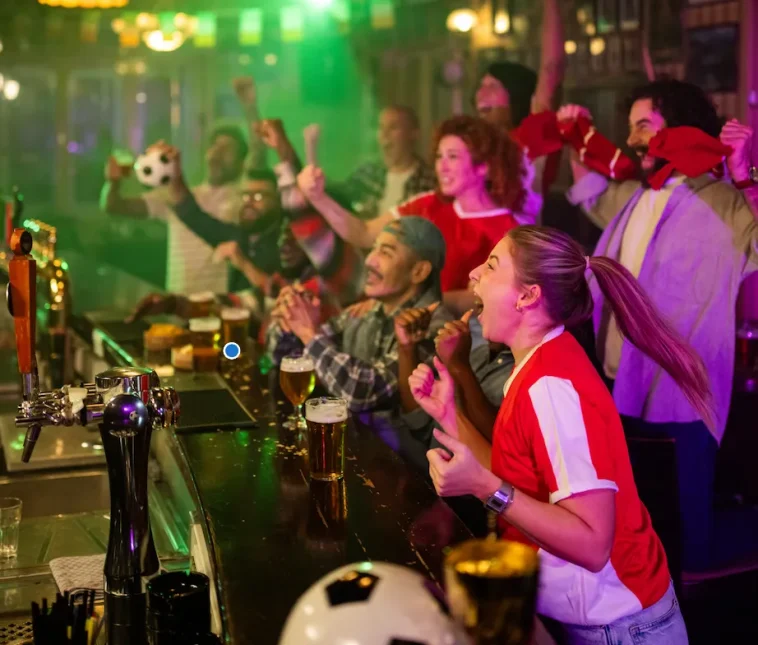
The sheer scale of this shift is striking. World Cup-related events across the United States have surged by over 400 percent compared to the 2022 tournament cycle, with attendance skyrocketing by an astonishing 572 percent, according to Eventbrite data. Globally, the number of events has more than doubled. This isn’t merely about watching; it’s about actively converting a universally shared broadcast into large-scale, in-person participation. From impromptu watch parties in public squares to pop-up activations transforming bars and businesses, we are witnessing a powerful demand for collective viewing experiences.
This pivot from passive viewing to active gathering is particularly significant because the World Cup has never lacked a television audience. The 2022 final alone captivated an astounding 1.5 billion simultaneous viewers. What has fundamentally changed is the propensity of fans to translate that synchronized viewership into a tangible, shared gathering, moving beyond the privacy of their individual screens. Numerator research further highlights this trend, revealing that nearly a third of U.S. adults plan to watch the 2026 tournament, a notable increase from roughly a quarter in January. Crucially, Gen Z leads this growth, with 40 percent intending to tune in. Even more telling is that over half of these prospective viewers plan to do so in a social setting, a clear intention that Eventbrite data confirms is being actively realized.
Gen Z’s Demand for Disconnection
This behavior, especially among younger demographics, offers a critical standalone data point irrespective of the sport itself. A study by The Harris Poll and Quad indicates that 81 percent of Gen Z often wish it were easier to disconnect from their devices. This is a generation that has grown up immersed in personalized, algorithm-sorted feeds, and they are now expressing a clear craving for what these highly individualized digital experiences inherently cannot offer: the tangible assurance that others are experiencing the exact same thing, at the precise same moment.
A personalized feed, by design, is architected for a solitary user. Its recommendation algorithms exist to maximize individual relevance, creating an experience that is efficient but fundamentally isolating, regardless of how many others are scrolling the same application concurrently. There is no collective temporal rhythm within such a feed. The World Cup, however, presents the structural antithesis: a singular match, a definitive outcome, a specific minute in which events unfold, witnessed by an immense global audience, all acutely aware of each other’s simultaneous engagement. This shared temporal understanding appears to hold greater social value for younger fans than the convenience of on-demand viewing, and the current event data strongly suggests this value is potent enough to motivate people to leave their homes and join communal spaces, often with strangers, to access it.
Beyond the Sports Bar: The Expanding Venue Landscape
Perhaps the most compelling evidence of this evolving trend lies in the diverse nature of these gatherings. Growth is not solely concentrated in traditional stadiums or sports bars. Instead, it’s flourishing in venues with no obvious connection to sports: bakeries, museums, arcades, art galleries, and bowling alleys. Even a decommissioned metro railcar in Washington, D.C., repurposed as a cocktail lounge, is hosting World Cup watch parties. With premium tournament tickets often scarce and prohibitively expensive, making the stadium experience inaccessible for many, a parallel economy of communal viewing has emerged. Organizers are not just chasing soccer fans; they are effectively chasing a broader desire for synchronized, real-world experiences, with soccer merely serving as the current, compelling occasion.
This pattern is not an isolated incident tied solely to the World Cup; it predates and will undoubtedly outlast it. It sits squarely within a larger, ongoing shift in the live events landscape, where younger consumers, in particular, are demonstrating a burgeoning interest in in-person gatherings as a vital counterpoint to years of screen-mediated, often isolated, socializing. A generation raised on the seemingly endless bounty of personalization is now treating synchronization – its direct opposite – as a much-needed relief valve. They are willing to make an effort, pay for tickets, or build an evening around a screen they could have easily watched for free at home, all for the sake of shared presence.
Strategic Imperatives for the Experience Economy
For brands, venue operators, and experience creators, the strategic implications are direct and profound. Synchronized cultural “clock-time” has emerged as a remarkably reliable driver of in-person attendance, often superseding the specific content of the moment itself. This shared timing is the invaluable asset around which forward-thinking entities should strategically position themselves. Instead of merely asking, “How do we associate with this event?”, the more pertinent question becomes, “What is the next fixed, shared moment on the cultural calendar, and are we prepared to offer people a compelling place to be when it unfolds?”
The true power of these synchronized moments becomes fully realized when they seamlessly integrate with existing communities. Imagine a bowling league transforming their regular league night into a vibrant World Cup viewing experience, complete with national jerseys and tournament brackets. Or a thrift store hosting a jersey customization table, providing its regulars with a creative reason to gather around a shared activity. In these scenarios, the match itself is only one facet of the appeal. The greater draw is the opportunity for an established community to occupy the same physical space together, with the World Cup supplying the universal timing and an undeniable surge of cultural energy.
The Future of Shared Cultural Consumption
This evolving pattern represents a nuanced evolution of experience culture. The preceding decade of in-person gathering was largely defined by hyper-specificity, with communities coalescing around increasingly niche passions. What is now emerging is an additional, critical layer atop that specificity: timing. A niche community can now effortlessly weave a broader cultural moment into its pre-existing interests and activities.
This logic extends far beyond the World Cup. Awards shows, celestial events like eclipses, highly anticipated season finales of popular series, the Olympic Games, and major album releases all create similar opportunities. They offer something increasingly rare and cherished in our fragmented digital culture: a definitive, fixed moment that everyone experiences simultaneously. The organizers and venues best positioned to capitalize on this trend are those capable of programming around these inherently attention-grabbing, synchronized moments. In an economy otherwise relentlessly optimized for individualized consumption, shared timing is rapidly solidifying its position as a durable and highly valuable business asset, signaling a shift towards a more connected, collective future.
#TrendingNow #ExplorePage #Viral #Motivation #Inspiration #Success #Mindset #Innovation #FutureTech #Lifestyle #Fitness #Travel
Artificial Intelligence, Generative AI, Cloud