Yulu Fuels India’s Quick-Commerce Revolution with $93 Million Funding Surge
Bengaluru, India – India’s burgeoning quick-commerce sector, characterized by its relentless pursuit of minute-fast deliveries, has found a critical enabler in Yulu. The electric mobility pioneer has successfully secured $93 million in fresh funding, a testament to its strategic position at the nexus of the gig economy and sustainable urban logistics. This significant Series C round underscores the growing investor confidence in Yulu’s innovative approach to powering the last-mile delivery ecosystem.
Pioneering a Sustainable Gig Economy
Yulu’s core offering revolves around providing electric two-wheelers on flexible weekly subscription plans. This model is a game-changer for India’s vast gig workforce, enabling delivery partners to seamlessly enter the booming quick-commerce and food delivery sectors without the prohibitive upfront cost of vehicle ownership. By removing this crucial barrier, Yulu not only democratizes access to economic opportunities but also fosters a more inclusive and dynamic gig economy.
With an impressive fleet of approximately 50,000 vehicles, Yulu is a powerhouse of eco-friendly logistics. The company proudly reports logging around 1.6 million zero-emission miles each week and facilitating over 750,000 deliveries daily. This operational scale directly contributes to reducing urban carbon footprints and combating air pollution, aligning perfectly with India’s broader environmental goals. The new capital injection is earmarked to quadruple this fleet to 200,000 bikes within the next two years, significantly expanding its reach and impact.
Strategic Funding and Future Trajectory
The $93 million Series C funding round comprised $63 million in equity, led by GEF Capital Partners, alongside $30 million in debt financing. A portion of the equity, approximately $5.5 million, was strategically utilized to repurchase shares from early seed investors, marking a mature step in the company’s financial lifecycle. Post-money, the deal reportedly valued Yulu at approximately $170 million, reflecting its substantial growth and market potential.
Notably, existing investors Bajaj Auto and Magna International opted not to participate in this round, waiving their pre-emptive rights to allow GEF Capital to achieve its target ownership stake. This move suggests a strategic alignment or a mature understanding of Yulu’s long-term financing plans. Co-founder and CEO Amit Gupta indicated that this is anticipated to be the final equity fundraising before an eventual public listing, with future fleet expansions primarily financed through debt and lease agreements. This strategic shift towards alternative financing mechanisms signals a confident stride towards financial independence and sustainable growth.
Financial Health and Strategic Pivot
Yulu’s financial performance paints a promising picture, with the company targeting profitability before interest and taxes (PBIT) next year, following a positive EBITDA achieved in the last financial year. CEO Amit Gupta also revealed an impressive seven-fold revenue growth between fiscal years 2023 and 2026, demonstrating robust market penetration and operational efficiency. Such aggressive growth figures underscore the efficacy of its business model in a rapidly expanding market.
The company’s journey began in 2017 as a bike-sharing service for urban commuters. However, the unforeseen advent of the COVID-19 pandemic catalyzed a crucial strategic pivot. As demand for food and grocery deliveries surged, Yulu astutely redirected its focus, identifying its greatest opportunity in supporting the burgeoning delivery ecosystem. This agile response to market shifts proved instrumental in its current success.
Today, approximately 95% of Yulu’s revenue is derived from its weekly subscription rentals to gig workers, with the remaining 5% from its established station-based rental service in Bengaluru. The earlier ambition to sell bikes directly to consumers has since been shelved, consolidating the company’s focus on its high-growth B2B2C model.
Introducing Yulu Express: Expanding Logistics Horizons
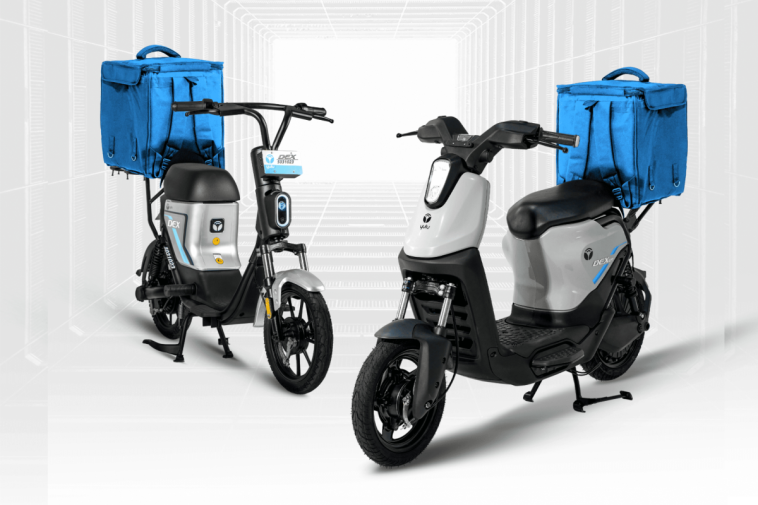
To spearhead its next phase of growth and capture new market segments, Yulu is introducing the “Yulu Express” – a full-sized, higher-speed electric scooter. This new model is engineered to tackle more demanding logistics use cases, including longer-haul e-commerce deliveries, burgeoning bike taxi services, and express parcel services, areas where its existing lower-speed fleet had limitations. The introduction of Yulu Express represents a strategic move to diversify its service offerings and penetrate higher-value segments of the logistics chain.
A significant portion of the planned 200,000-vehicle fleet – approximately one-third – will comprise this new high-speed model. While Yulu’s current low-speed fleet is manufactured by Bajaj Auto, the Yulu Express is being sourced from a different Indian manufacturer, indicating a strategic expansion of its supply chain to meet diverse product requirements. About 500 of these new scooters are already operational in Bengaluru and are undergoing trials in three additional cities, paving the way for a broader rollout.
Geographic Expansion and the “AWS of Mobility” Vision
Currently operating across 12 Indian cities, Yulu manages its own operations in key metropolitan hubs like Bengaluru, Mumbai, Delhi-NCR, and Hyderabad, while leveraging franchisee partnerships in eight other markets. The company’s ambitious expansion plan aims to extend its footprint to roughly 20 cities within the next year, with Chennai and Pune identified as primary targets. This expansion is critical for capitalizing on India’s rapid urbanization and the increasing demand for efficient last-mile delivery solutions.
Yulu positions itself as a vital infrastructural layer for the digital economy, partnering with virtually every major quick-commerce, food delivery, and e-commerce platform, including industry giants like Amazon and Walmart-owned Flipkart. Though its direct customers are the gig workers, Yulu’s role is foundational. CEO Amit Gupta articulates this vision by likening Yulu to “the AWS of mobility,” providing the essential infrastructure that empowers delivery workers and enables platforms to operate without relying on multiple third-party logistics providers. This analogy highlights Yulu’s aspiration to be the scalable, reliable, and ubiquitous mobility backbone for India’s digital commerce, cementing its authoritative position as a key enabler of the future of urban logistics.
#EngagementBoost #ViralContent #SocialMediaTips #TrendingNow #DigitalMarketing #ContentCreator #MarketingStrategy #AudienceEngagement #InstaGood #TechTrends #Innovation #FutureIsNow
Artificial Intelligence, Cloud, Cybersecurity