The Autoimmune Revolution: How CAR T-Cell Therapy is Redefining Hope
For millions grappling with debilitating autoimmune conditions, the future has long been shrouded in uncertainty and progressive decline. But a remarkable therapeutic frontier, once exclusive to the battle against cancer, is now rapidly emerging as a beacon of hope: CAR T-cell therapy. This revolutionary approach, which engineers a patient’s own immune cells to combat disease, is poised to fundamentally transform the landscape of autoimmune care, offering the tantalizing prospect of remission where only symptom management once existed.
Jan Janisch-Hanzlik, at 49, personified the relentless grip of multiple sclerosis (MS). Her once-active nursing career gave way to a desk job, falls jeopardized cherished moments with grandchildren, and the specter of a wheelchair loomed large. Traditional medications offered little respite, leaving her to dread the inevitable progression of her illness. It was this desperate search for a solution that led her to a groundbreaking clinical trial for CAR T-cell therapy at the University of Nebraska Medical Center, becoming its inaugural patient in June 2025. Her proactive pursuit of an experimental treatment, driven by a desire to spare her grandchildren from a similar fate, underscores the profound hope this therapy ignites in patients facing limited options.
Originally conceived to unleash a patient’s immune system against malignancies by reprogramming T cells to specifically target and obliterate cancerous cells, CAR T-cell therapy is now at the forefront of hundreds of clinical trials for a vast array of autoimmune diseases. Conditions such as lupus, Graves’ disease, vasculitis, and crucially, multiple sclerosis, are all being investigated. The scientific premise is compelling: if CAR T can achieve lasting remission in aggressive blood cancers, it might similarly “reset” the immune system in autoimmune disorders by eliminating the rogue cells responsible for self-attack.
From Oncology’s Triumph to Autoimmunity’s Promise
The journey of CAR T-cell therapy from laboratory concept to life-saving treatment began in oncology. The Food and Drug Administration’s landmark approval of the first CAR T treatment in 2017 for an aggressive form of leukemia marked a pivotal moment. Since then, this intensive therapy has delivered remarkable, long-term remissions for countless cancer patients, showcasing the immense power of precision immune engineering.
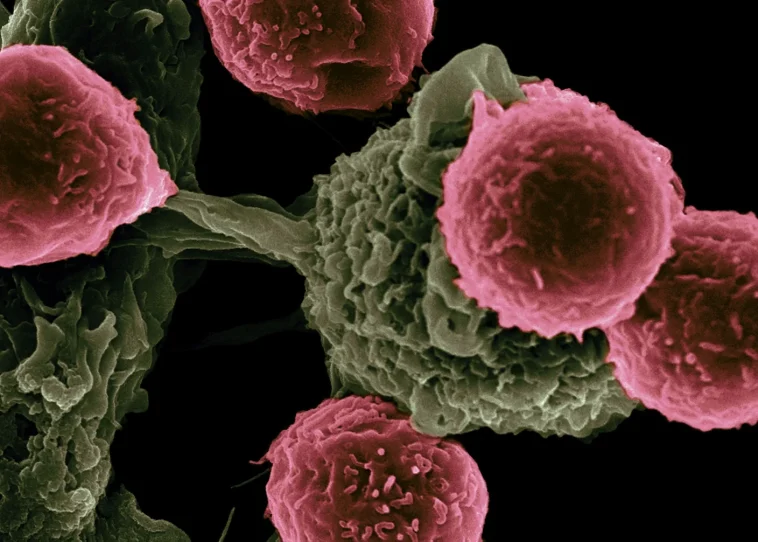
At its core, CAR T therapy harnesses the inherent strength of T cells, the immune system’s frontline defenders. These cells typically identify and neutralize foreign invaders or abnormal body cells. In the CAR T process, scientists extract a patient’s T cells, genetically modify them with a “chimeric antigen receptor” (CAR), and reintroduce them. This CAR acts as a highly specific homing device, enabling the T cells to recognize and destroy target cells that were previously invisible to the natural immune response.
A key breakthrough in both cancer and autoimmunity applications lies in targeting B cells, another critical immune component. While B cells are essential for producing antibodies to fight pathogens, in certain blood cancers and many autoimmune conditions, they become dysregulated, either proliferating uncontrollably or mistakenly generating autoantibodies that attack healthy tissues. By engineering CAR T cells to specifically recognize and eliminate B cells carrying particular surface markers, researchers aim to eradicate the source of the problem in both disease categories.
This elegant translation of oncology success to autoimmune conditions was swiftly recognized. A German team pioneered the use of CAR T in a lupus patient, reporting promising results in 2021. Since then, the field has exploded. Dr. Amanda Piquet, an autoimmune neurologist at the University of Colorado Anschutz, exemplifies this shift. Evaluating CAR T for stiff person syndrome, a rare and severe autoimmune disorder with no FDA-approved treatments, she saw a “perfect opportunity.” Her study, which reported positive preliminary data in December 2025, showed significant improvements in mobility and a dramatic reduction in the need for other immunotherapies among participants, illustrating the profound potential for this novel treatment.
Navigating Risks and Uncharted Waters
While the promise of CAR T is undeniable, its powerful mechanism necessitates careful consideration of inherent risks and lingering uncertainties. Early cancer treatments saw CAR T cells trigger severe inflammation, leading to life-threatening side effects like cytokine release syndrome (CRS) and neurotoxicity. These can manifest as high fevers, low blood pressure, confusion, and drowsiness. Fortunately, a decade of clinical experience has armed physicians with refined protocols for recognizing and managing these issues, making them largely reversible in most cases, according to experts like Dr. Emily Littlejohn, a rheumatologist at the Cleveland Clinic.
A more nuanced challenge arises from the treatment’s very objective: profound immune suppression. Patients undergo chemotherapy to reduce existing immune cells, making way for the engineered T cells. Subsequently, the CAR T cells decimate B cell populations. This leaves patients temporarily vulnerable to infections for up to a year post-treatment. However, this risk is mitigated through prophylactic antibiotics, antivirals, and vaccinations. Intriguingly, some studies suggest that CAR T therapy may spare older, memory B cells, allowing patients to retain immunity to previously encountered pathogens and vaccines.
Despite these advancements in managing acute complications, the long-term implications remain a significant area of inquiry. The FDA has acknowledged CAR T’s potential in autoimmunity but has also cautioned about “unpredictable long-term toxicity.” Concerns include links between CAR T treatment for cancer and conditions like Parkinson’s disease, and, in rare instances, the alarming possibility of the engineered T cells themselves turning malignant, leading to new T-cell based cancers. Balancing these difficult-to-quantify future risks against the severe, often progressive impacts of chronic autoimmune diseases presents a complex ethical and clinical dilemma, as noted by Dr. Matt Lunning, medical director for gene and cellular therapy at Nebraska Medicine.
In response, researchers are already innovating “second- and third-generation” CAR T platforms designed for enhanced safety. One promising avenue, exemplified by Cartesian Therapeutics’ approach, utilizes mRNA to encode the CAR. This short-lived genetic messenger, similar to those in COVID-19 vaccines, allows for transient B-cell eradication, theoretically eliminating the long-term risk of genetically modified cells persisting and turning cancerous. Furthermore, this method allows for infusion of sufficient T cells without requiring them to reproduce extensively within the patient, which Dr. James Howard of the University of North Carolina at Chapel Hill believes further reduces inflammation risks. Early trials with this mRNA-based CAR T have shown symptom improvement in two-thirds of autoimmune patients with no long-term serious side effects.
Tackling the “Sticker Shock” and Future Accessibility
Beyond the biological complexities, a major hurdle for widespread CAR T adoption is its exorbitant cost, often reaching hundreds of thousands of dollars when factoring in hospital stays, cell engineering, and associated care. This “sticker shock” underscores the urgent need for more scalable and affordable solutions.
One promising direction involves shifting from personalized, patient-specific cell engineering to “in-body” modification, where T cells are reprogrammed directly within the patient. Another, perhaps more transformative, approach is the development of “off-the-shelf” CAR T therapies. These utilize T cells from healthy donors, engineered for universal compatibility across multiple patients. While challenges exist in preventing immune rejection between donor and recipient cells, advanced genetic modifications are being developed to overcome this. Dr. Bing Du, an immunologist at East China Normal University, estimates that a single donor’s blood could yield CAR T cells for over a thousand patients, drastically reducing costs and enhancing accessibility. Jan Janisch-Hanzlik, in fact, was a recipient of such an off-the-shelf therapy, highlighting its imminent potential.
The ability to mass-produce these therapies not only addresses the cost barrier but also the logistical complexities of individualized cell processing, paving the way for CAR T to become a more readily available treatment option for a broader patient population. This shift would represent a profound leap, transforming it from a highly specialized, niche treatment into a potentially mainstream therapeutic for chronic autoimmune diseases.
A Glimmer of a New Dawn
Nearly a year after her experimental infusion, Jan Janisch-Hanzlik’s life has undergone a profound transformation. The double vision that once plagued her vanished, her cane became an afterthought, and the need for daily, three-hour naps disappeared. She recently savored a trip to the Grand Canyon and now eagerly anticipates more active time with her grandchildren. While some symptoms, such as weakness in her right leg and occasional word-finding difficulties, persist, her remarkable improvement offers a compelling testament to the therapy’s power.
“I have been told so many times, ‘We don’t know, you’re the first. We’re just going to have to wait and see,'” she reflects. Her journey, alongside those of other pioneering patients, is writing the definitive chapter on CAR T-cell therapy for autoimmunity. As research progresses and next-generation therapies emerge, the insights gained will not only refine treatments but also expand our fundamental understanding of autoimmune diseases. For patients like Janisch-Hanzlik, and indeed for all those battling chronic autoimmune conditions, CAR T-cell therapy represents more than just a medical advancement; it signifies the return of agency, the reclaiming of lives, and the tangible promise of a healthier, more independent future. This is not merely a treatment; it is the dawn of an immune reset, a paradigm shift that InnovationWarrior.com will continue to watch closely.
#HashtagTips #SocialMediaMarketing #EngagementBoost #ContentCreator #DigitalMarketing #TrendingNow #ViralContent #AudienceGrowth #CommunityBuilding #BrandAwareness #InstaGood #MarketingStrategy
Generative AI, Large Language Models, Artificial Intelligence